Gran Canaria
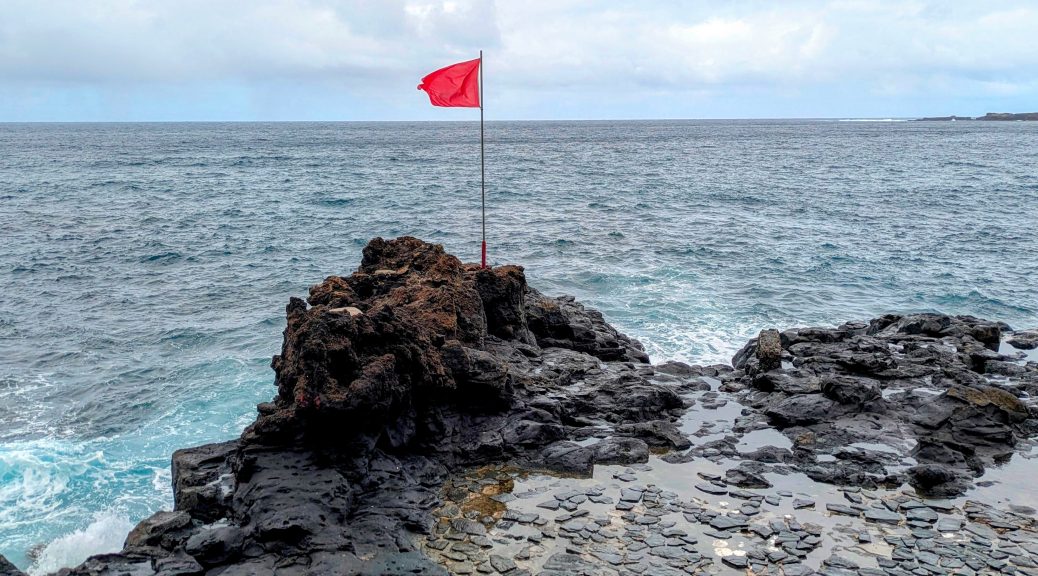
After a week in Tenerife, we went to the island of Gran Canaria, another hugely popular destination for European tourists. To make the short hop between islands, we boarded a high-speed ferry for an hour and a half trip. The boat docked in the northwest port town of Agaete, framed by steep cliffs and dramatic coastline.
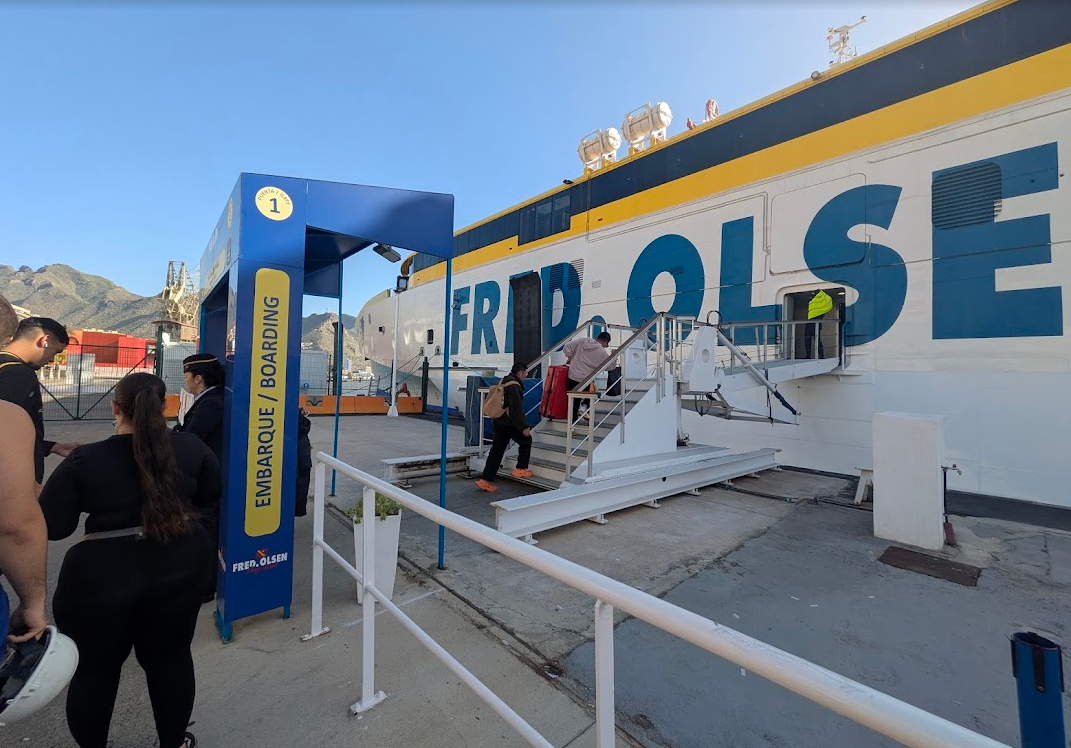
From Agaete, we caught a bus for the half-hour ride across the island to Las Palmas de Gran Canaria. After settling into our apartment, we did what has quickly become our arrival ritual: exploring the neighborhood on foot, scouting nearby coffee shops, restaurants, and grocery stores. Within a few hours, the unfamiliar streets already began to feel comfortable and navigable.
Not long after unpacking, we headed back out into the streets, drawn toward the sounds and crowds of Carnaval already underway. There was music in the streets, pedestrians with costumes, and just like that, we were part of the celebration.
Carnaval de Las Palmas de Gran Canaria
The Carnaval de Santa Cruz de Tenerife felt like a world-class event, high energy, polished, and full of Brazilian-inspired glamour. The scale was massive. The Grand Parade felt internationally broadcast-ready (a local Canarian even told us it is televised throughout Spain). The entire center of the city transformed into a nonstop party zone, elaborate stages, massive crowds, and costumes that looked professionally designed and made.
By contrast, the Carnaval de Las Palmas de Gran Canaria felt more local and informal. The scale was slightly smaller. The Grand Parade was noticeably different, with fewer traditional floats and marching bands. Instead, it was dominated by carrozas (floats), which are rolling nightclubs. These decorated trucks and rigs were outfitted with massive speakers, lighting systems, and live DJs, packed with groups representing clubs, neighborhoods, or organizations, all drinking and dancing as they moved down the parade route.
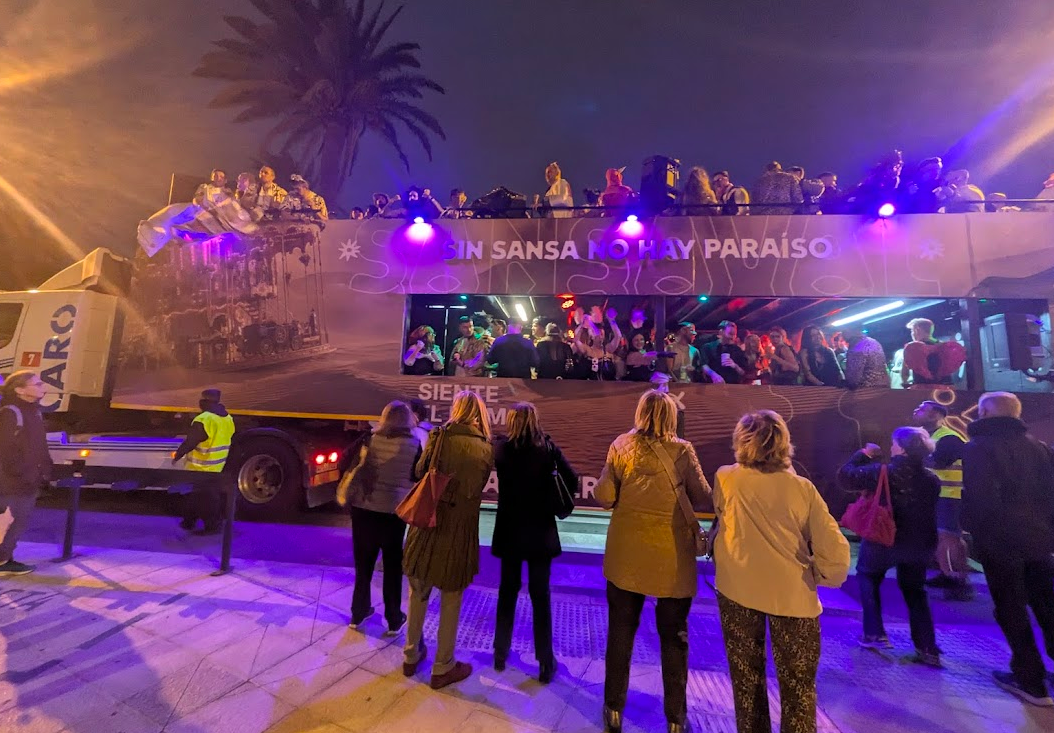
As the carrozas rolled slowly along, crowds followed behind them dancing in the streets, which made the parade feel less like something to watch and more like something to join. It was more of a mobile street party than a spectator event.
The parade route ran just two blocks from our apartment, so we could dip in and out easily to take a break from the crowds.
Old-Town
One of the main reasons we chose to stay in Las Palmas de Gran Canaria was the historic center. Our apartment was less than a mile from the oldest part of the city, making it easy to walk there each day. Two historic neighborhoods, Vegueta and Triana, sit side by side, yet each offers a completely distinct experience. Over several days, we explored both, discovering that every corner revealed unexpected charm.
Vequeta
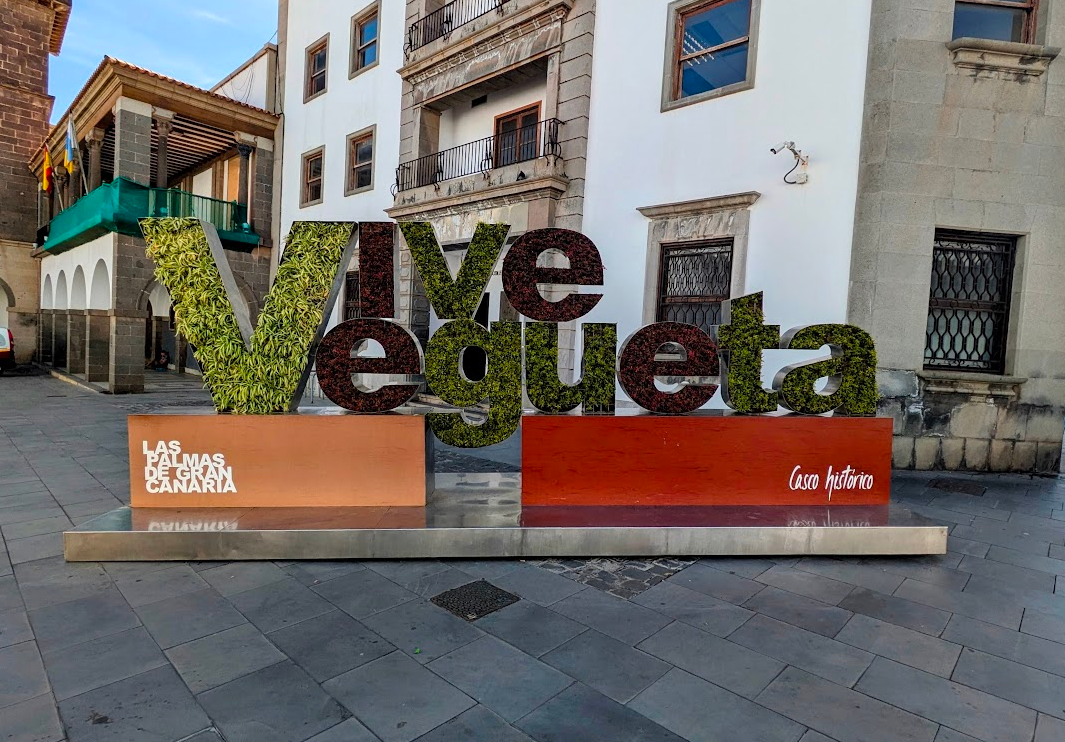
Vegueta felt like stepping directly into the original soul of Las Palmas. Founded in the late 15th century, this neighborhood marks the birthplace of the city itself. Narrow cobblestone streets wind between ochre-colored buildings, carved wooden balconies lean overhead, and the atmosphere feels quieter and more intimate than the modern energy found elsewhere in Las Palmas.
At its center rises the striking Catedral de Santa Ana, anchoring the palm-lined Plaza de Santa Ana with imposing stone towers.

Just steps away, the Casa de Colón reflects Gran Canaria’s historic role as an Atlantic crossroads, linking the island to early voyages of Christopher Columbus between Europe and the Americas.
What drew us most to Vegueta was its charm. Small museums, hidden courtyards, and shaded cafés invite lingering rather than rushing. It’s the kind of place we experienced without an agenda, simply wandering, looking around, and feeling the history of the city.
Triana
Triana felt different the moment we crossed into it. Centered around Calle Mayor de Triana, it’s still historic; the balconies, the colors, the ornate details are all there, but the rhythm is different. It feels lived-in and present. People shopping. Meeting friends. Carrying groceries. Sitting outside with coffee. It has movement.
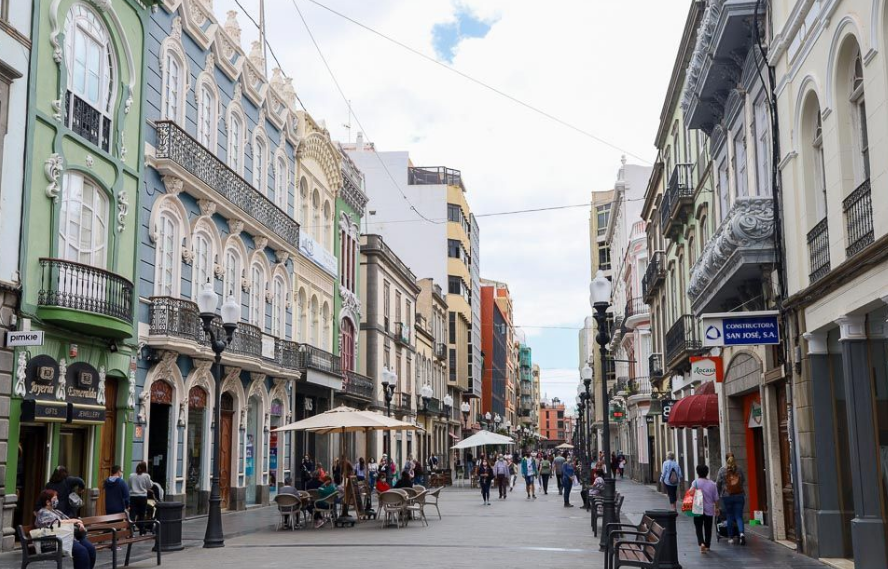
We found ourselves naturally blending in there, stopping for lunch, browsing shops, and just watching the afternoon pass. What makes Triana special is that it doesn’t feel preserved. It feels alive.
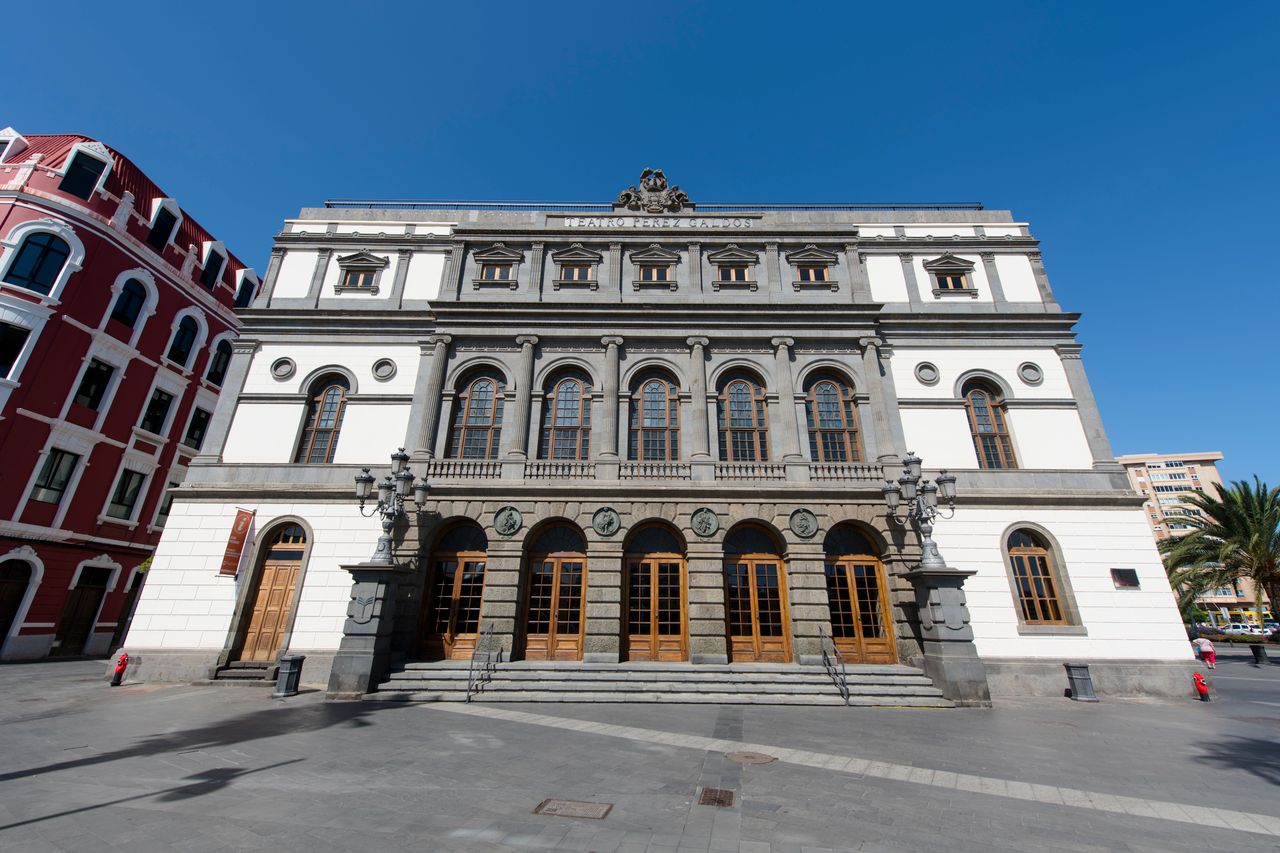
If Vegueta is the history of Las Palmas, Triana is its daily heartbeat. And being able to walk to both neighborhoods from our apartment, to move back and forth between history and modern life, made our stay more enjoyable and complete.
Out and About
We also wanted to get outside of Las Palmas and explore some of the smaller towns scattered across the island. Each one felt completely different with its own personality and charm.
Instead of renting a car, we relied on the island buses, which turned out to be part of the experience. The routes wound their way through mountain roads, twisting along cliffs and dipping into valleys. From the window, we watched tiny villages appear and disappear, houses clinging to hillsides, terraced farms carved into steep slopes, and locals hopping on and off the bus in places we would never have discovered on our own.
The bus rides weren’t just transportation; they were front-row seats to the real Gran Canaria.
Arucas
Arucas is a small town west of Las Palmas. It was one of our favorite cities to visit. The town is surrounded by banana plantations, but it is anchored by the church of San Juan Bautista. It surprised us to see such a large church in such a small town, dominating the Arucas skyline. It was constructed entirely of local blue-gray basalt and stands as one of the most remarkable examples of neo-Gothic architecture in the archipelago.
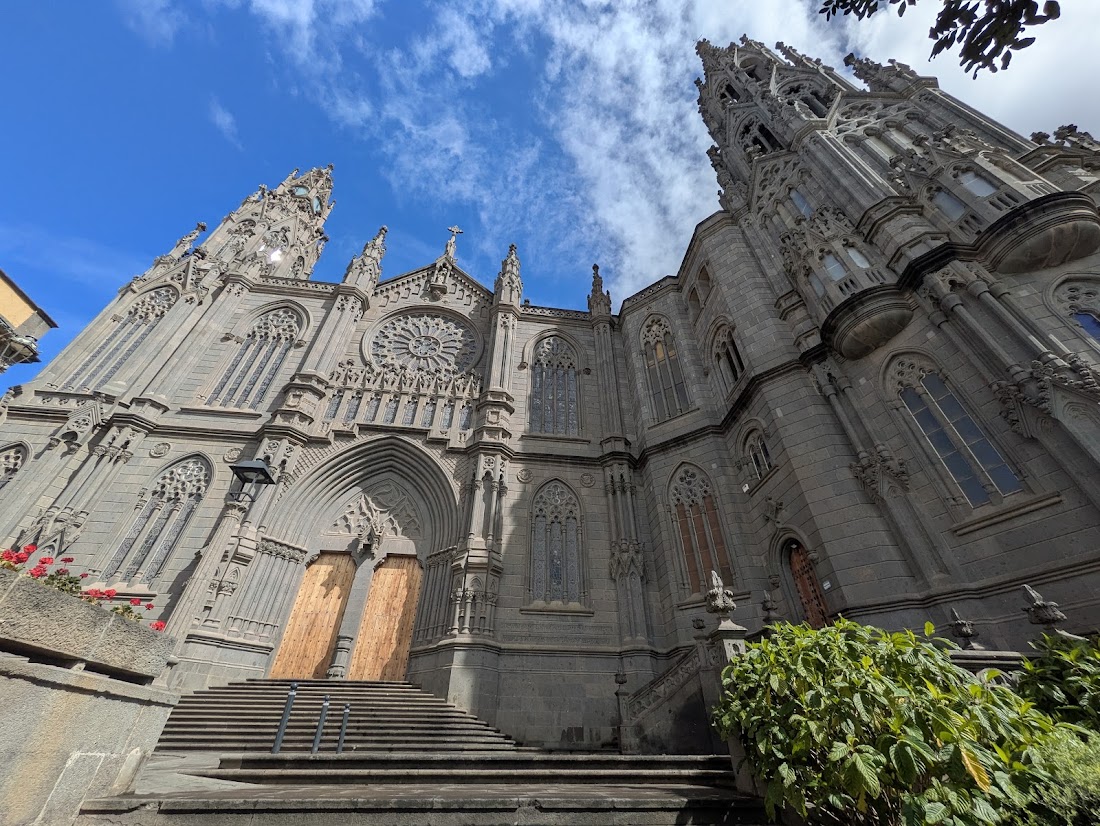
The square right in front of the church is called Plaza de San Juan. It’s been the historic heart of the town for centuries and forms a beautiful architectural setting around the church.


Arucas has almost 40,000 residents. We found the streets very charming, and when we arrived, the town was making final preparations for Carnaval.

We found it ironic that the big stage that would host music, dance, and a drag show was erected right in front of the church.

Firgas
Another of our favorite towns was Firgas, just a short ride from Arucas. Much smaller in scale, Firgas felt relaxed and charming. Known as the “Villa del Agua,” it is famous for its beautiful, stepped water feature cascading down the Paseo de Canarias, where tiled benches represent each of the Canary Islands. The combination of flowing water and colorful ceramics gave the town a distinctive character that made it especially memorable.
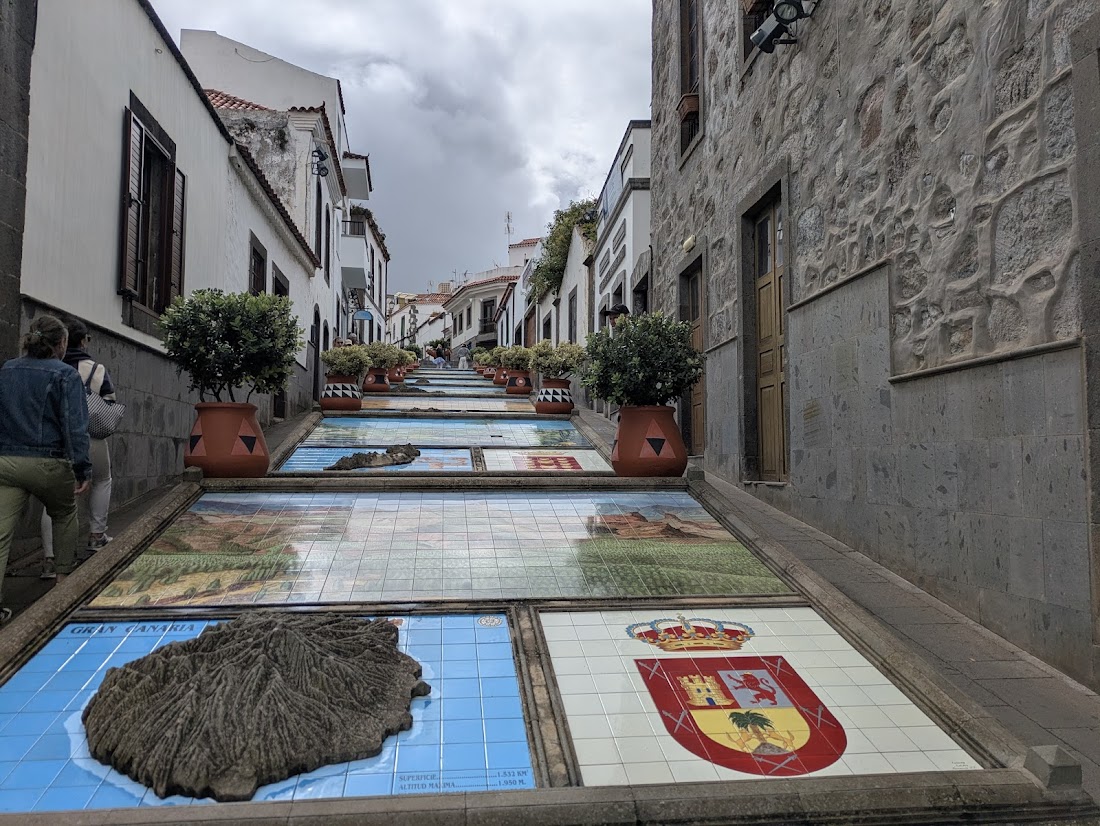

Exploring these smaller towns gave us something the larger destinations can’t always offer, a glimpse into everyday life in Gran Canaria. No big tour groups, no rush, just locals going about their routines and a slower pace that made the island feel more personal and real.
Saying Good-Bye
We loved the Canary Islands and could easily see ourselves retiring there. They offer all the advantages of Spain: clean, safe, rich in history, full of charm, pedestrian-friendly, and exceptionally well-maintained, combined with outstanding year-round weather. It’s no surprise that many Brits and Germans choose to retire there or escape to the islands for a midwinter break from colder climates.
Leaving after two weeks felt bittersweet, as we had grown comfortable and connected to the rhythm of life there. At the same time, we were excited to head to Morocco for a completely different and contrasting experience.
One thought on “Gran Canaria”
Wow! Maybe we will join you there in your retirement