Out In the Parks
One of the things we wanted to do while in Croatia was hike some of the parks and trails. Our first hike was in the middle of the city of Split.
Marjan Forest Park
Marjan Forest Park is a large green peninsula that rises west of Split’s Old Town. Our apartment was close to the park, and when we walked past, it called us to explore. So, of course, we did.
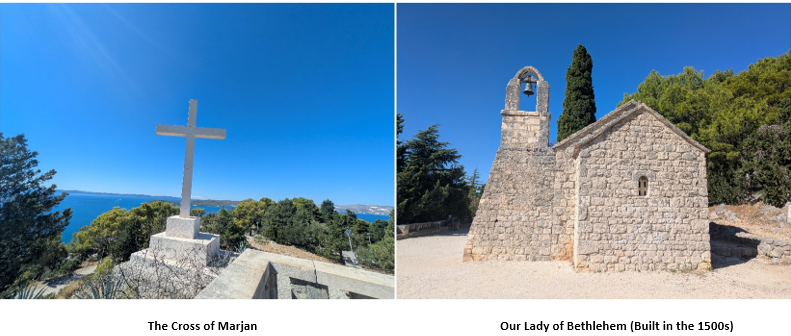
Called the “Lungs of Split,” Marjan is covered with Mediterranean pine forest and crisscrossed with walking and cycling trails. It’s amazing how quickly the sounds of the city disappear once you start climbing. Along the way, we passed small old churches, stone walls, and viewpoints overlooking Split and the Adriatic Sea. It was hard to believe we were so close to the center of the city.
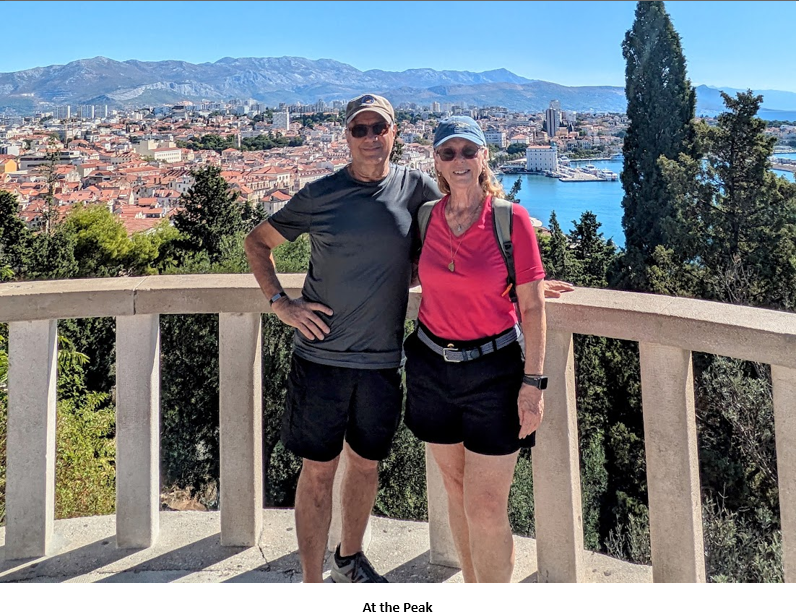
We decided not to stop at the lower viewpoints and continued to the peak at Telegrin, the highest point on Marjan. The climb gave us a workout, but the views along the way made every step worthwhile. From the top of the hill, we could look over Split, with the tightly packed stone buildings of the Old Town below us and the blue Adriatic stretching out toward the islands in the distance.
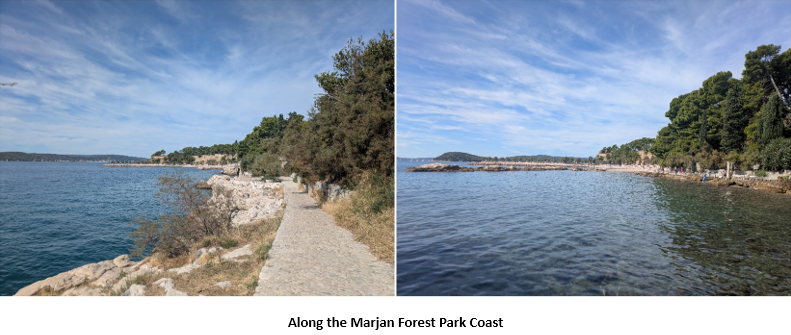
We spent several days exploring the rest of the park, hiking along the coast where we saw numerous beaches and play areas.
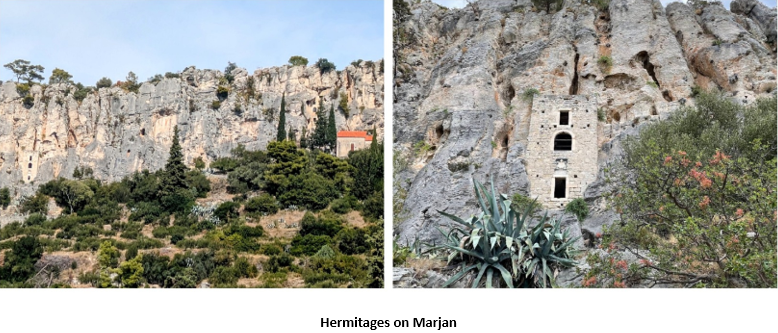
An unusual sight was the caves high in the cliffs. At first, we assumed they were simply natural openings in the rock, but we later learned that some were 500-year-old hermitages. Hermits came to this isolated side of Marjan to live and pray, building walls, windows, and small rooms into the cliffs. Nearby is the 15th-century Church of St. Jerome, along with Karepić Tower, a fortified refuge built into the rocks in 1523. Looking up at these tiny structures clinging to the cliff, it was hard to imagine people living there centuries ago.
After spending so much time exploring Diocletian’s Palace and wandering through the narrow streets of the historic center, it was nice to see Split from an entirely different perspective.
What we liked most about Marjan was that it didn’t really feel like a tourist attraction. It felt more like Split’s backyard, a place where locals come to walk, run, bike, swim, and simply enjoy being outdoors. Knowing that people have been using this hill since Roman times adds another layer to the experience. Hiking to the top gave us great views and an appreciation for Split’s incredible setting between the mountains, the forest, and the sea.
Krka National Park
Krka National Park is one of those places that makes everyone’s list when visiting this part of Croatia, so of course we had to check it out for ourselves. We hopped on a bus in Split for the one-hour ride northwest to the park. It was an easy trip and a nice chance to see a little more of the Croatian countryside along the way.
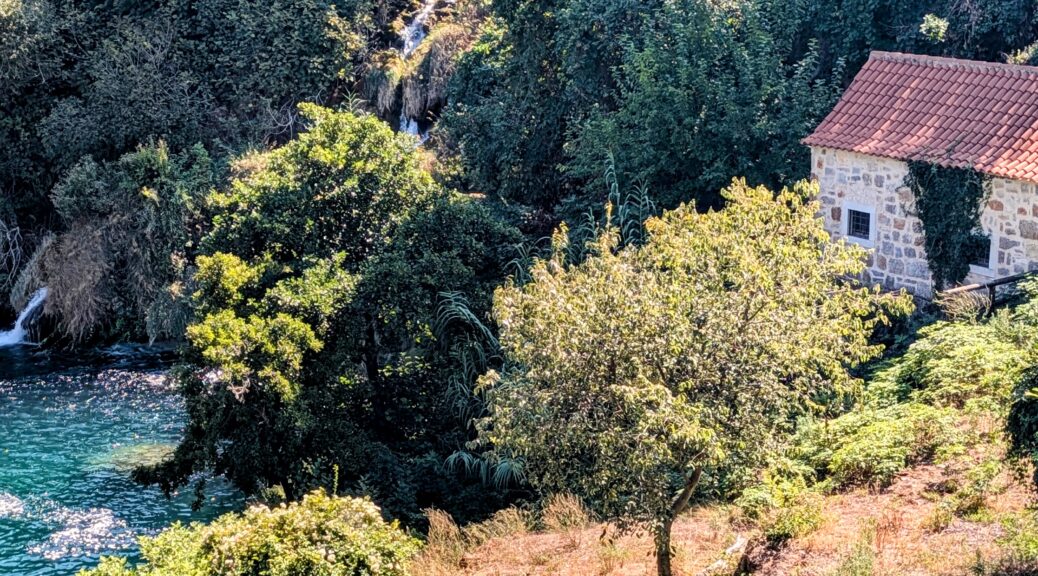
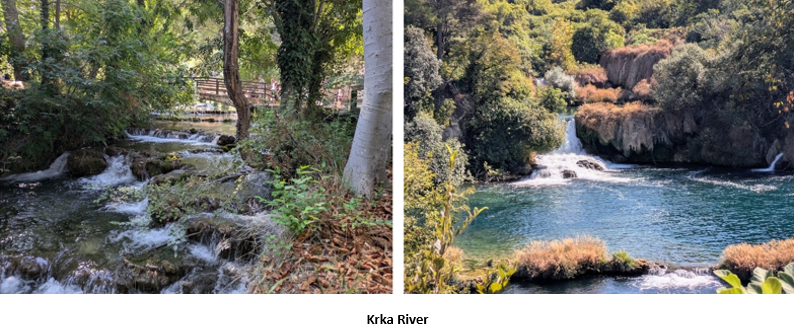
The park follows the Krka River as it winds through the countryside, creating a series of rapids, waterfalls, and beautiful blue-green pools. It became a national park in 1985 and covers more than 100 square kilometers, so there is more here than we could see in one day.
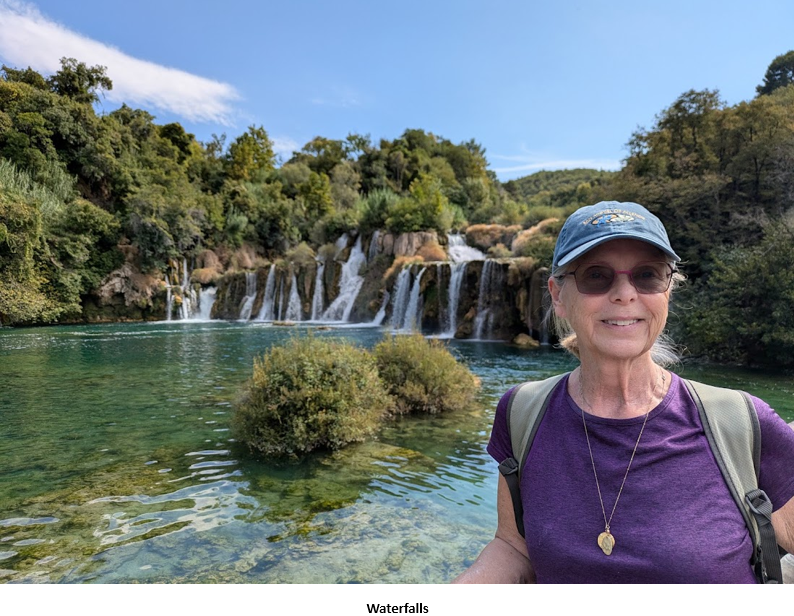
Once we arrived, we followed the wooden walkways and trails through the park, stopping along the way to enjoy the river and waterfalls. The main attraction is Skradinski Buk, where the river cascades over a series of waterfalls surrounded by trees and thick vegetation. It’s beautiful, but peaceful and secluded? It is not! There were plenty of other tourists enjoying it with us. Much of the trail is one-way, which keeps everyone moving in the same direction and at times makes you feel a little like you’re part of a slow-moving parade through the park. Still, with waterfalls and rushing water around every corner, it was a nice parade.
Before heading back to Split, we boarded a river boat to the small town of Skradin. It was a relaxing way to end our visit to the park, and we wandered around town and had lunch before catching our bus back to Split.
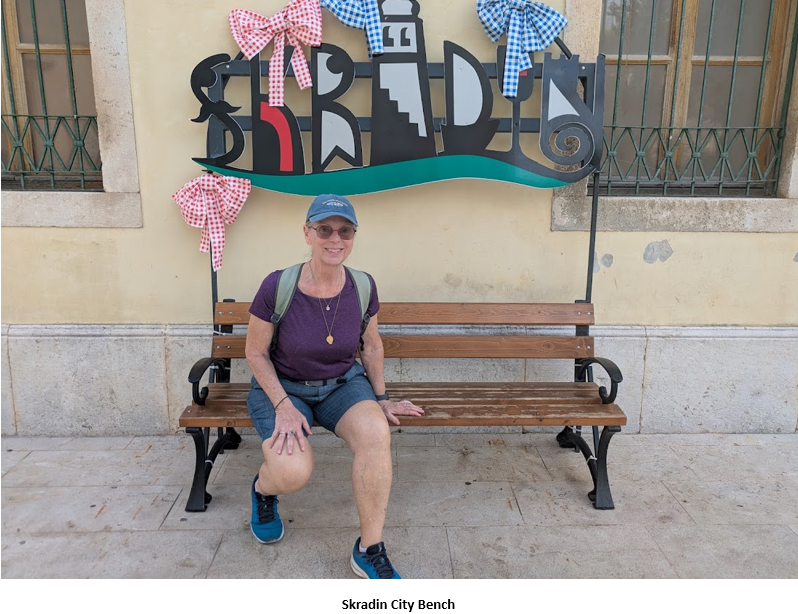
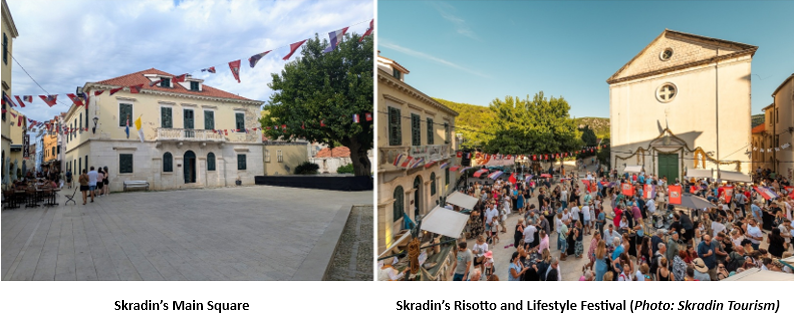
Unfortunately, our timing was just a little off. We arrived two days too late for Skradin’s Risotto and Lifestyle Festival. This year, guest chefs from 3 European sister cities- Italy, Lithuania, and Hungary brought their own unique traditions to the town. Considering how much we enjoy experiencing local food traditions when we travel, that would have been fun to see and even better to taste.
Between our hikes in Marjan Forest Park and Krka National Park, we got a great introduction to the natural side of Croatia. Marjan gave us a chance to hike right from the city, climb to the highest point, enjoy incredible views, and discover centuries of history hidden among the cliffs.
Krka was a completely different experience, with its rushing river, waterfalls, wooden walkways, and boat ride to Skradin. Both parks were beautiful in their own way and reminded us that there is much more to Croatia than its historic cities and beautiful coastline.
But really, every day in Split seemed to turn into a hike of its own. We spent most of our days on foot, wandering through neighborhoods, visiting museums, and exploring whatever looked interesting along the way. And in Split, walking usually means plenty of hills, stone steps, and winding streets. By the end of the day, our legs often reminded us just how much ground we had covered. Between the parks, runs, and exploring the city, we certainly didn’t have to worry about getting our steps in while we were in Split!