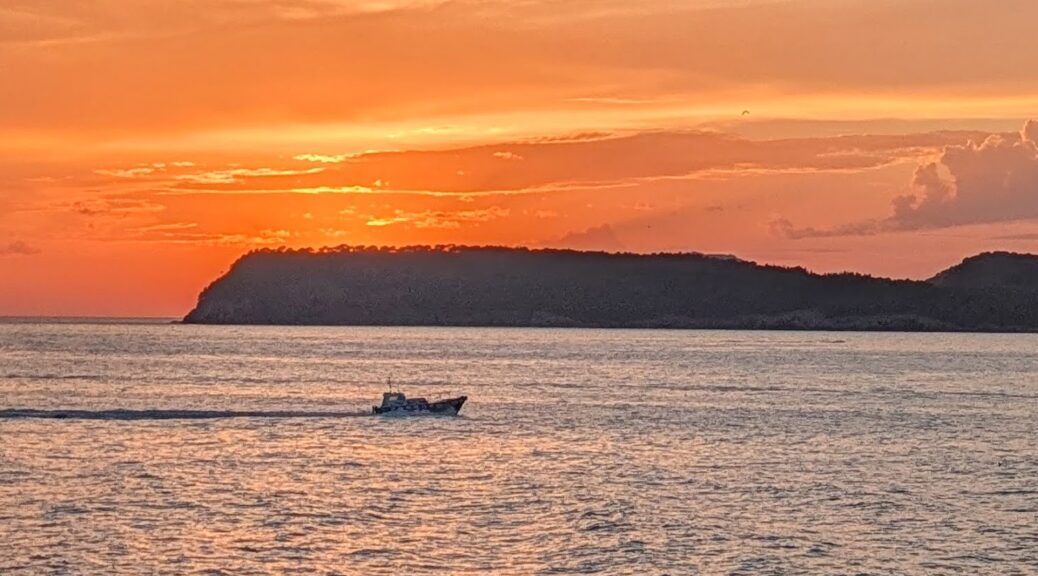
The Other Side of Dubrovnik
The walled city of Dubrovnik is one of the most impressive medieval cities in Europe. For centuries, it was the heart of the Republic of Ragusa, a wealthy maritime trading republic that competed with Venice. Massive stone walls, built and strengthened between the 13th and 17th centuries, surround Old Town. The 1.2 mile wall is lined with towers and fortresses overlooking red-tiled rooftops and the Adriatic Sea. The historic city has survived for centuries and was fully restored after damage from the 1991–92 siege of Dubrovnik by Yogoslavia.
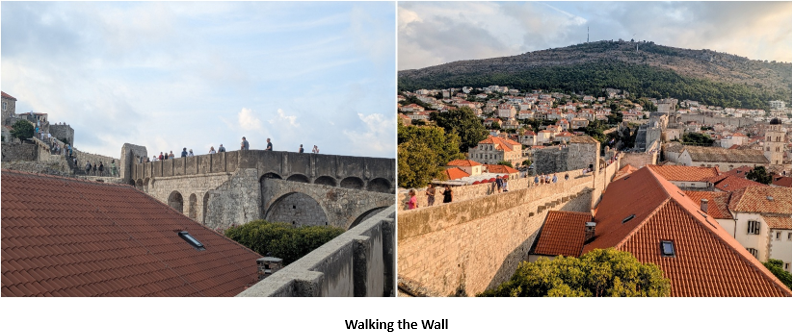
Walking the city walls is a highlight of Dubrovnik. There was a great view around every corner. On one side, we looked down over the maze of narrow streets, stone buildings, church towers, and red-tiled roofs; on the other was the beautiful blue Adriatic stretching out in front of us. Even with the crowds, it was a great way to appreciate just how beautiful and unusual Dubrovnik really is.
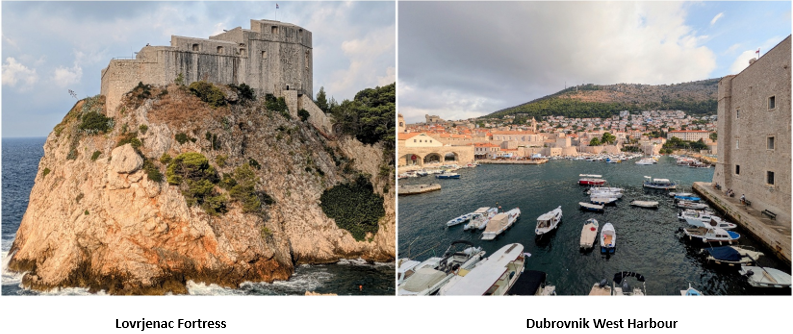
Other highlights of the walled city include the Rector’s Palace, Franciscan Monastery, Dubrovnik Cathedral, Sponza Palace, West Harbor, and Lovrijenac Fortress.
We bought a three-day Dubrovnik Pass, which gave us access to the city walls and many of the other attractions and museums throughout the Old Town. It turned out to be a great way to explore the city over several days without feeling like we had to see everything at once. The pass also included bus rides, which we took advantage of.
The Other Side of Dubrovnik
The city of Dubrovnik is more than the walled city. We spent several days exploring the other side of Dubrovnik to see what life is like beyond the walls.
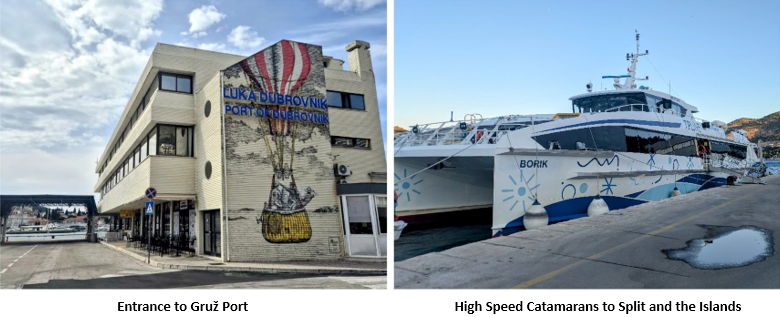
We hopped on a bus for the short ride to the modern northern part of the city. This is Gruž Port, Dubrovnik’s main port, where the cruise ships dock before bussing their passengers to the Old Town. Gruž is also a transportation hub for ferries to the islands and towns along the Dalmation coast. We loved seeing this modern side of Dubrovnik after spending so much time inside the historic walls.
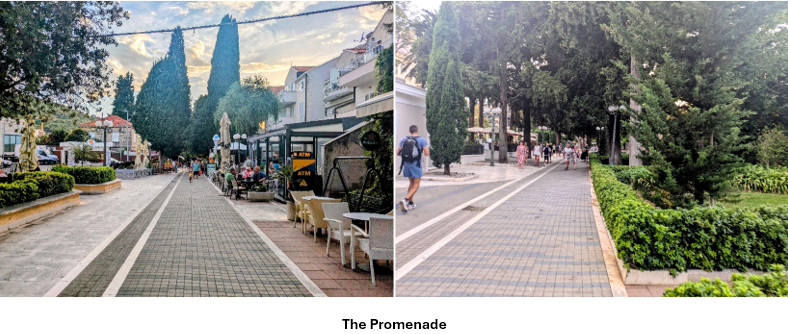
 Lapad is a seaside neighborhood of Dubrovnik, two miles from Old Town. It’s known for its beaches, green hills, waterfront promenades, cafés, restaurants, and hotels, and has a more residential feel than the historic center.
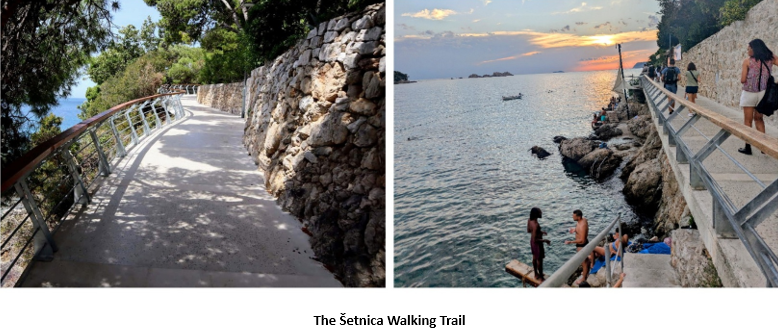
Lapad Bay is the heart of the area, and we spent a relaxing day exploring the coastal path that winds around the peninsula. The Šetnica Walking Trail is .6 miles, and hugs the rocky shoreline for much of the walk. Along the way, we passed bars, restaurants, and hotels, but what we enjoyed most were the views of the Adriatic. There are plenty of spots where you can climb down to the rocks, take a swim in the clear water, or just sit and look out over the scenery. We took our time, stopping along the way to enjoy the water and the views.
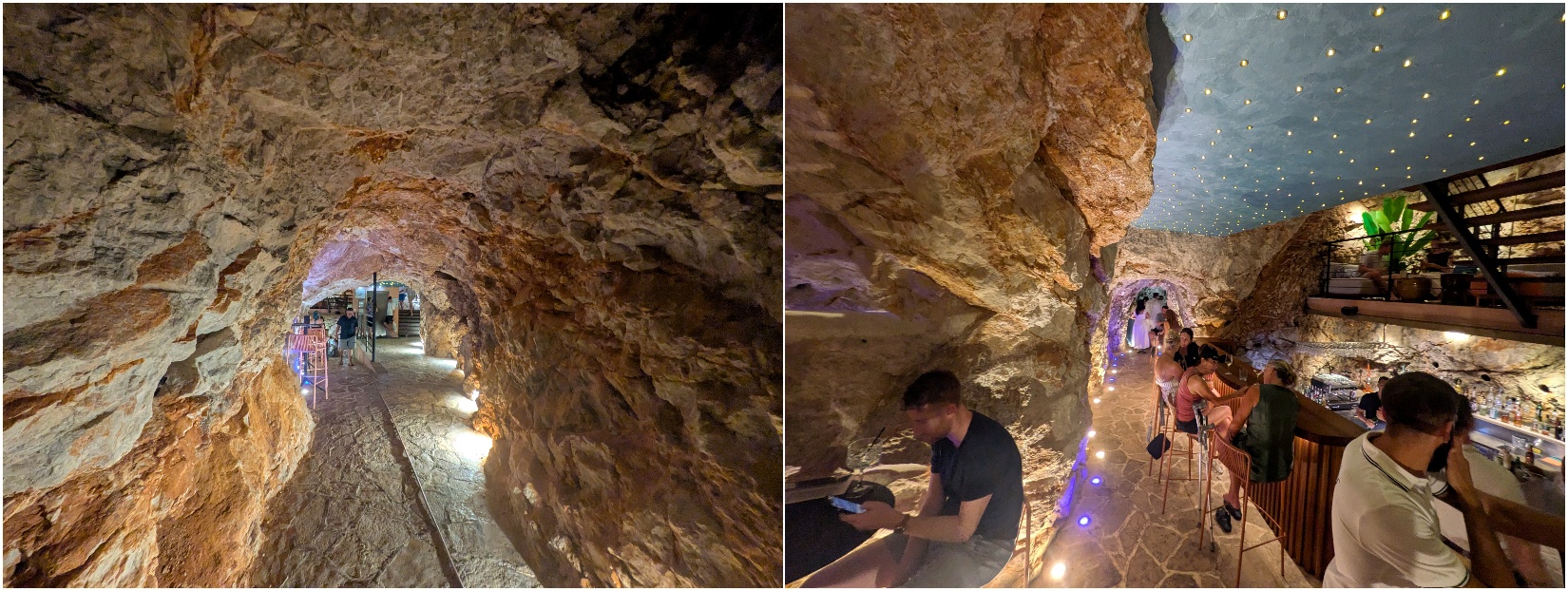
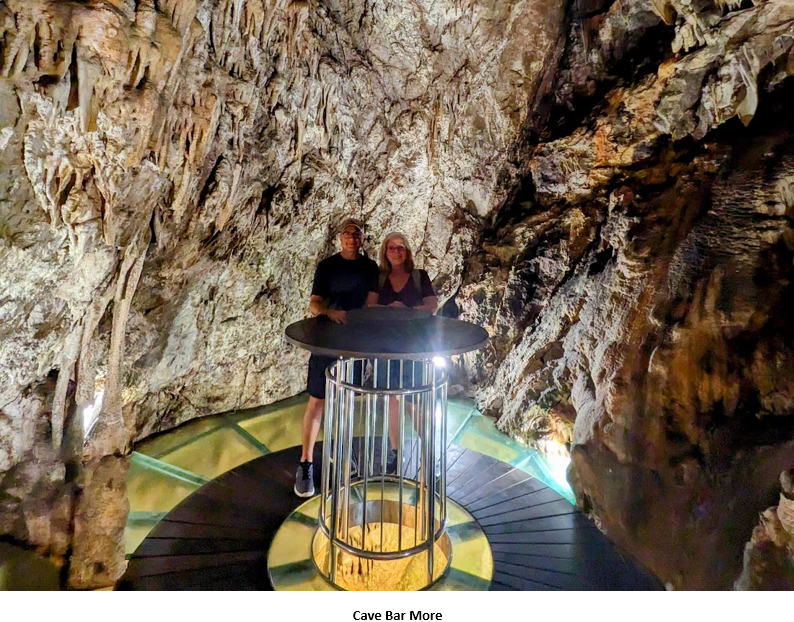
That evening, we had dinner overlooking the bay and watched the sun set over the Adriatic. We have been eating octopus and squid, local delicacies. After dinner, we stopped at Cave Bar More for a drink. The bar is built inside a natural cave beneath Hotel More, with rock walls and formations. It is different from any bar we’ve been to before. We grabbed a drink, found a spot to relax, and enjoyed the atmosphere before heading back out along the waterfront.
Afterward, we strolled back along the promenade, enjoying the evening air and the lights along the bay. It was the perfect ending to a relaxing day and an escape from the crowds of Old Town.
On our last day in Dubrovnik, we rose early and headed to the port. Instead of driving north along the coast to Split, we decided to travel by boat. It seemed like a much more enjoyable way to make the journey, with stops at islands along the way before eventually arriving in Split.
Split will be our home base for the next part of our trip. From here, we’ll take day trips to some islands, explore the town, and visit some Croatian national parks.