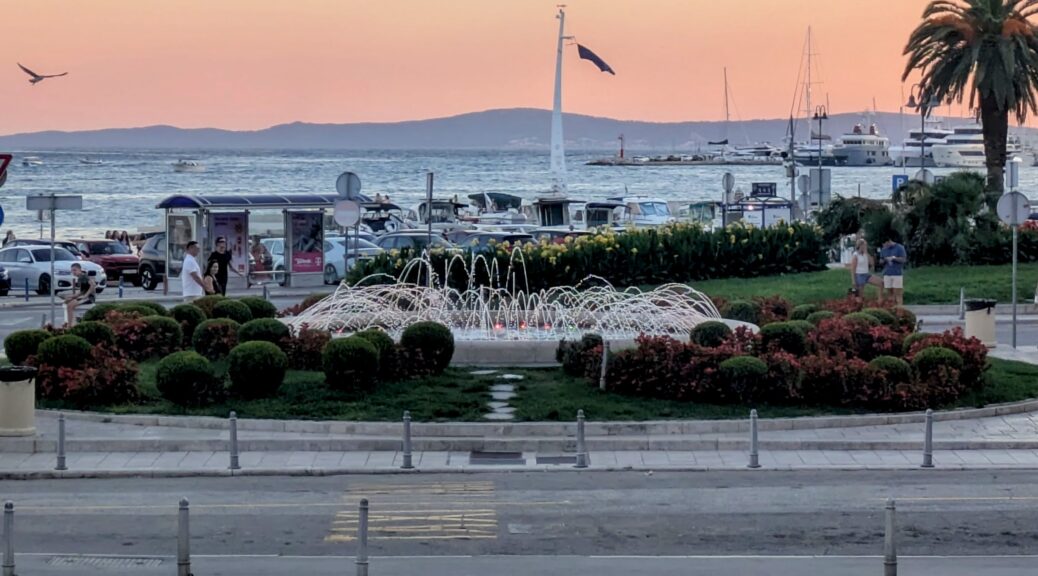
Arriving In Split
Our next destination in Croatia was the seaside city of Split. We decided to skip the bus and take a high-speed catamaran from Dubrovnik instead. The trip took about 5½ hours, but it certainly didn’t feel that long. Along the way, we made several stops at islands to pick up and drop off passengers, which gave us a chance to see a little more of Croatia’s beautiful coastline from the water.
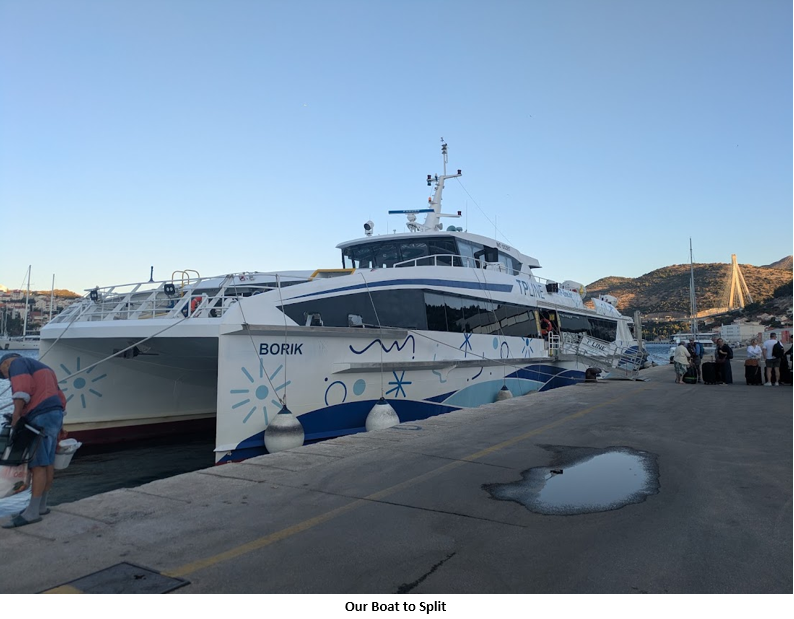
It turned out to be a great way to travel. We could sit back and watch the islands pass by, get up and walk around whenever we wanted, and enjoy a coffee or snack from the small minibar on board. After spending so much time traveling by planes, trains, buses, and cars over the years, there was something especially relaxing about simply cruising up the Adriatic with nowhere to go until we reached Split.
When we arrived at the port, we grabbed a taxi to our apartment. It was only about three-quarters of a mile away, which normally wouldn’t be much of a walk for us, but dragging our carry-on luggage through the streets and up the hills of Split didn’t sound like an enjoyable introduction to the city. Sometimes a short taxi ride is money well spent!
After getting settled into our apartment, we did what we usually do when arriving somewhere new, we headed out on foot to explore. We walked back toward the harbor and the Riva, Split’s main waterfront promenade. Lined with trees, cafés, restaurants, and people enjoying the day, the Riva immediately gave Split a very different feel from Dubrovnik. On one side were the boats and blue waters of the Adriatic; on the other were the ancient walls of Diocletian’s Palace and the maze of narrow streets that make up the old city.

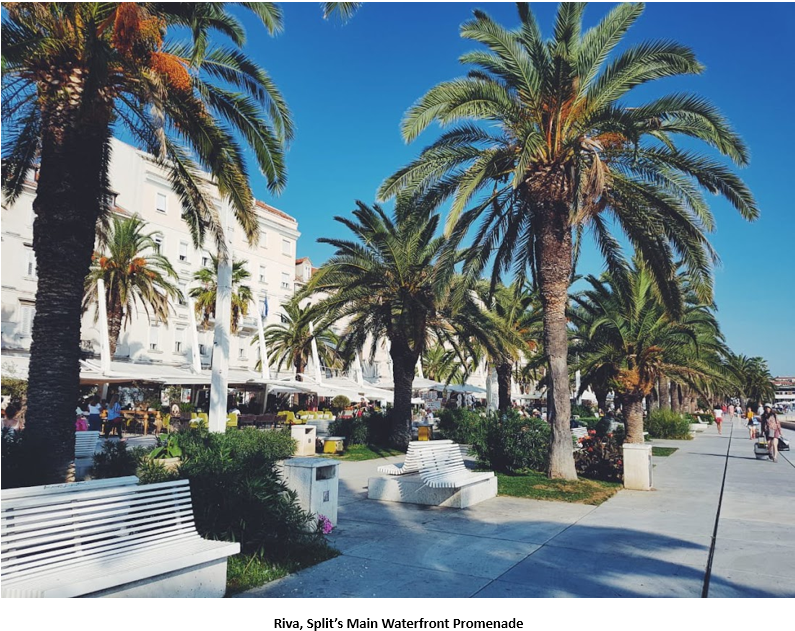
It didn’t take us long to realize that the Riva would become one of those places we would return to again and again during our stay, sometimes with somewhere to go and other times simply to walk, sit, people-watch, and enjoy being in Split.
Diocletian’s Palace
Diocletian’s Palace is really the heart of Split, but the word palace can be a little misleading. It isn’t a single grand building like Versailles. Instead, it is an enormous Roman fortified complex that gradually became part of a living city, with homes, shops, restaurants, churches and narrow streets built into and on top of the original Roman structures.
The palace was built around AD 300 for the Roman Emperor Diocletian. After abdicating as emperor in AD 305, he retired here and lived in the palace until his death. The complex served two purposes: part luxurious imperial residence and part fortified Roman military camp.
The southern half, overlooking the Adriatic Sea, contained Diocletian’s private apartments and ceremonial spaces. The northern half housed soldiers, servants, storage areas and many of the other functions needed to support the imperial household. Two main Roman streets, each about six meters wide, crossed near the center and divided the palace into four sections.
What we find most interesting is what happened here after the Roman Empire. When the city was devastated in the early 7th century, many of its residents took refuge inside the old palace walls. Rather than abandoning the complex, they began building their lives right into it. Roman rooms became homes, ancient walls became part of newer buildings, and medieval streets and churches were built among the original Roman structures. Over the centuries, even the two main Roman streets were largely swallowed up by the maze of buildings and narrow passageways that developed inside the palace.
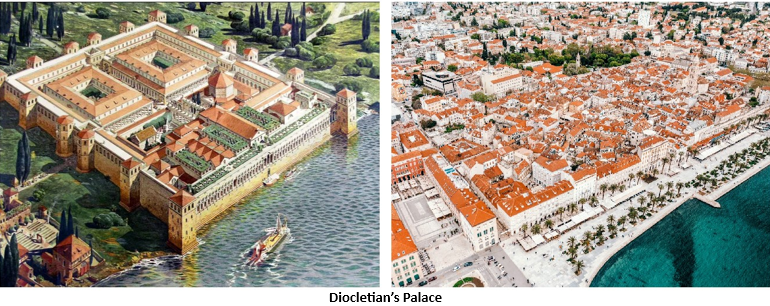
That explains why we sometimes find ourselves a little confused as we wander around. We’ll stop and look at a wall or building and wonder: Is this Roman? Medieval? Renaissance? Or something much newer? Often, the answer seems to be a little bit of everything. One building may have a Roman foundation, medieval walls, and a modern restaurant occupying the ground floor.
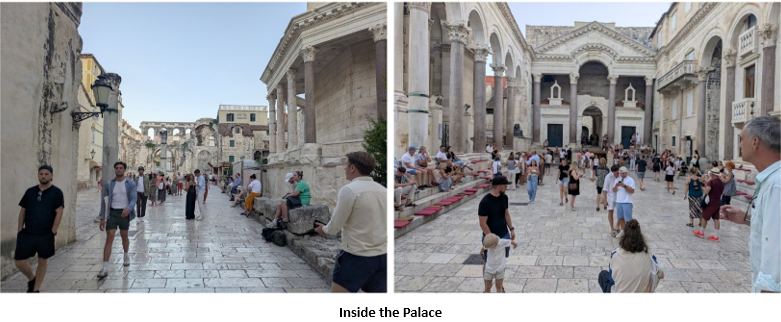
That has become one of our favorite things about exploring Split. Diocletian’s Palace doesn’t really feel like a museum or an archaeological site. There aren’t boundaries separating the ancient ruins from everyday life. We can walk past a Roman column, turn down a tiny stone alley, pass someone’s apartment, and suddenly come upon a café or restaurant tucked into a centuries-old building.
Along the Waterfront
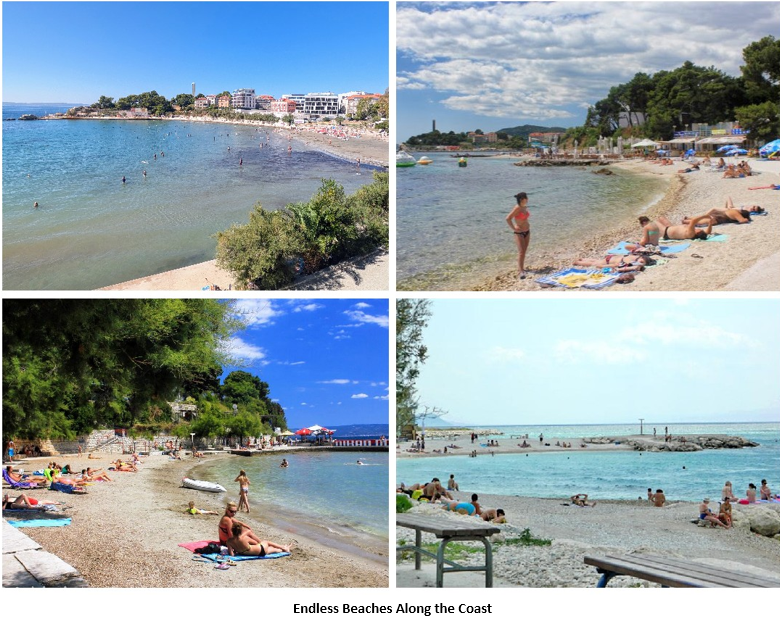
One of the things we have enjoyed about staying in Split is how easy it is to get to the water. From our apartment, we can walk down toward the coast and follow the seaside paths around the Marjan Peninsula, which is very close to our apartment, passing small beaches, rocky coves, and countless places where people simply put down a towel and jump into the incredibly clear Adriatic. We especially like that you don’t need to go to an official beach; almost anywhere along the rocky shoreline can become your own little swimming spot.
The seaside paths are also great for walking, running and biking. Around Marjan, the trails wind through pine forests and along the water, while in the opposite direction we can walk through the Riva and continue past the beaches of Bačvice, Ovčice and Firule toward Trstenik and Žnjan. There are miles to explore, and the chance to stop for a swim makes it even better.
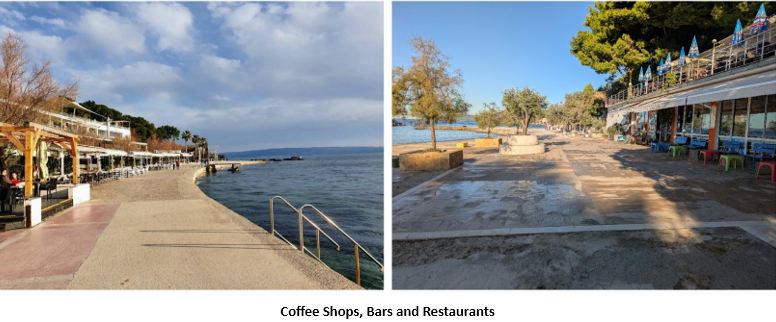
Along the way there are plenty of beach bars, cafés and restaurants, many with outdoor terraces overlooking the Adriatic. It is easy to combine our walks at the beach with a cold drink, coffee or meal while sitting just a few steps from the water.
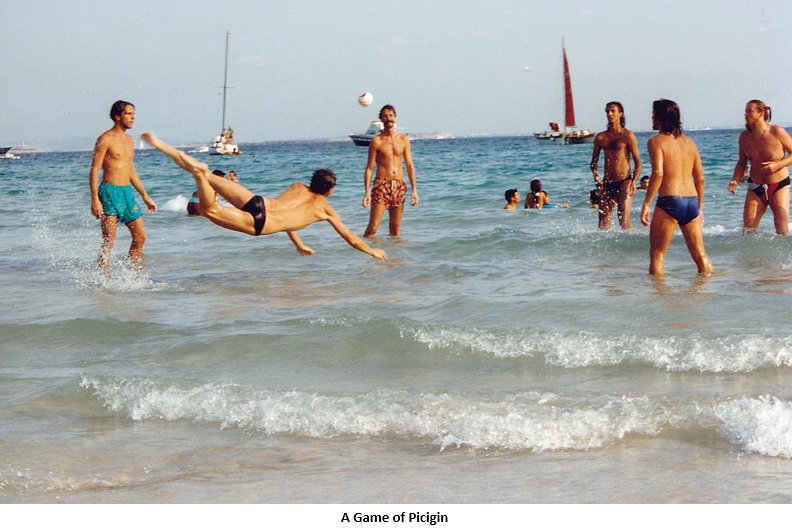
Sports are part of the waterfront as well. We watched locals play Picigin. Picigin is a traditional game that originated right here in Split, most famously at Bačvice Beach. Players stand in the shallow water and use their hands to keep a small ball from touching the water. There are no teams, points or winners; the fun is in keeping the ball in the air, often with players making dramatic dives and splashes to save it. It’s been played in Split for more than a century and is one of those local traditions that seems to fit perfectly with the city’s love of the sea.
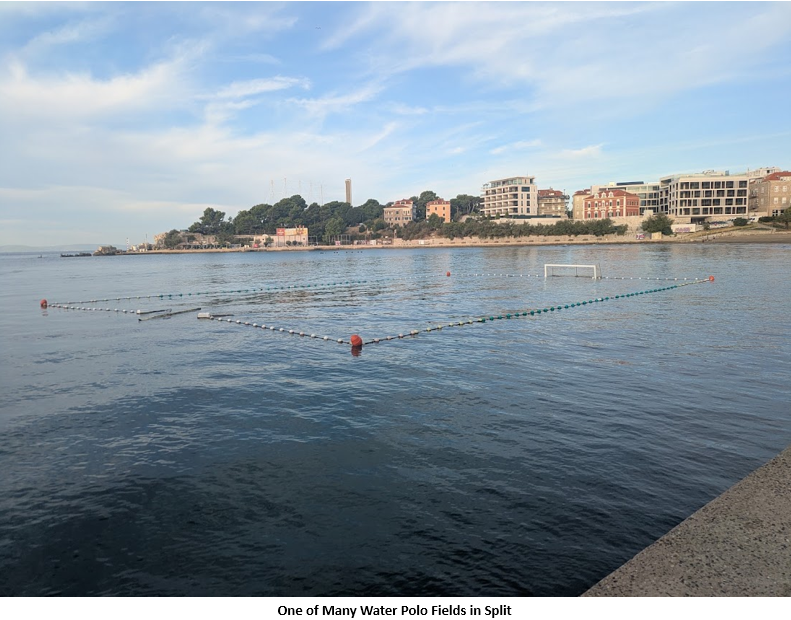
And then there is water polo, which is extremely popular in Croatia. We’ve noticed water-polo goals set up right in the sea near where we’re staying and all along the coast. Coming from the U.S., it’s a little unusual to see a water-polo court floating in the Adriatic, but in Split it’s perfectly normal.
That is probably what we enjoy most about Split’s waterfront. You can walk or bike for miles, stop for a swim, have a drink or something to eat at a seaside café, and then continue along the coast. The Adriatic isn’t just something people look at here; they swim in it, play in it, eat and drink beside it, and make it part of their everyday lives.