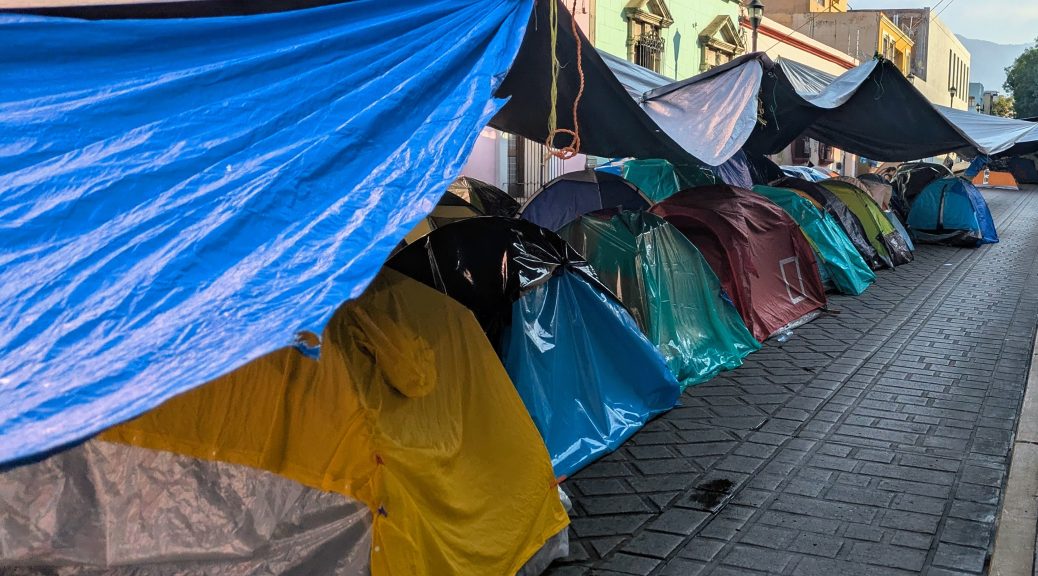
Tent City-Oaxaca, Mexico
Heat Reprieve
Summer has arrived in Florida. Early morning temperatures already hover between 75 and 80 degrees, with humidity levels nearly as high. By late morning, the mercury has climbed into the upper 80s and low 90s—and it’s only June. It’s shaping up to be a long, hot summer in Sarasota, so we decided to head south in search of cooler weather.
Wait, south for cooler weather?
It sounds backwards, but that’s exactly what we found in Oaxaca, Mexico. Sitting at an elevation of more than 5,000 feet, Oaxaca enjoys a climate that feels worlds apart from Florida’s sweltering summer heat. Days are warm and pleasant, evenings are comfortable, and morning walks don’t require a change of clothes afterward. While Sarasota settles in for months of heat and humidity, we traded beach weather for mountain air, colonial streets, and some enjoyable summer temperatures. We are spending the entire month of June in Oaxaca, escaping the heat and humidity back home and, hopefully, making the summer feel a little shorter. The city’s pleasant climate, rich culture, and slower pace make it an ideal place to settle in for a month and experience daily life beyond the typical tourist visit.
Tent City
One of the most unexpected parts of our visit to Oaxaca so far has been witnessing the teachers’ strike that has transformed the city’s historic center. What is normally a gathering place for locals and tourists has become a sprawling encampment of tents, tarps, banners, and communal kitchens.
Walking through the Zócalo (city center) and surrounding streets, we initially assumed we were seeing a temporary protest. Instead, we discovered a highly organized community of teachers living here around the clock. They cook meals together, hold daily assemblies, organize security and logistics, and coordinate demonstrations across the state. The camp feels less like a protest site and more like a temporary village that has sprung up in the heart of Oaxaca.
The strike also affects daily life well beyond the city center. We experienced it immediately upon arrival when our taxi driver was forced to take several lengthy detours from the airport to our apartment because major roads had been closed by demonstrations and blockades. Throughout the city, traffic patterns have been disrupted, and both locals and visitors have had to adapt to unexpected delays. We found it challenging to navigate the city center.
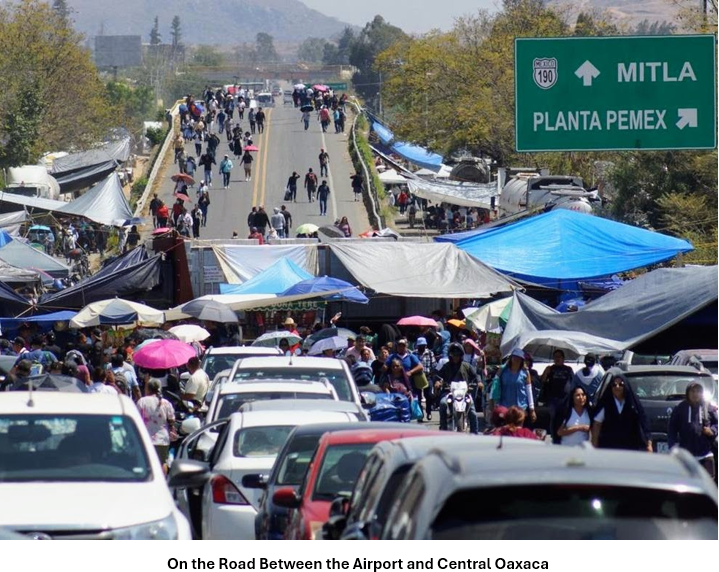
To make our way through the streets, we ducked beneath ropes and tarps, stepped over power cords and cables, and wove around tents that lined the sidewalks in front of shops and businesses. Food vendors had also set up throughout the area, adding to the congestion as they served the teachers and supporters participating in the strike.


The movement is led by CNTE Section 22, the powerful Oaxaca branch of Mexico’s dissident teachers’ movement. It is the largest or second largest section in the country with roughly 70,000 to 80,000 members. Section 22 is far more than a labor union. Its roots extend deep into Oaxaca’s rural and indigenous communities, where teachers often serve as educators, community leaders, and advocates.
The teachers’ central grievance is a 2007 pension reform that shifted many public employees from a traditional government pension system into individual retirement accounts.
What makes this moment especially significant is its timing. The strike is taking place just days before the opening of the 2026 FIFA World Cup on June 11th, and the teachers know that this gives them unusual leverage. The federal government wants stability and positive international attention as millions of eyes turn toward Mexico. The teachers, in turn, believe that this is one of the few moments when the government may feel pressure to make meaningful concessions.
As visitors, we can appreciate both sides of the situation. The teachers’ concerns about pensions, retirement security, and public education are clearly heartfelt and deeply rooted. At the same time, the strike has disrupted daily life for residents, students, businesses, and travelers alike.
This was not the first time we had encountered strikes and protests during our travels. We found ourselves in the middle of demonstrations in Panama, Mexico City, Ecuador, and, most notably, the violent protests in Chile.
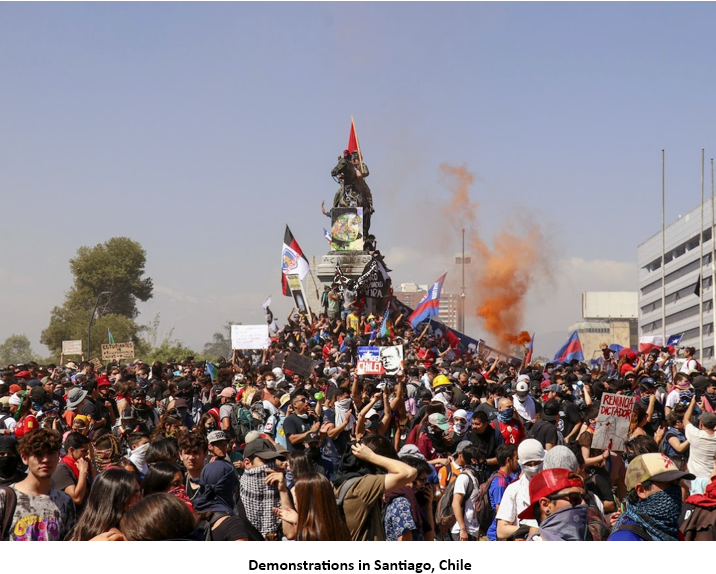
In each of those cases, the protests took the form of marches, roadblocks, and occasional vandalism that disrupted daily life but came and went throughout the day.
The teachers’ strike in Oaxaca is different. While there are occasional marches and roadblocks, it is peaceful, organized, and constant. Thousands of teachers have established a 24-hour presence in the city center. Tents line the plazas and sidewalks, tarps stretch across the streets, and entire blocks have effectively become a temporary encampment.
While the strike has certainly made navigating the city more challenging, its character is very different from the protests we have witnessed elsewhere. There is little sense of confrontation or violence. Instead, it feels more like a community living in public spaces while waiting for negotiations to produce a settlement.
So, after only a few short days in Oaxaca and witnessing the encampment firsthand, we have come to understand better the complexity of the issues involved. We are hopeful that a peaceful resolution can be reached soon—one that addresses the teachers’ concerns while allowing Oaxaca to return to the beauty, energy, and charm that make it such a special place to visit.
One thought on “Tent City-Oaxaca, Mexico”
This is very interesting and beautifully written. Thank you, Marc and Kathy.
I will be visiting Oaxaca in October, going along to help take care of my new baby grandson while his dad and mom (a teacher) attend a wedding.