
Exploring Morocco
After a week in Marrakech, we were ready to see more of Morocco. Our first stop was Rabat, the country’s capital. With a population of two million, Rabat is Morocco’s second-largest city and sits on the Atlantic coast. So, of course, we were excited to try fresh seafood prepared the Moroccan way, something the city is known for.
Rabat
To get there, we took the train, which was our favorite way to travel around the country. Morocco has a well-developed rail network that connects many of its cities. There is even a high-speed rail line linking Casablanca and Tangier, with plans to expand the system in the future. Throughout our time in Morocco, we relied on the trains. They were convenient, affordable, and offered front-row views of the countryside.
Mausoleum of Mohammed V
The Mausoleum of Mohammed V is one of the most important landmarks in Rabat, honoring the leader who helped guide Morocco to independence from France in 1956. Completed in 1971, the mausoleum sits beside the historic Hassan Tower and is built in traditional Moroccan architectural style, with white marble walls, intricate tilework, carved cedar wood, and a green tiled roof that symbolizes Islam. Royal guards in ceremonial dress stand watch at the entrance to the grounds as well as inside and outside the mausoleum, adding a sense of formality and importance to the site.
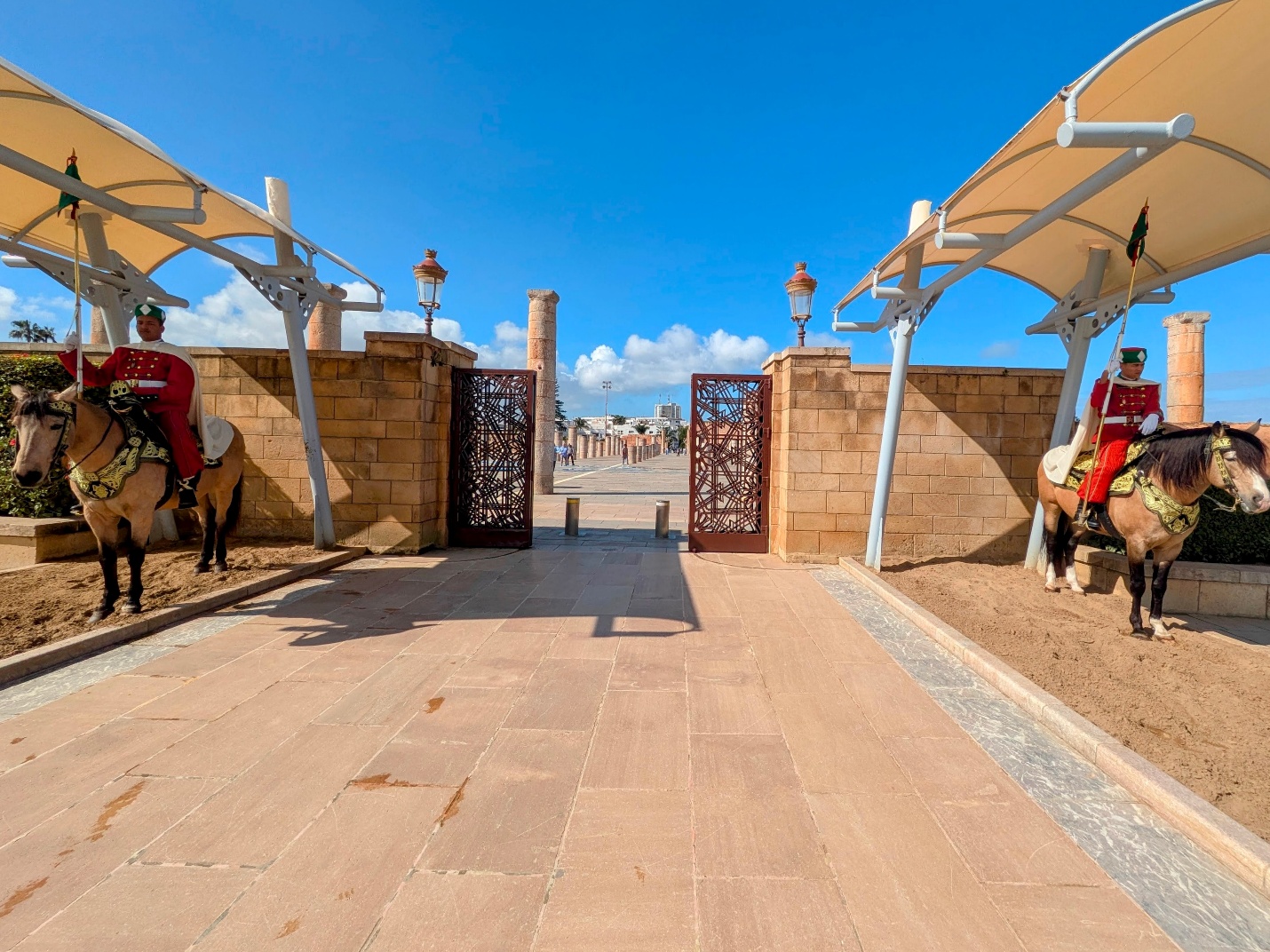
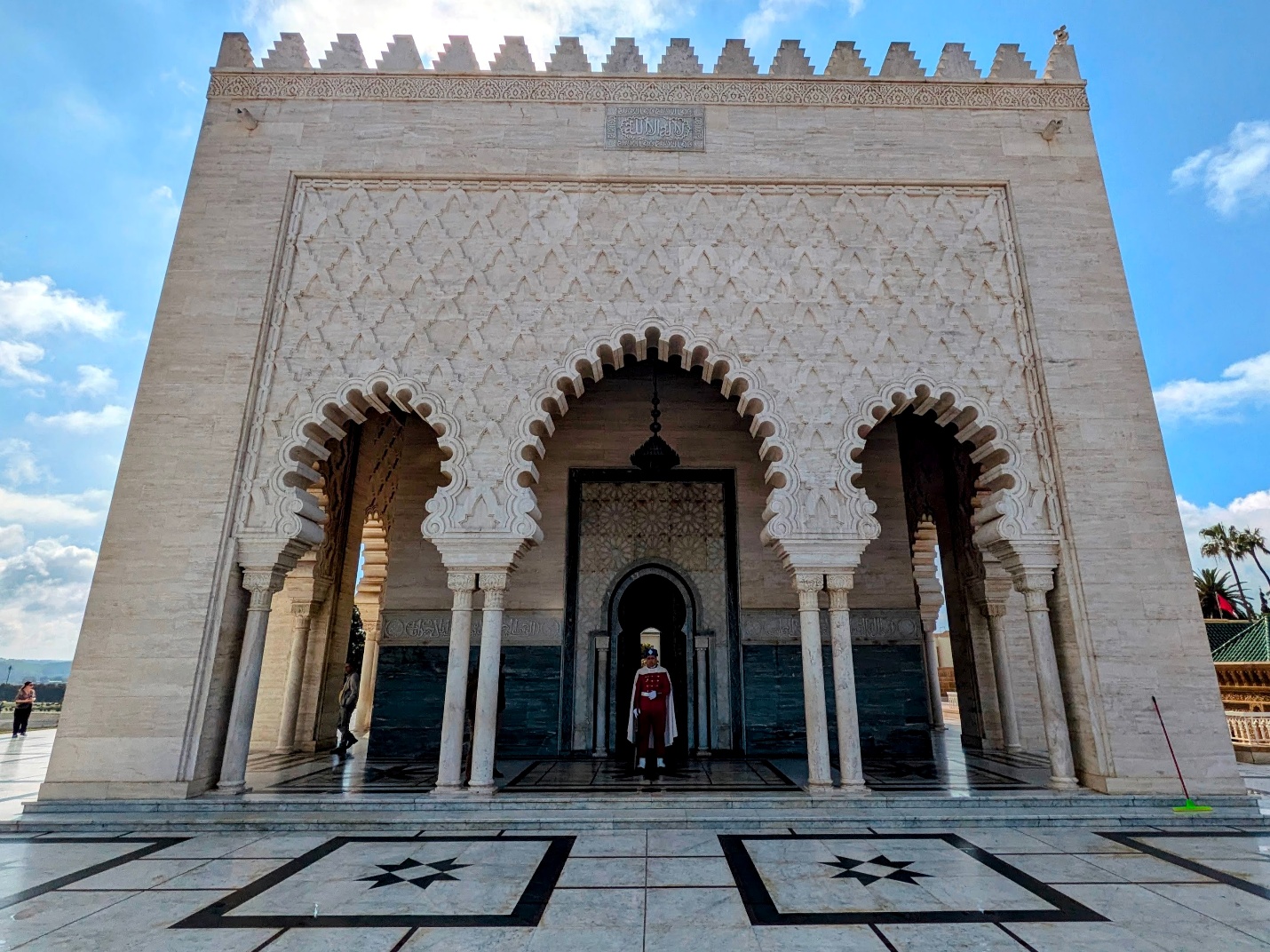
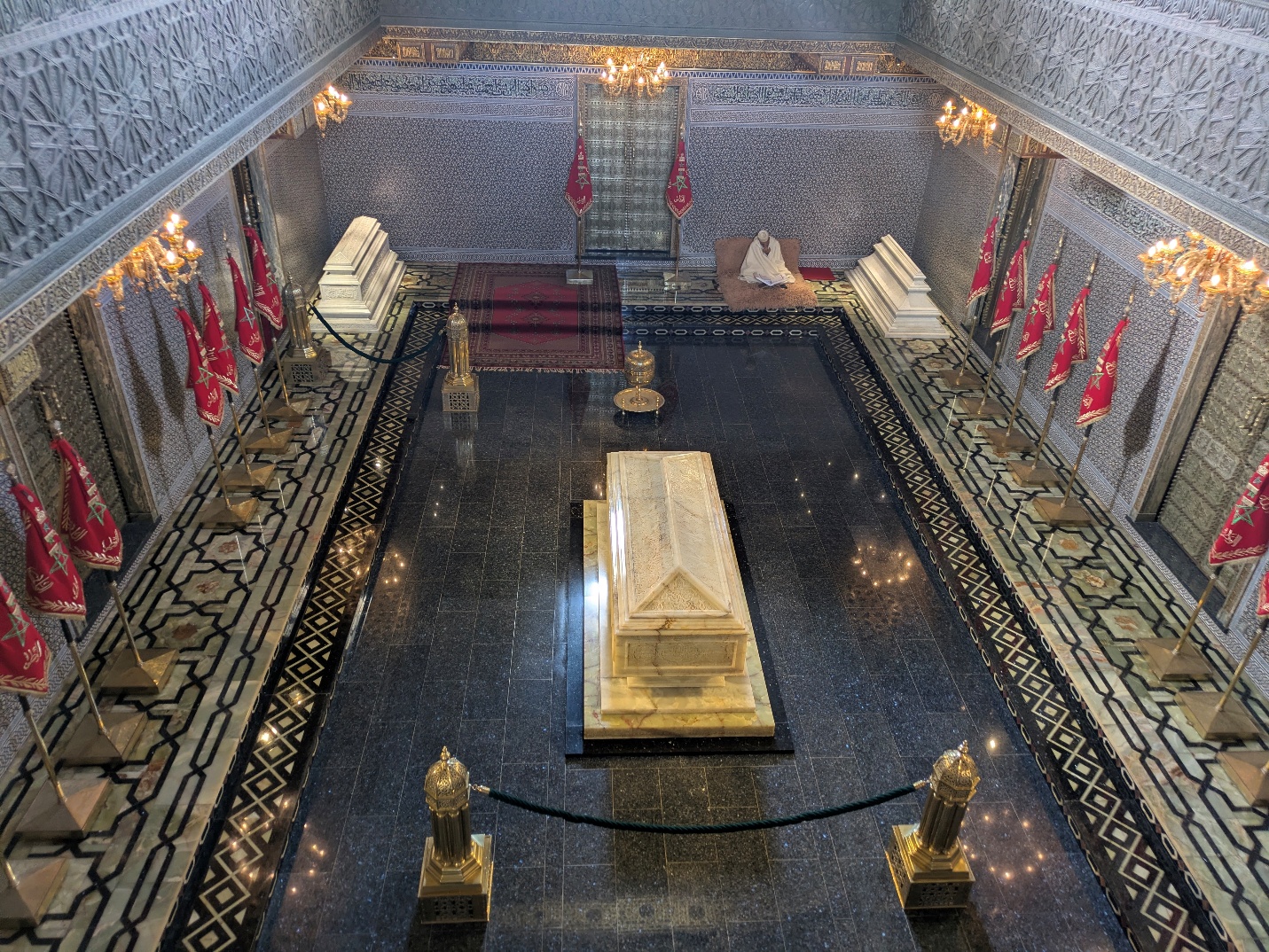
Inside the mausoleum were the tombs of Mohammed V and his two sons, King Hassan II and Prince Abdallah. We looked down onto the tomb chamber from a balcony, where the decorated marble floor and intricate craftsmanship could be fully appreciated.
Kasbah of the Udayas
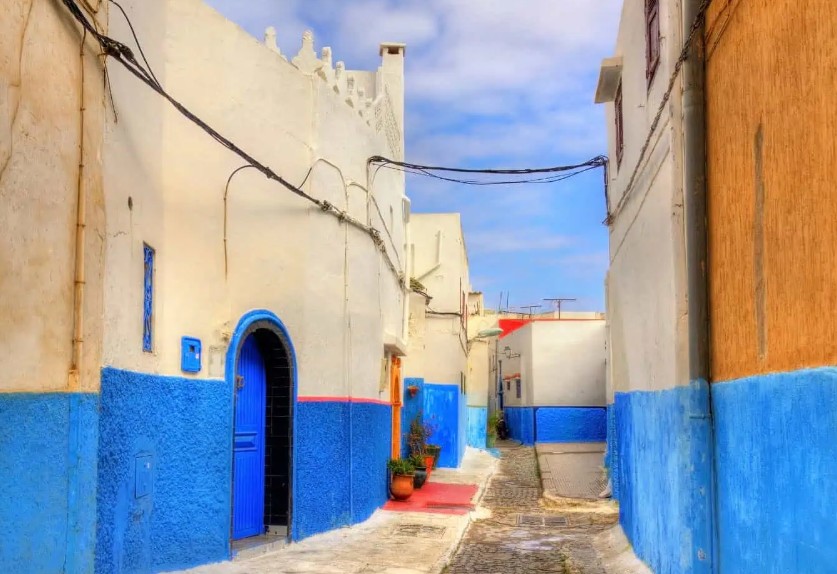
The Kasbah of the Udayas is one of Rabat’s most picturesque and historic areas, perched on a cliff overlooking the Atlantic Ocean and the mouth of the Bou Regreg River. Originally built as a fortress in the 12th century, today it is known for its narrow streets lined with white houses and blue doors and walls, giving it a charm reminiscent of Mediterranean coastal villages.
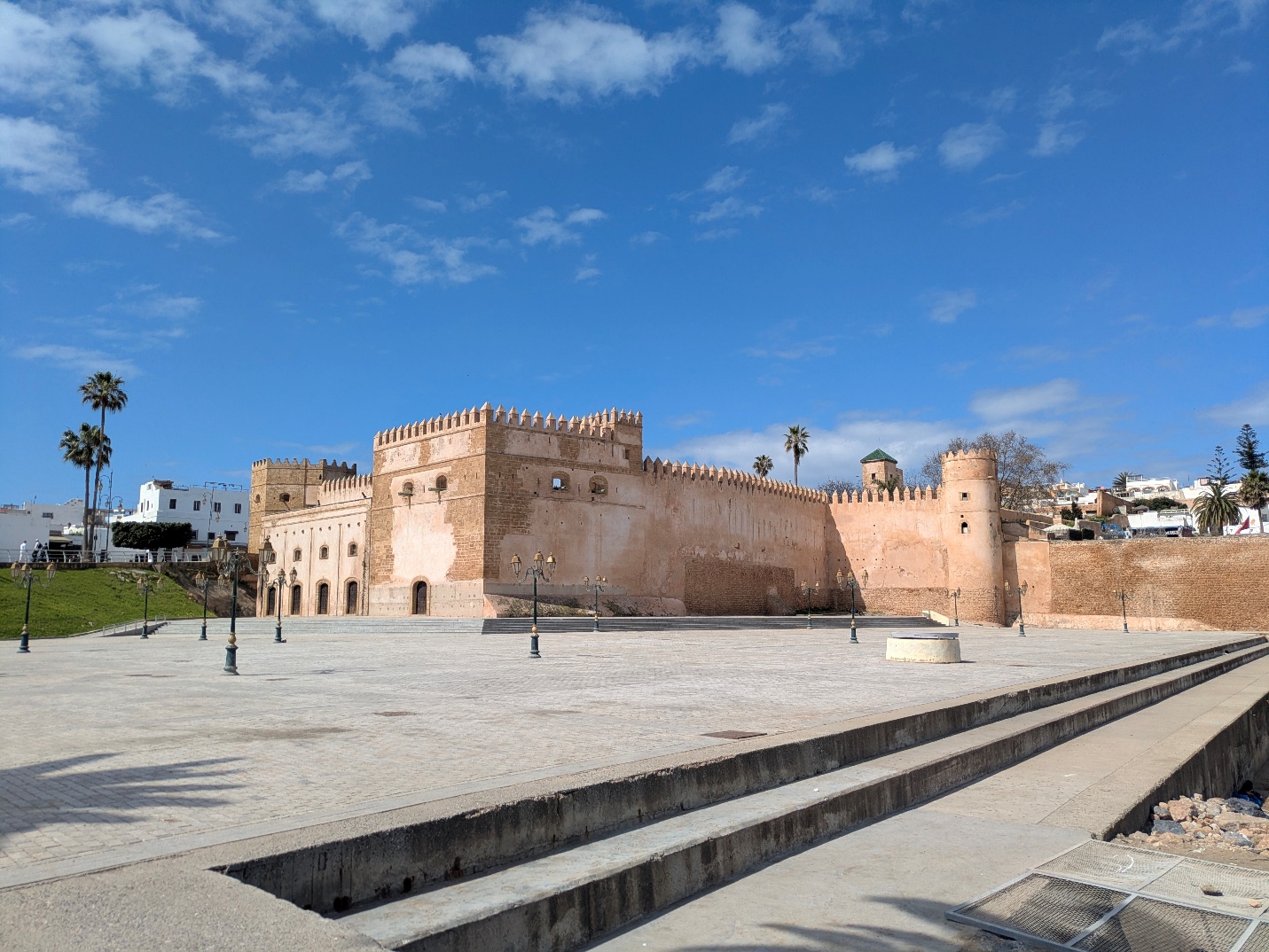

As we wandered through the quiet alleys, we enjoyed views of the ocean from the ancient ramparts. Compared to the chaos of Marrakesh, this kasbah felt relaxing, no crowds pushing past, no vendors calling out, just a calm stroll through the narrow streets of this beautiful historic neighborhood.
Fez
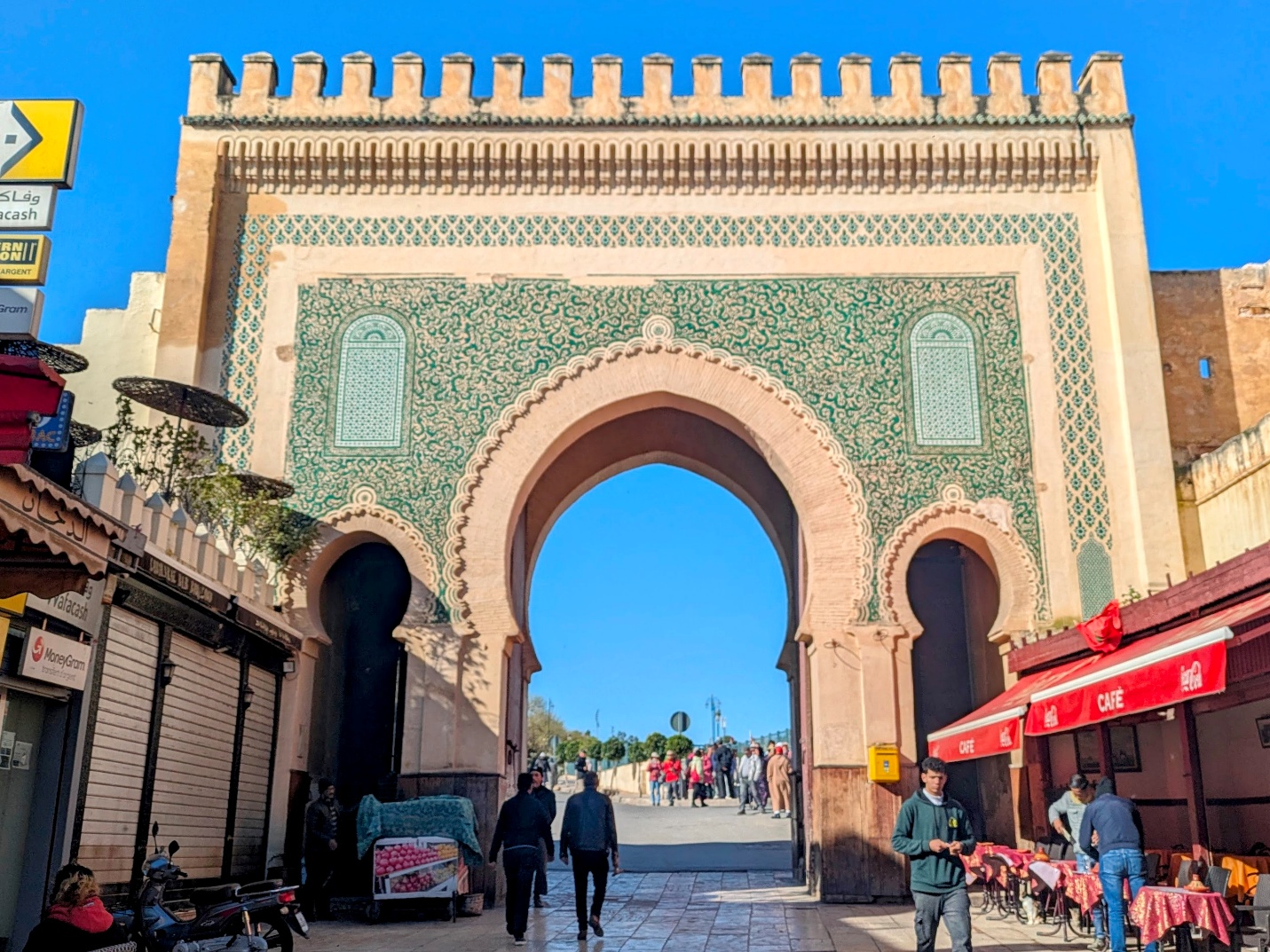
After 3 days in Rabat, we hopped on a train for a 3-hour ride to the city of Fez. Fez is one of Morocco’s oldest and most historic cities and is often considered the country’s cultural and spiritual center. Founded in the 9th century, the city is famous for its vast medina (historic neighborhood) named Fes el-Bali, a UNESCO World Heritage site. It is one of the largest and most complex historic city centers in the world, containing over 9,000 narrow streets and passageways, some so tight that you have to walk single file or turn sideways to pass through.

There are 13 major gates leading into the old city. These gates are called “Bab” in Arabic. They were originally built to control entry into the city and were often closed at night for security. Today, they remain open, allowing people to move freely in and out of the medina.
Fez and Marrakech are two of Morocco’s most famous cities, but they felt very different to us. The medina in Fez felt more traditional, quieter, and in more authentic. Its maze of narrow alleys, historic mosques, and centuries-old workshops made it feel like we were stepping back in time. Walking through the medina, we had the sense that daily life here hadn’t changed much in generations.
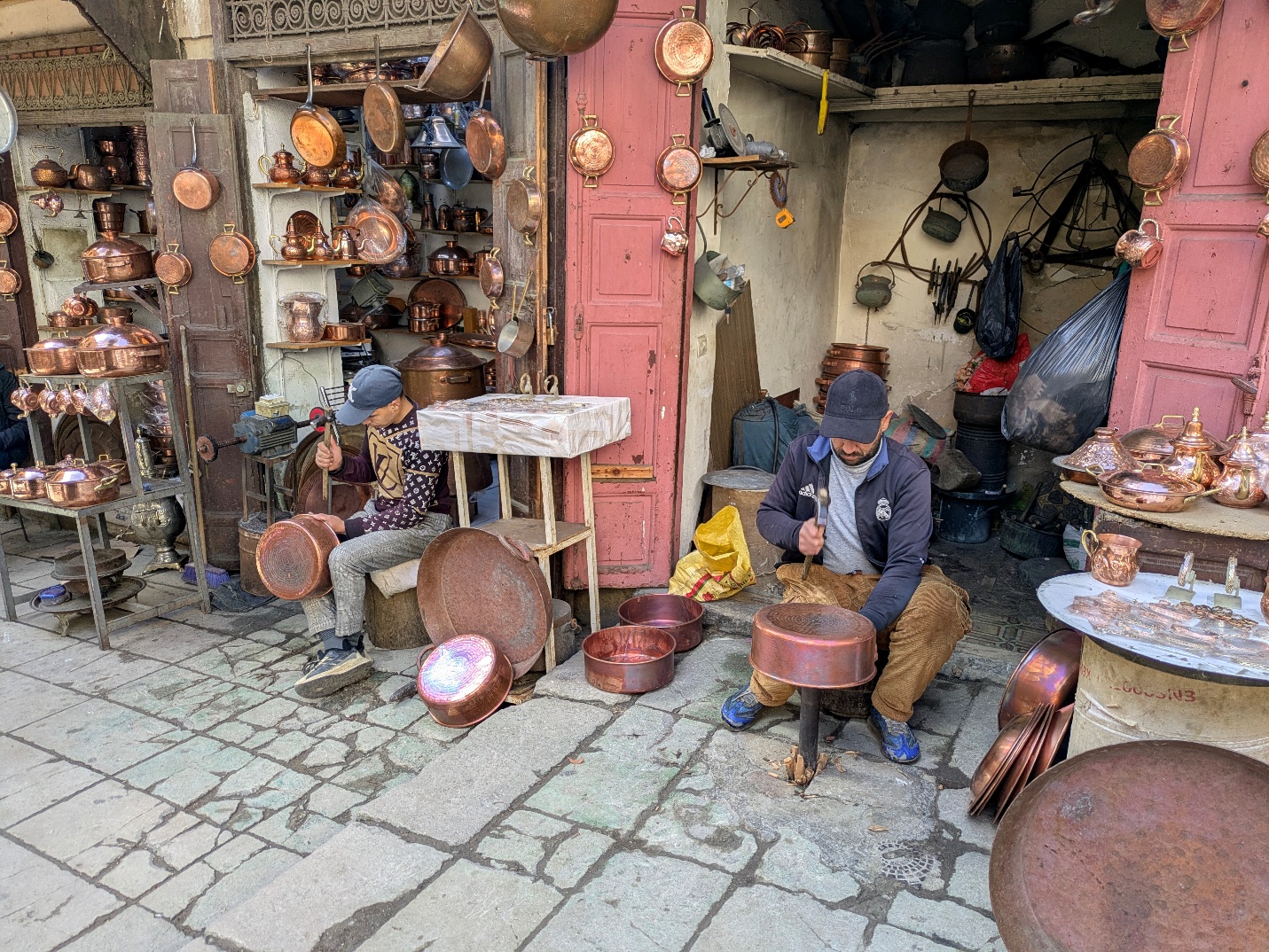
One of the things that stood out most was the number of artisans still producing goods by hand in tiny shops tucked along the alleyways. We saw craftsmen creating jewelry, hammering large metal pieces into pots, sewing garments (almost always done by men), and carving intricate wood designs. The sound of tools tapping on metal and the sight of people patiently working on their crafts gave the medina a living, working atmosphere rather than just a place built for tourists.
Marrakech, by contrast, was livelier and more energetic, centered around the bustling Jemaa el-Fnaa square with street performers, food stalls, and a constant buzz of activity. While Marrakech felt tourist-oriented and fast-paced, Fez felt historic and immersive, offering a glimpse into Morocco’s traditions and everyday life.
Chouara Tannery
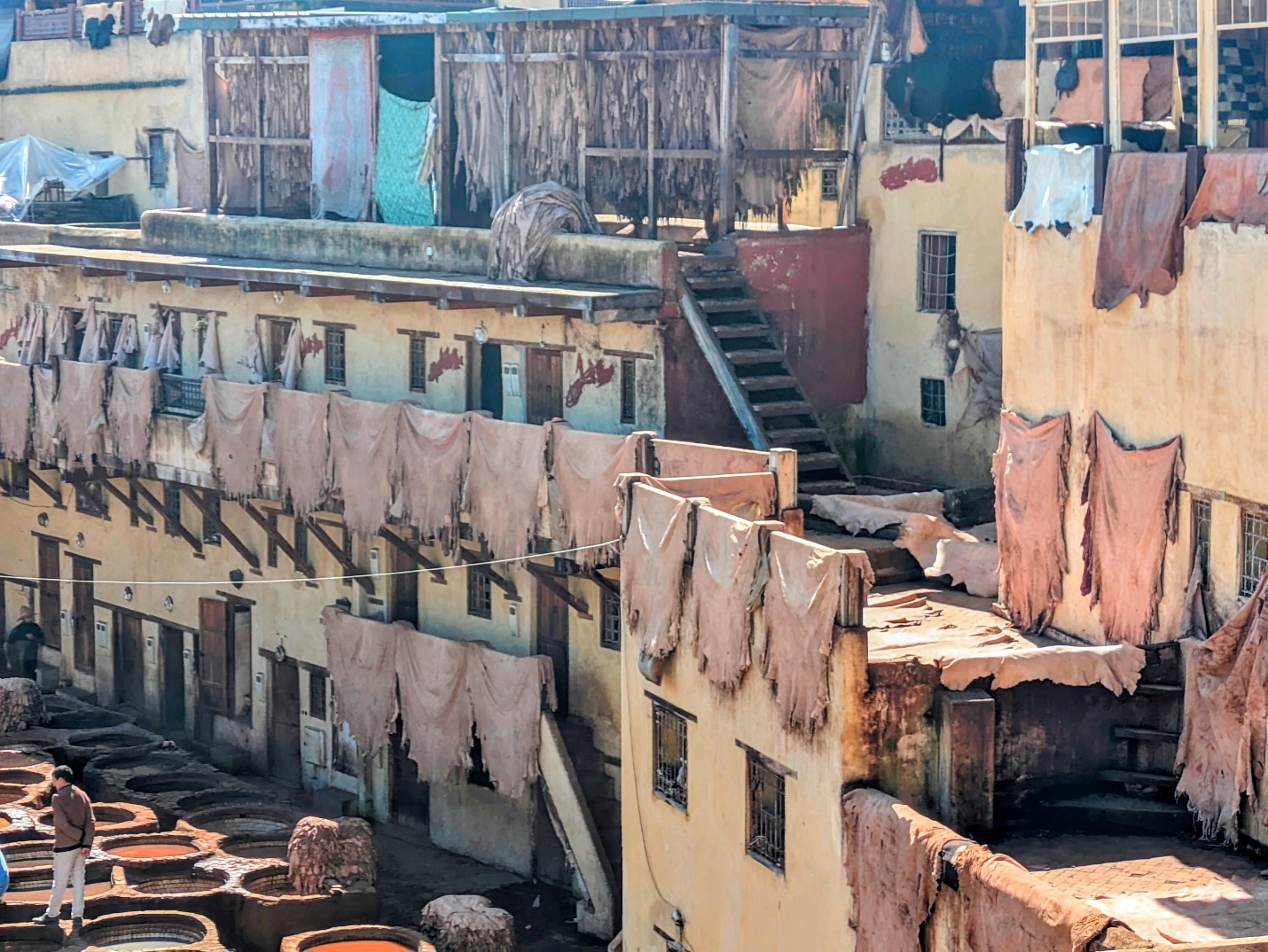
The leather tanneries of Fez are one of the city’s most fascinating sights and have been operating in the same way for nearly a thousand years. The most famous is the Chouara Tannery, located deep inside the medina. From the terraces and balconies of nearby buildings, we were able to look down over dozens of round stone vats filled with dyes and liquids used to process cow, goat, sheep, and camel animal hides. Workers moved from vat to vat, soaking, scraping, and dyeing the leather using techniques that have changed very little over the centuries. The hides are first softened in a mixture that traditionally includes lime and pigeon droppings, then washed and dyed with natural colors made from plants and minerals.
While the tanneries in Fez and Marrakech use the same centuries-old process, they feel quite different. The Chouara Tannery in Fez is larger and more dramatic, with dozens of colorful vats spread across a wide courtyard. Looking down from above, it created the iconic scene people picture when they think of Moroccan leather production.

The tannery in Marrakech is smaller and more scattered, with fewer vats and a more modest setup. It doesn’t have the same sweeping view, but it does offer a quieter and more up-close look at the work. Seeing both gave us a better appreciation for this ancient craft that has been part of Moroccan life for generations.
The Spa
After more than three weeks on the road, we decided it was the perfect time to slow down for a day and experience a traditional Moroccan hammam. A hammam is a public bathhouse that has long been part of everyday life in Morocco, a place where people come not only to wash but also to relax and socialize. We opted for a private couple’s hammam at a spa in Fez.
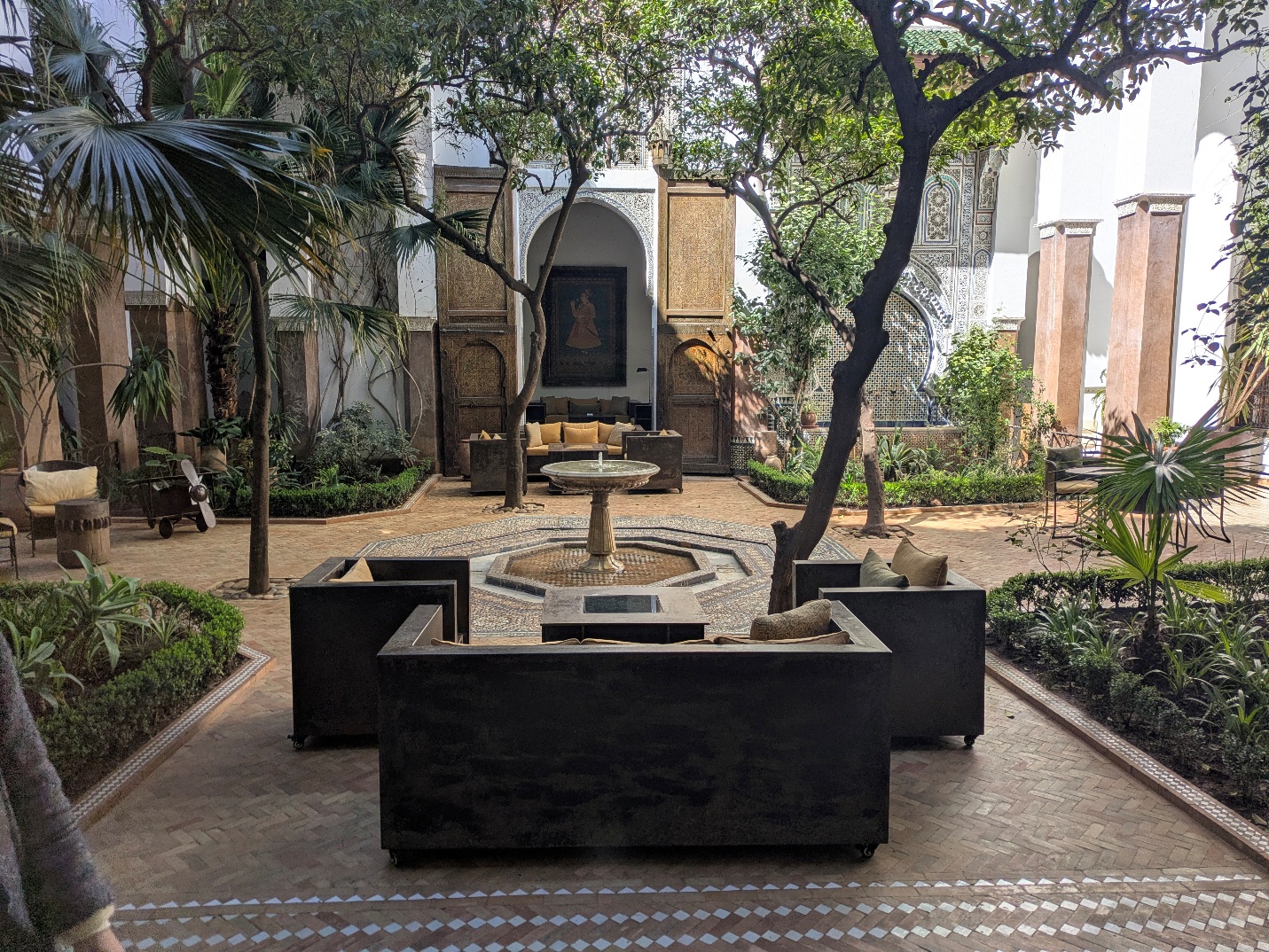
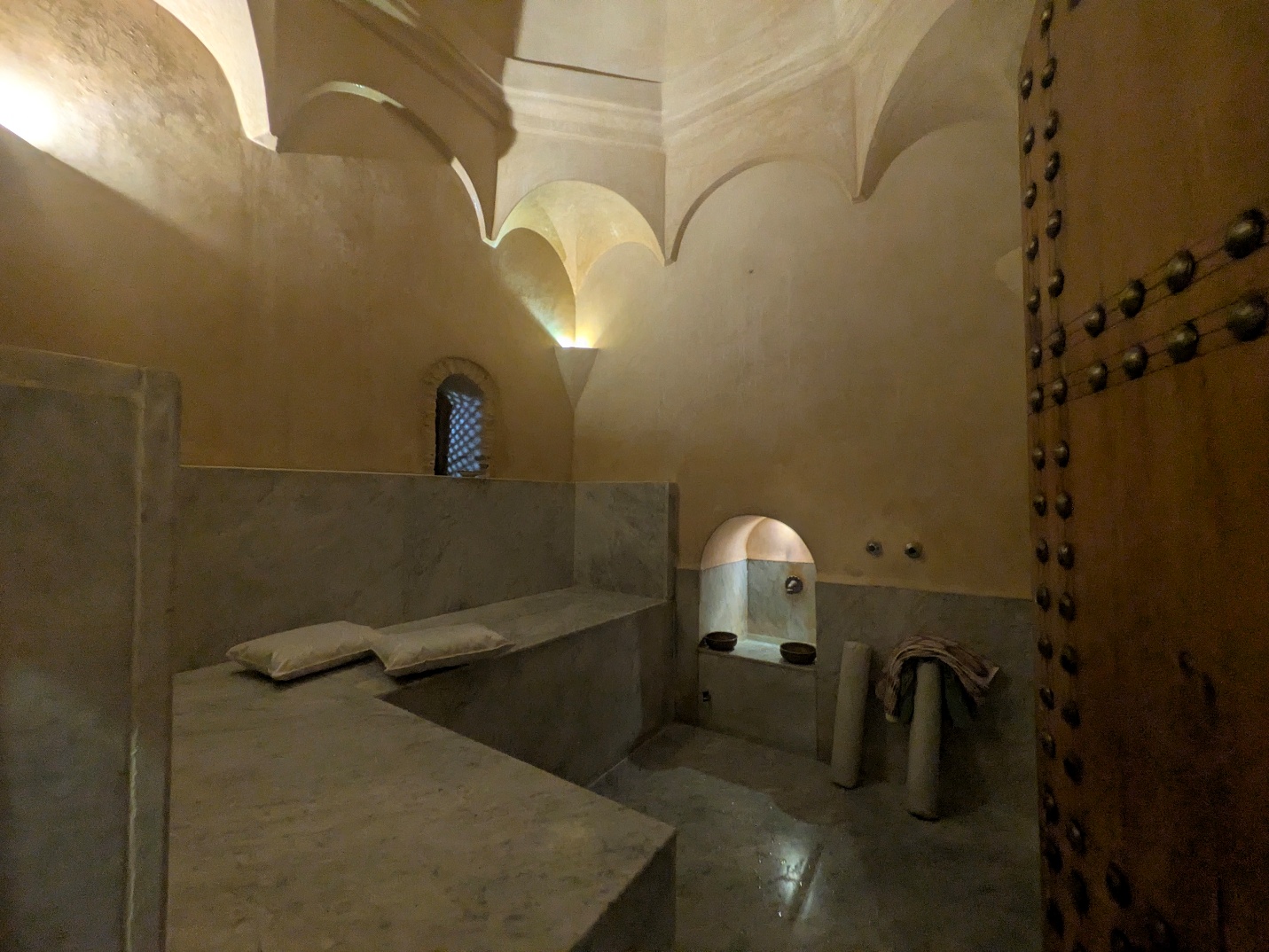
The ritual began in a warm steam room that helps open the pores, preparing the skin for a deep cleaning.
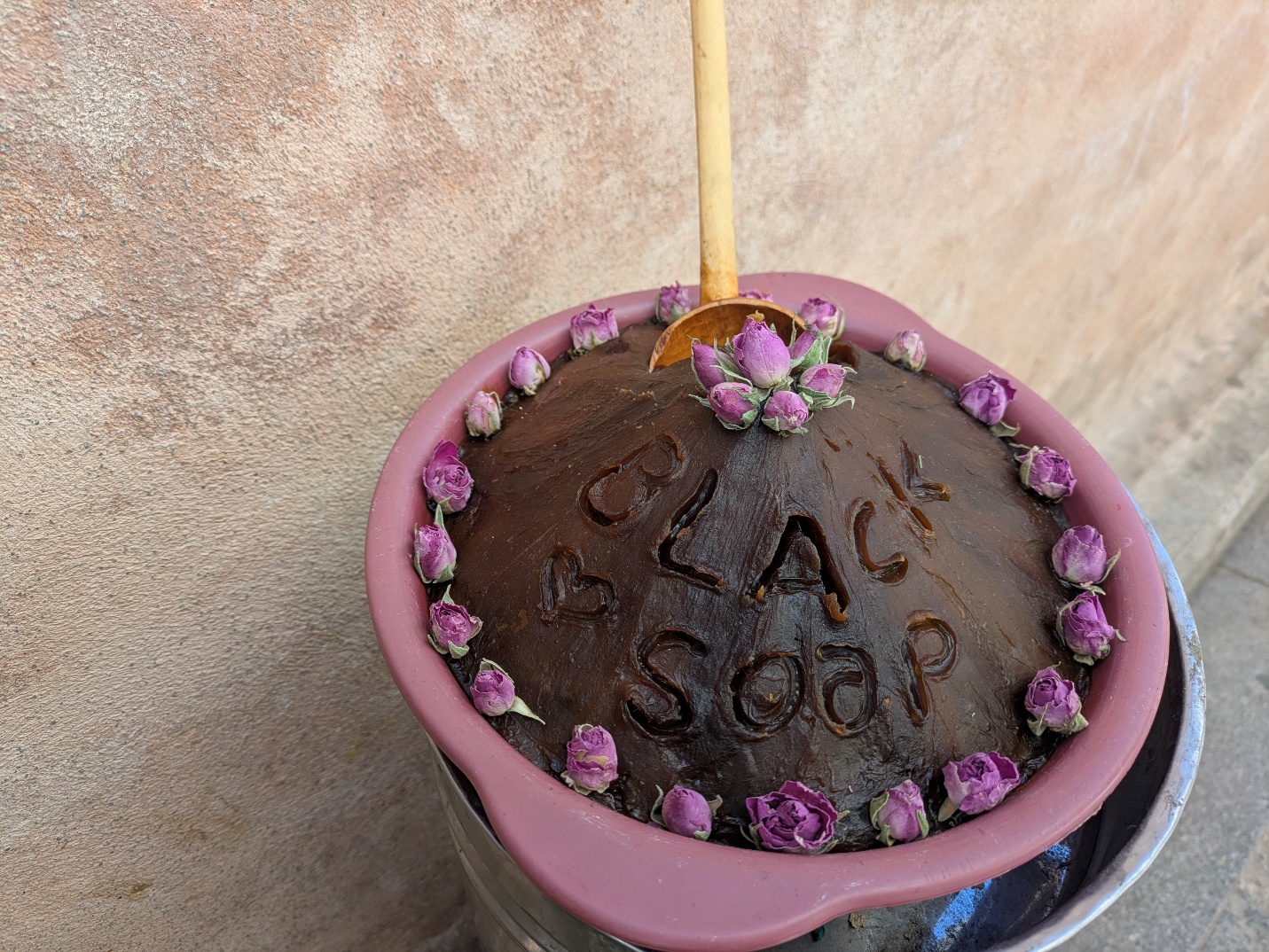
Using savon noir, a soft black olive soap, the skin is softened before an attendant scrubs the body with a rough exfoliating glove called a kessa, removing layers of dead skin we didn’t realize were there.
Afterward, everything is rinsed away with buckets of warm water. We took a shower to remove any residue and finished with a relaxing massage.
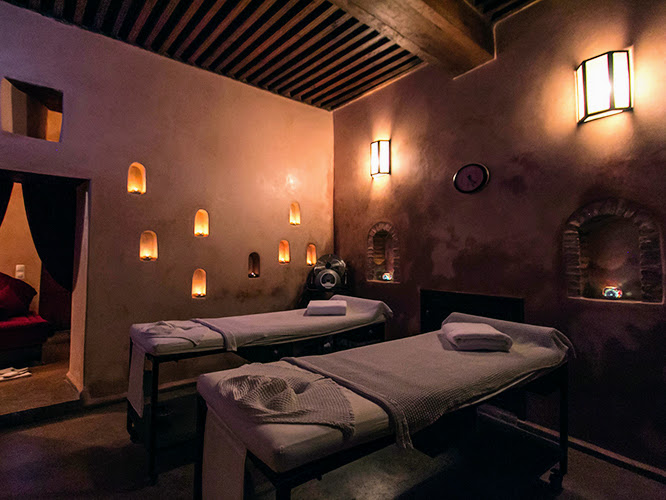
It left us feeling completely refreshed, and it was easy to see why this centuries-old tradition remains an important and social part of Moroccan life.
When we were done, we went to the rooftop patio for mint tea and lunch. We enjoyed our meal so much that we returned later for an elegant candlelit dinner.
Casablanca
We saved Casablanca for our final stop before heading home. At first, we had planned to spend four or five days there, thinking it would be a good place to wrap up the trip. But as we traveled through Morocco and talked with locals and other travelers, we kept hearing the same advice: one or two days in Casablanca is enough to see the main highlights. One person even said, “Why are you going to Casablanca because of a movie made over 80 years ago?”
Unlike cities such as Marrakech or Fez, Casablanca is more of a modern business hub than a traditional tourist destination. It’s Morocco’s largest city and economic center, but it doesn’t have the same maze-like medinas or centuries-old atmosphere that define the country’s other famous cities. In the end, we decided to follow the advice we had been hearing and shorten our stay, leaving ourselves just enough time to see the city’s famous landmark, the Hassan II Mosque, and enjoy time along the Atlantic before heading home.
Hassan II Mosque
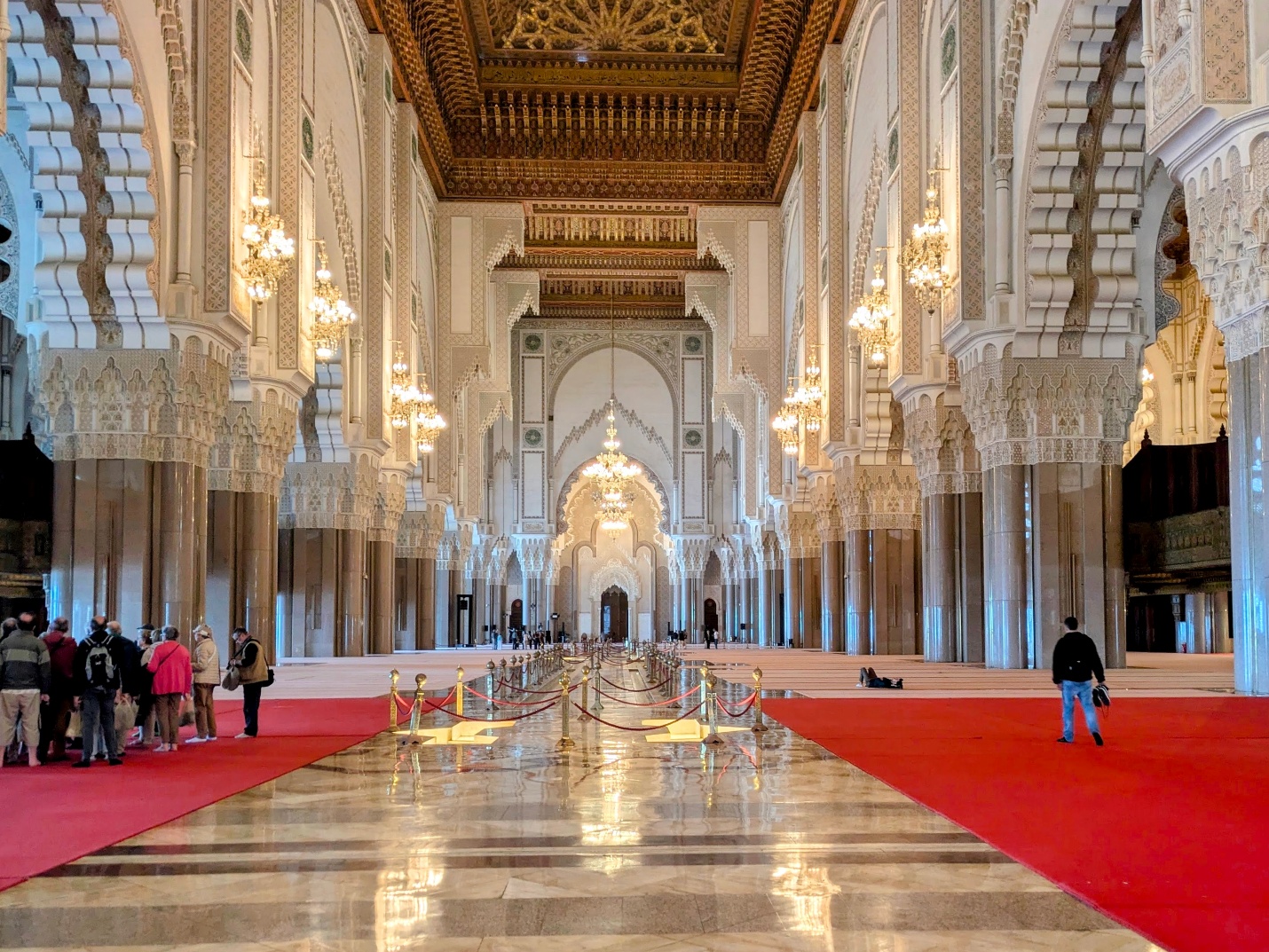
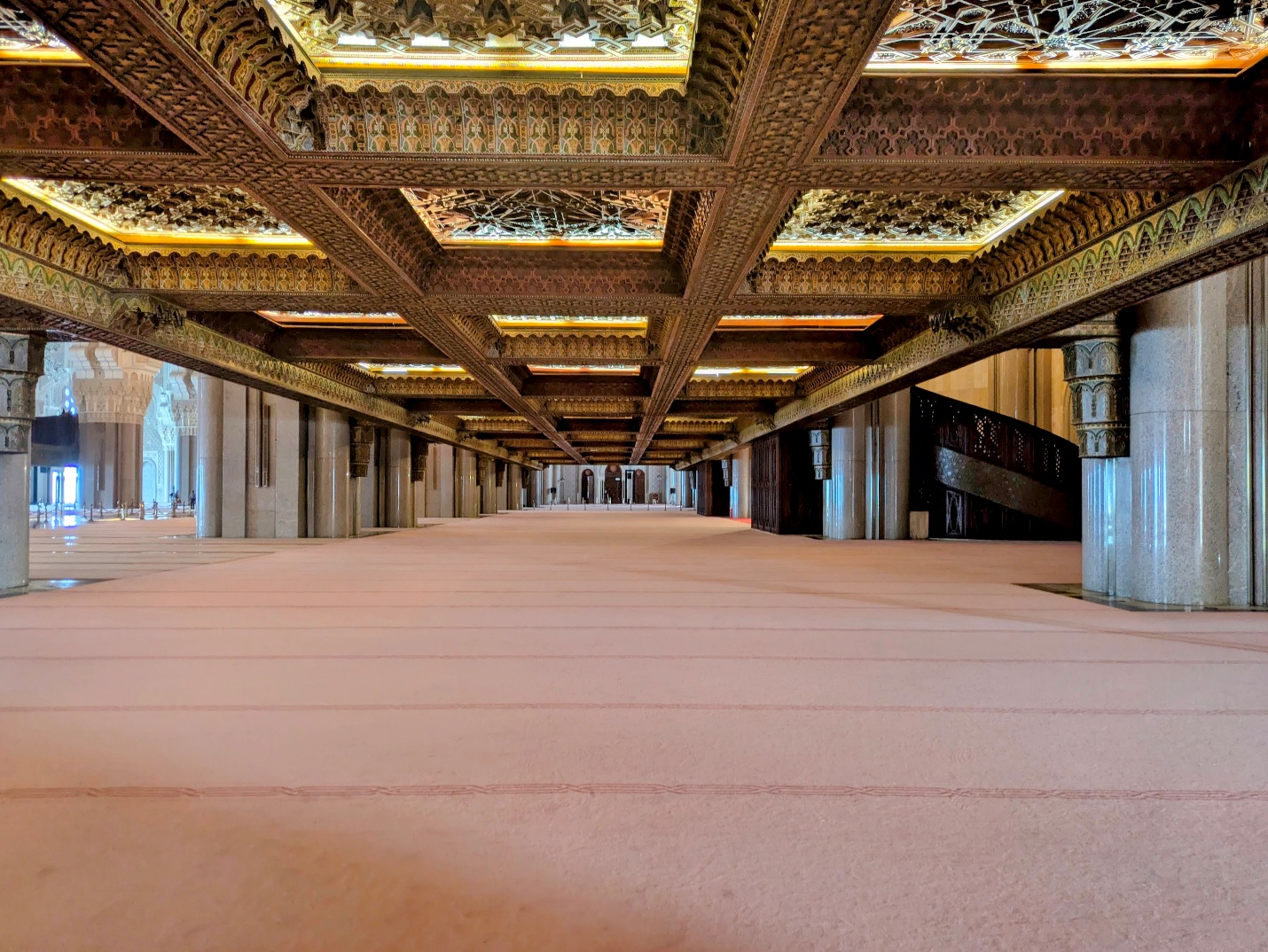
The Hassan II Mosque is one of the most remarkable landmarks in Morocco and one of the largest mosques in the world. Completed in 1993, it was built to commemorate the 60th birthday of King Hassan II and stands dramatically at the edge of the Atlantic Ocean. Its towering minaret rises about 210 meters (689 feet), making it the tallest minaret on earth and one of the tallest religious structures anywhere. The mosque was built by thousands of Moroccan artisans who incorporated traditional craftsmanship such as carved cedar wood, zellige tilework, marble floors, and intricate plaster carvings.
What makes the mosque especially unique is its location and scale. Part of the structure extends over the ocean, symbolizing the Quranic verse that God’s throne was built upon water.
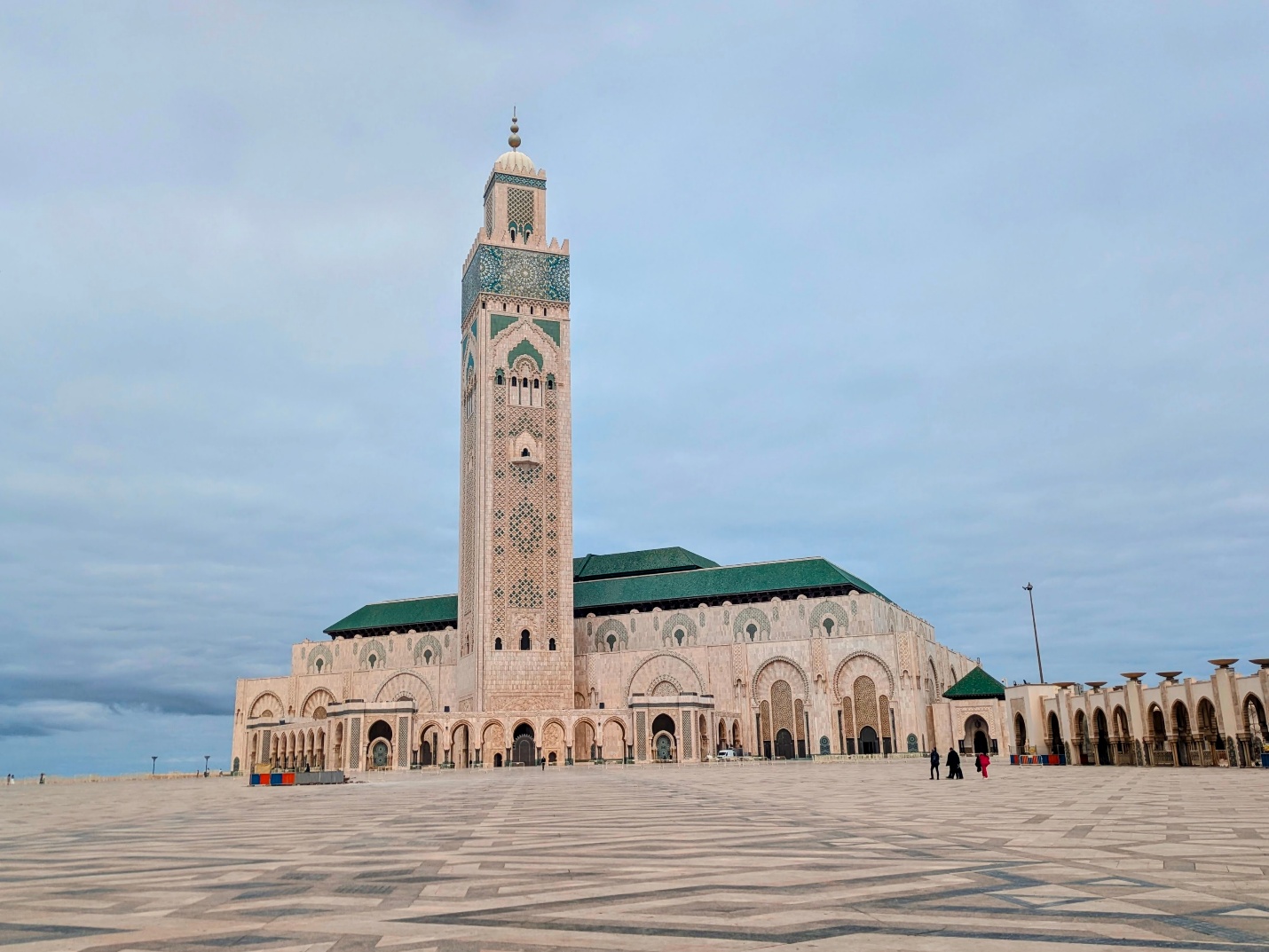
The massive courtyard can hold 80,000 worshippers, while the interior prayer hall can accommodate 25,000 more beneath a retractable roof.

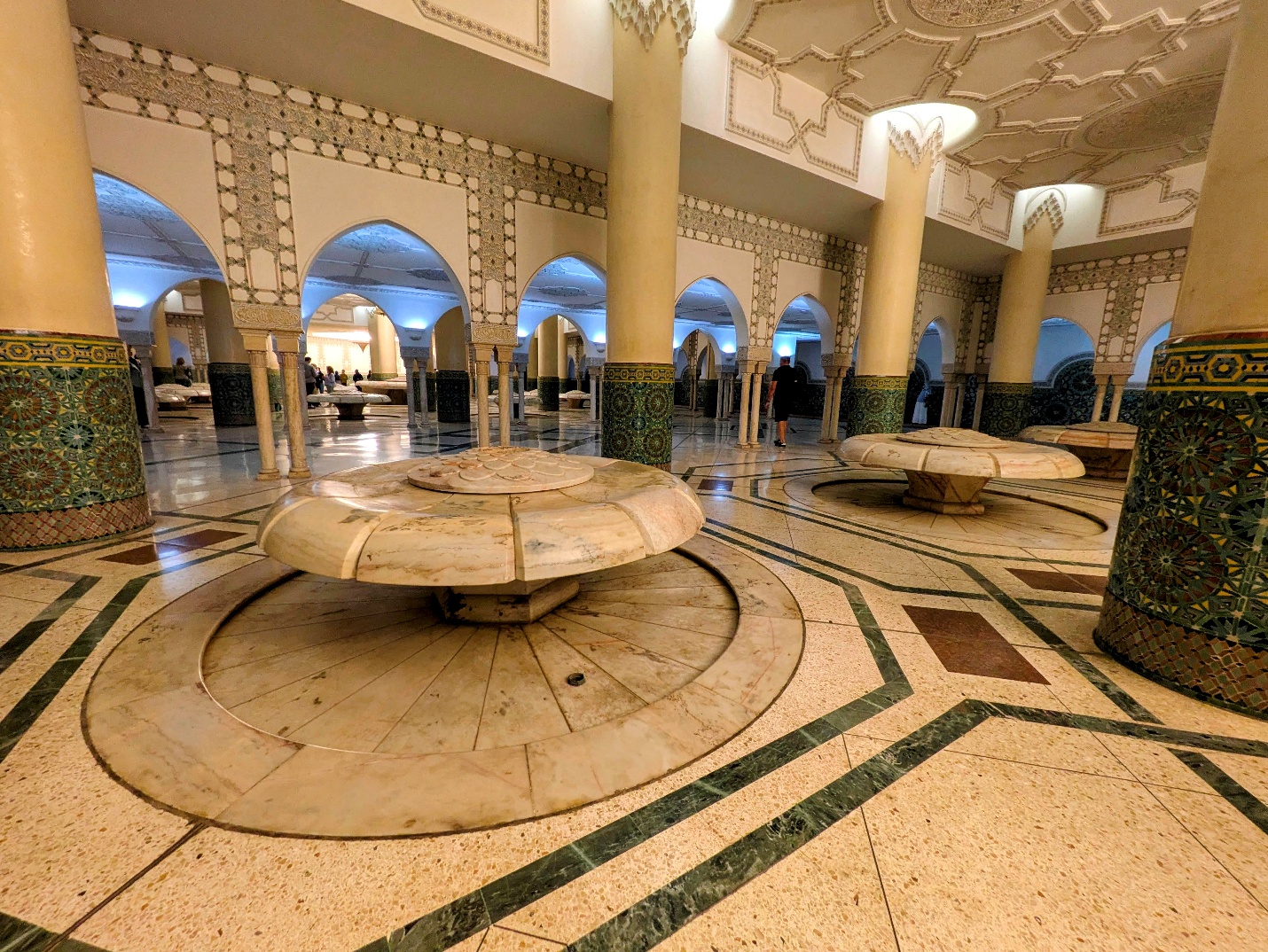
The lower level of the mosque is dedicated to ritual cleansing before prayer. In Islamic tradition, worshippers perform a purification ritual called wudu, washing their hands, face, arms, and feet before entering the prayer hall. The mosque’s vast ablution area is designed with rows of marble fountains and carved columns where people wash in preparation for prayer. The space is both functional and impressive, reflecting the importance of cleanliness in Islam while also showcasing the detailed craftsmanship found throughout the mosque. It’s a quiet, reflective place where worshippers pause and prepare themselves before joining the congregation above.
Unlike most mosques in Morocco, the Hassan II Mosque is open to non-Muslim visitors, allowing travelers to admire its architecture, ocean views, and detailed interior spaces.
Returning home
Looking back on our time in Morocco, each city offered a different experience, and together they gave us a glimpse into the country’s culture and history. Marrakech welcomed us with its energetic medina, bustling souks, and the constant rhythm of life in the famous square. From there, we traveled north to Rabat, the country’s capital, where the pace felt calmer, and the ocean views, historic kasbah, and monuments gave the city a relaxed coastal charm. In Fez, we stepped even further back in time while exploring the world’s largest and most traditional medinas, where narrow alleyways, ancient mosques, and centuries-old tanneries revealed how much of Morocco’s past is still alive today. Finally, our trip ended in Casablanca, a modern city on the Atlantic, where we were able to visit the magnificent Hassan II Mosque.
Traveling between these cities by train allowed us to see the countryside and made the journey part of the adventure itself. Each stop showed us something new, from historic architecture and colorful markets to ocean views and incredible Moroccan food. Morocco turned out to be a country full of contrasts, blending ancient traditions with modern life in a way that made every place feel unique. As we head back home, we leave with an appreciation for the culture, history, and hospitality we experienced and with memories that will stay with us long after we’re home.
2 thoughts on “Exploring Morocco”
I so enjoyed following you two on your journey through this travel blog and gorgeous pictures. Thank you for sharing your adventures with us!
I will be praying for your safe return home .🙏🏻❤️
Thank you for sharing your adventures. Save travels!