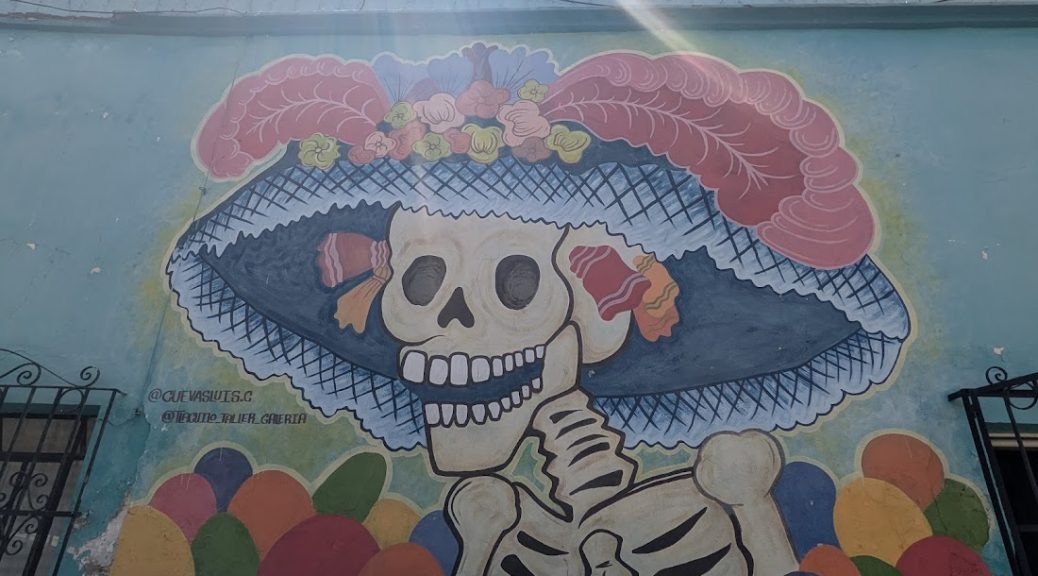
Street Art
We are now in our second week in the city of Oaxaca. After spending our first days exploring on foot and taking a walking tour of the historic center, we have finally gotten our bearings and become familiar with our neighborhood. Our apartment is located just a short walk east of the Zócalo, the heart of the city, making it easy to wander into the center whenever we choose.
As with other long stays, Oaxaca is beginning to feel less like a destination and more like home. We discovered our favorite coffee shops and bakeries, found several local restaurants, and learned where to shop for groceries. We even joined a gym just two blocks from our apartment. I have also established several running routes that begin right outside our front door, allowing us to explore different parts of the city while keeping up with our exercise routine.
One of the pleasures of spending an entire month in Oaxaca is having the time to settle into a daily rhythm rather than rushing from one attraction to the next. We don’t have to check items off a sightseeing list. Instead, we are experiencing the city as residents might, greeting familiar faces, visiting neighborhoods and businesses, and slowly discovering the character and charm of Oaxaca one day at a time.
Oaxaca
The name Oaxaca has been around long before the Spanish ever arrived. It comes from the Nahuatl word Huāxyacac, often translated as “place among the huaje trees.” At first, it seemed like an interesting piece of history, but the longer we stay here, the more meaningful it feels. Huaje trees still grow throughout the valleys, connecting modern Oaxaca to the people who first called this place home centuries ago.
The more time we spend in Oaxaca, the more we realize it is much more than a beautiful colonial city. It is a place where different civilizations and cultures have been meeting, blending, and evolving for thousands of years. The ancient Zapotecs built impressive cities here long before Europeans arrived, and their legacy can still be seen at places like Monte Albán. Later came the Spanish, leaving behind churches, plazas, aqueducts, and the architecture that is in the historic center today.
What makes Oaxaca truly special, though, is that its Indigenous roots are not just part of its history, they remain part of everyday life. Oaxaca is the most Indigenous state in Mexico and is home to 16 officially recognized Indigenous peoples. Across the state, hundreds of communities continue to preserve their languages, traditions, and ways of life. Oaxaca has 570 municipalities, and about 418 of them still govern themselves through traditional usos y costumbres (customary law), giving the state one of the strongest systems of Indigenous self-governance in all of Mexico.
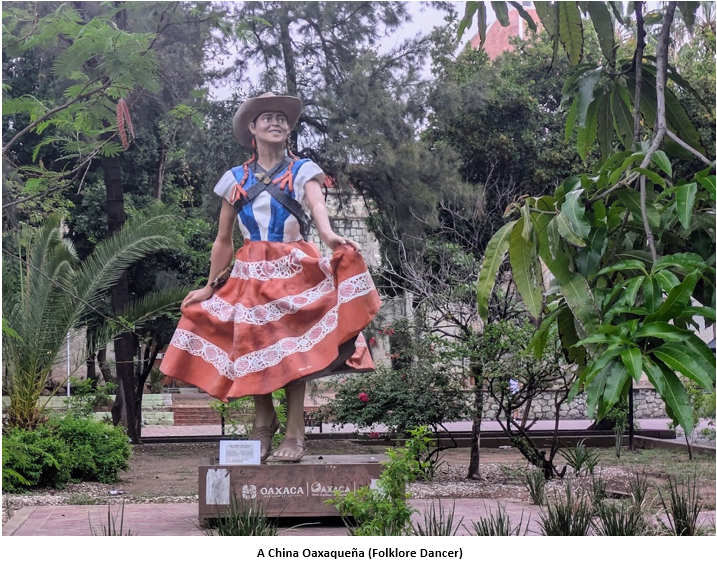
We can see this heritage everywhere. We hear Indigenous languages spoken in markets and on city streets. We taste centuries-old traditions in food. We see them reflected in festivals, textiles, art, and daily customs. Walking through Oaxaca often feels like moving through layers of history, where the past is not tucked away in museums but remains woven into the fabric of everyday life. It is one of the things that makes Oaxaca feel so authentic and vibrant.
Street Art in Oaxaca
One of the things that has impressed us is that the city feels like an open-air art gallery. Murals, paste-ups, stencils, and large-scale street art appear on walls throughout the historic center and surrounding neighborhoods. Unlike many other cities where street art is primarily decorative, much of Oaxaca’s public art reflects indigenous identity, social justice, migration, environmental concerns, and political activism.
The city’s modern street-art movement gained momentum after the social and political upheaval of 2006, when artists began using walls as a way to communicate ideas and support community movements.
Open-Art Neighborhoods
One of our favorite discoveries in Oaxaca has been the vibrant street art that brings neighborhoods to life. Just east of the historic center, the barrio of Jalatlaco has become the city’s most famous street-art district. Colorful murals are on walls, garages, cafés, and homes, transforming ordinary streets into an open-air gallery. Many of the works celebrate Oaxaca’s indigenous heritage, while others depict Day of the Dead imagery, local musicians, folklore, animals, and scenes from everyday life.
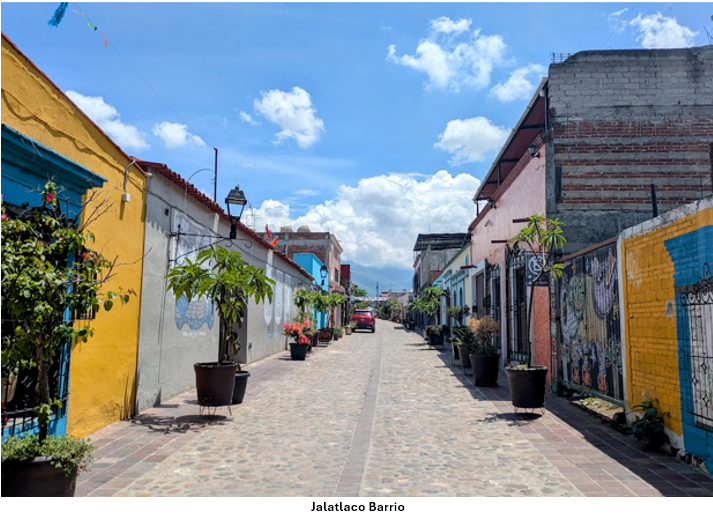

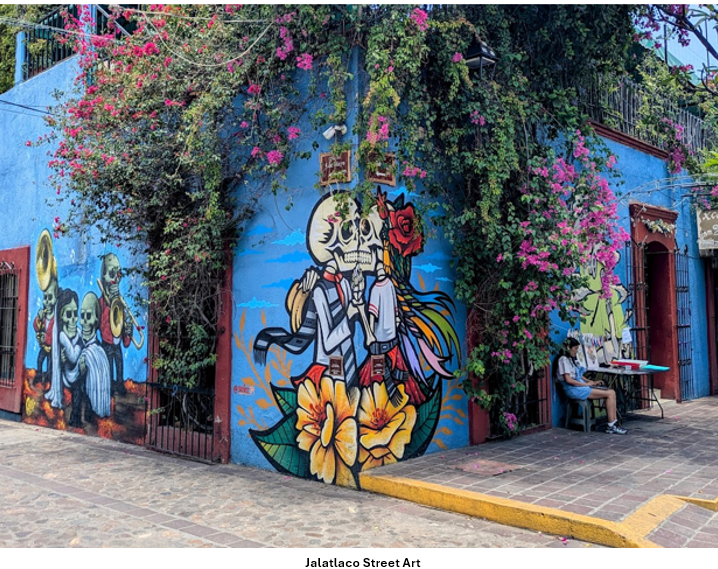

Not far away, the neighborhood of Xochimilco offers a different but equally fascinating experience. Home to the historic aqueduct arches, its narrow streets are lined with murals ranging from traditional indigenous themes to contemporary urban art. Around nearly every corner, there is art that invites you to stop, look, and reflect on the stories being told through paint and color.


One of the highlights of our exploration was meeting several local artists during our walk in the neighborhoods. We had the opportunity to visit their workshops, learn about their creative process, and hear the stories behind their work. Each artist had a distinctive style and perspective, which made it special to recognize their murals in the neighborhoods and throughout the city. What began as a search for street art quickly became a deeper appreciation for the artists who use Oaxaca’s walls as a canvas to celebrate culture, history, and community.
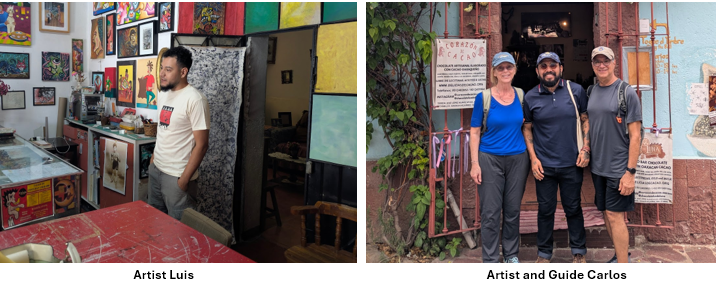
Almost every day, we walk to some destination, a coffee shop, restaurant, museum, park, or our gym. At first, our walks were simply a way to get around the city. But as the days passed, we found ourselves paying less attention to where we were going and more attention to the murals and art around us. What once blended into the background began to tell stories. We started noticing the details, the colors, the expressions, and the messages on the walls of Oaxaca’s neighborhoods.
One thought on “Street Art”
Enjoy your time in Mexico!