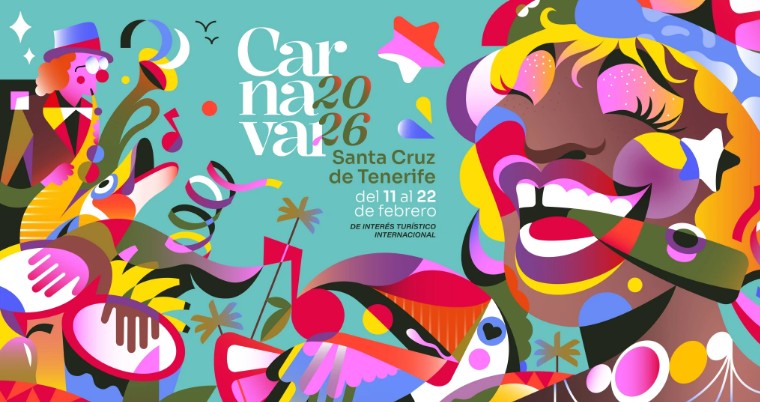
Carnival
A year and a half ago, we hiked the Camino de Santiago route. We loved the landscape, culture, and slow pace of travel. After completing the Camino, we spent two weeks in Seville, in southern Spain. During that time, we talked about crossing the Strait of Gibraltar into Morocco. It felt so close, geographically, yet we never made the trip — something we’ve regretted.
On this 2026 trip, we’ve decided to visit Morocco. This time, though, we’re beginning with a two-week stop in the Spanish Canary Islands for a taste of the most famous celebration — Carnaval — which was on our bucket list.
We typically travel with an open-ended return date, allowing a trip of three to six weeks — or longer if something captures our interest along the way. Traveling this way lets us go with the flow, adjusting plans as we go instead of rushing from place to place. Longer trips allow us to minimize stress and anxiety from traveling, long airport waits, tight connections, complicated layovers, and rigid timelines.
So, we planned an easy flight from Sarasota to Atlanta to Barcelona. Choosing Barcelona allowed us to stop over for two days before the next leg of our trip to the Canary Islands.
We’ve visited Madrid several times and have also spent time in Barcelona on previous trips, so this stop wasn’t about sightseeing as much as recovery. We stayed only a few days — long enough to adjust to the time change, walk familiar streets, enjoy relaxed meals, and shake off the jet lag before continuing. It provided a comfortable transition between home and adventure, giving us time to reset before heading onward to the Canary Islands.
CARNAVAL
Carnaval (the Spanish spelling of Carnival) in Spain is one of the liveliest times of the year, celebrated in the days leading up to Lent, in February or early March. Originally tied to religious tradition, it was meant to be a final period of celebration and indulgence before the fasting of Lent. Today, though, it’s about enjoying life and community. Streets are filled with music, costumes, dancing, and parades, and for a few days, normal routines take a back seat to celebration.
One of the most recognizable parts of Carnaval is the costumes. People of all ages dress up — sometimes in elaborate, professional costumes and sometimes in funny, homemade disguises. Groups of friends, families, and community organizations coordinate costumes and march together in parades called rúas. The atmosphere is playful and humorous, and satire is a big part of the tradition.
Carnaval in Barcelona
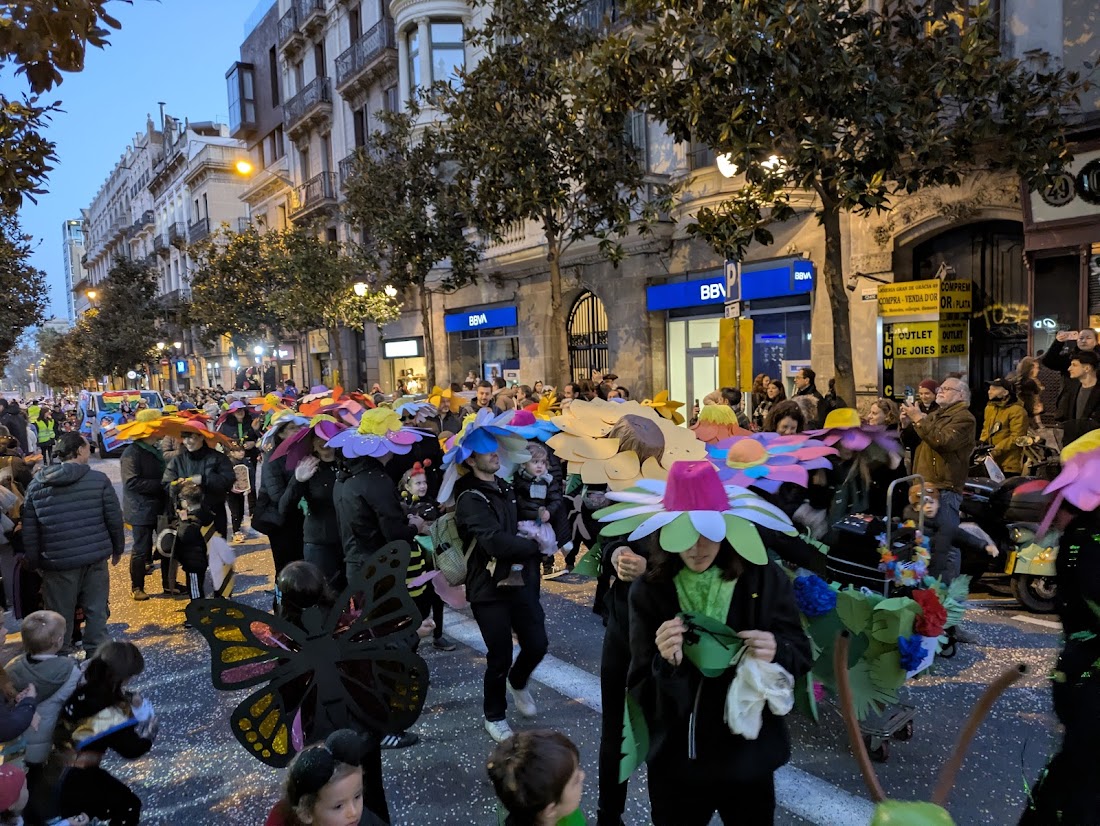
Carnaval celebrations vary greatly depending on where you are in Spain. In cities like Barcelona, the celebrations are focused on the neighborhoods, with smaller parades, street parties, children’s events, and community gatherings spread across different districts.
Carnaval festivities began on February 12th, so we missed some of the opening celebrations. Even so, the city was already buzzing with activity. Over the next few days, neighborhood parades and music events were taking place throughout Barcelona, making it difficult to decide which ones to attend.
We chose to explore and enjoy whatever celebrations we came across. We spent much of our time reacquainting ourselves with familiar plazas and neighborhoods during the day, and in the evenings, we joined locals along the streets to watch the smaller neighborhood parades — an easy, relaxed way to experience Carnaval.

Carnaval in Santa Cruz de Tenerife
In contrast, the Carnaval of Santa Cruz de Tenerife (Tenerife is the largest of the eight Spanish Canary Islands off the coast of Africa) is often compared to Rio de Janeiro’s Carnaval and features huge parades, the Carnaval Queen competition, outdoor concerts, and all-night street celebrations. During the main events, hundreds of thousands of people fill the streets, transforming a city of just over 200,000 residents into a massive open-air festival. The biggest parade, the Coso Apoteosis (Grand Finale Parade), alone attracts crowds of 500,000 spectators, while over the course of the celebration, more than a million visitors pass through the city. Nearly every plaza, avenue, and waterfront street becomes part of the celebration, creating an atmosphere that feels far larger than the city itself.
What makes Santa Cruz unique is that Carnaval is not confined to a stadium or single parade route — the entire downtown becomes the party. Locals and visitors dress in costumes, music stages run throughout the night, and celebrations continue until sunrise for days on end. Comparsas (carnaval troupes), musicians, dancers, and elaborate floats move through streets packed shoulder to shoulder with spectators. Rather than simply watching an event, everyone becomes part of it, making the scale of the Carnaval feel immersive, energetic, and city-wide.
Carnaval in Santa Cruz de Tenerife runs from January 31st to March 1st. Events and activities are going on almost every day and night.
The official theme of the carnaval was “Ritmos Latinos” (Latin Rhythms). That means the whole carnaval — from the costumes and floats to the parades and music — was inspired by the vibrant sounds and dance traditions of Latin America, like salsa, samba, merengue, bachata, reggaeton, and other energetic styles.
It’s a theme that naturally fits the feel of the festival: bright color, movement, percussion-heavy music, and that street-party energy we experienced every day.
We stayed in an apartment about a mile from Plaza de España (ground zero). We were far enough away from the music and noise, but close enough to walk to the festivities. No matter when we walked out of our apartment, we always saw people dressed in costumes, heading to the plaza or some event. Many stores and businesses close during this time. Feb. 17th (the day of Coso Apoteosis) is a holiday.
Our Participation
We didn’t arrive in Santa Cruz de Tenerife until late Sunday afternoon on the 15th, so we missed the opening day parade. After we settled in, we headed down to the plaza, not really knowing what to expect, but almost immediately, we were blown away by the sheer scale of the carnaval. Multiple stages were spread throughout the area, each featuring dancers, live bands, and musical groups. Somehow, despite the size, the music from one stage never overwhelmed another.

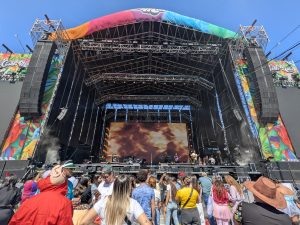
Surrounding it all were carnival rides, food and drink pavilions, and outdoor dining areas run by local restaurants.
For the next five days, heading to the plaza became our daily routine. There was always music in the streets, and people were fully committed to their costumes — everywhere we looked was color, creativity, and energy. We’d return to the apartment for a short rest, then head back out for another round of celebrations that seemed to get wilder as the night went on. We quickly realized we couldn’t see everything, so we picked a spot and let the experience happen. Once we stopped moving, the crowd would slowly close in around us like an amoeba — dancing, singing, drinking, and celebrating together. It felt less like an event and more like an enormous block party that had taken over the city.
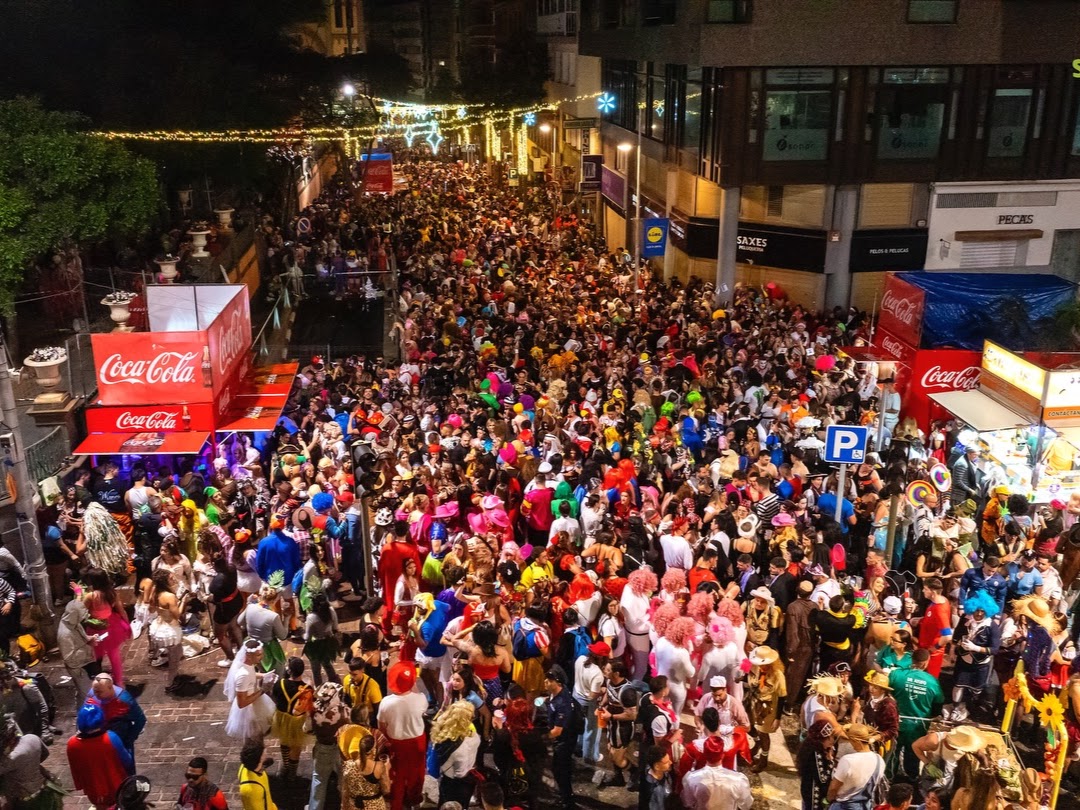

We were really impressed by the costumes. Some were homemade, but a lot of them looked like they came straight out of a professional production. We saw everything from individuals doing their own thing to huge groups all dressed in matching costumes. The creativity was incredible — funny, elaborate, colorful, and sometimes completely over the top. It felt like everyone had put real thought and imagination into being part of the celebration, not just watching it. The participants were all ages, including senior citizens singing and dancing along with young people.
The highlights for us were The Grand Finale Parade (Coso Apoteosis) and The Burial of the Sardine.
Coso Apoteosis
With a lot of anticipation, we arrived early to grab a good spot along the parade route. The parade kicked off around 4 p.m. and just kept going — more than three hours of nonstop energy. Percussion groups, dancers, and incredible floats rolled past one after another. Everyone in the parade looked like they were genuinely having the time of their lives. The costumes were elaborate, colorful, and sometimes over the top, and the floats were absolutely stunning.
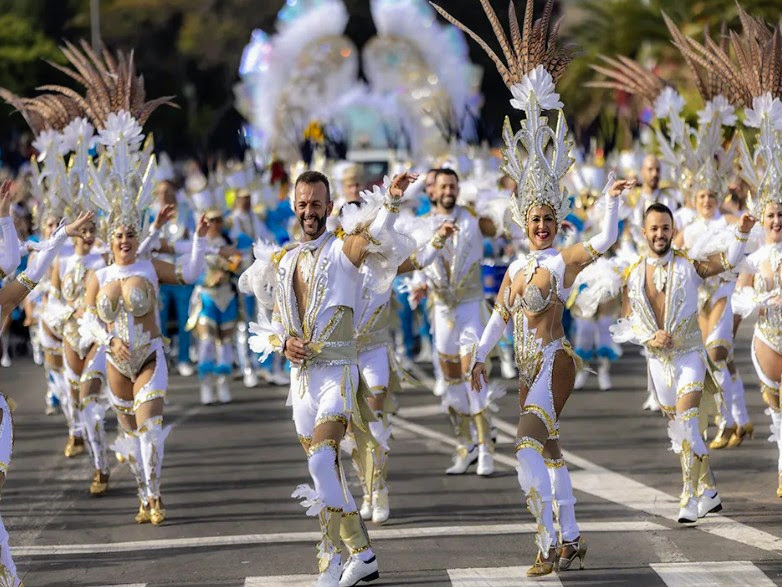


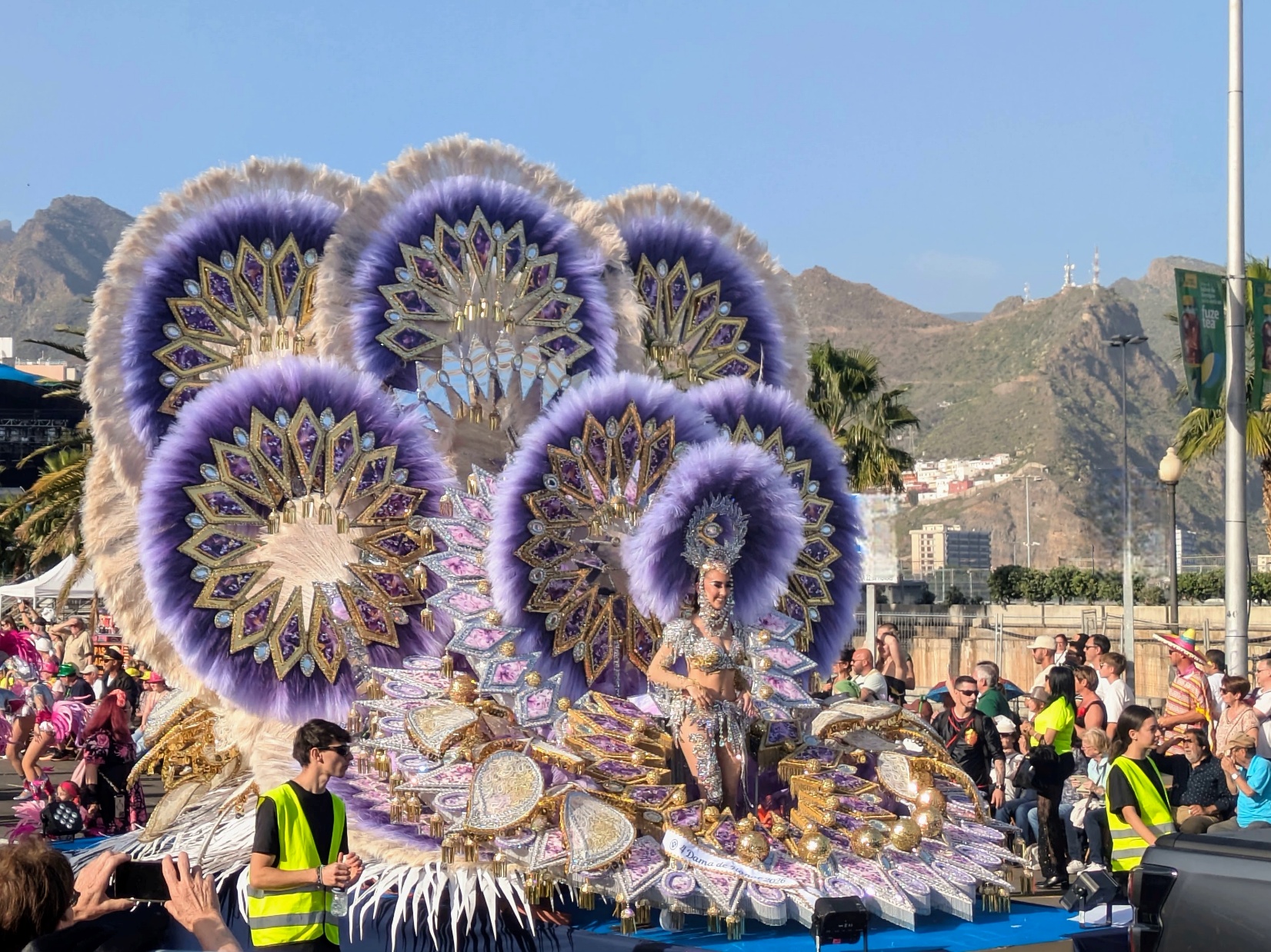

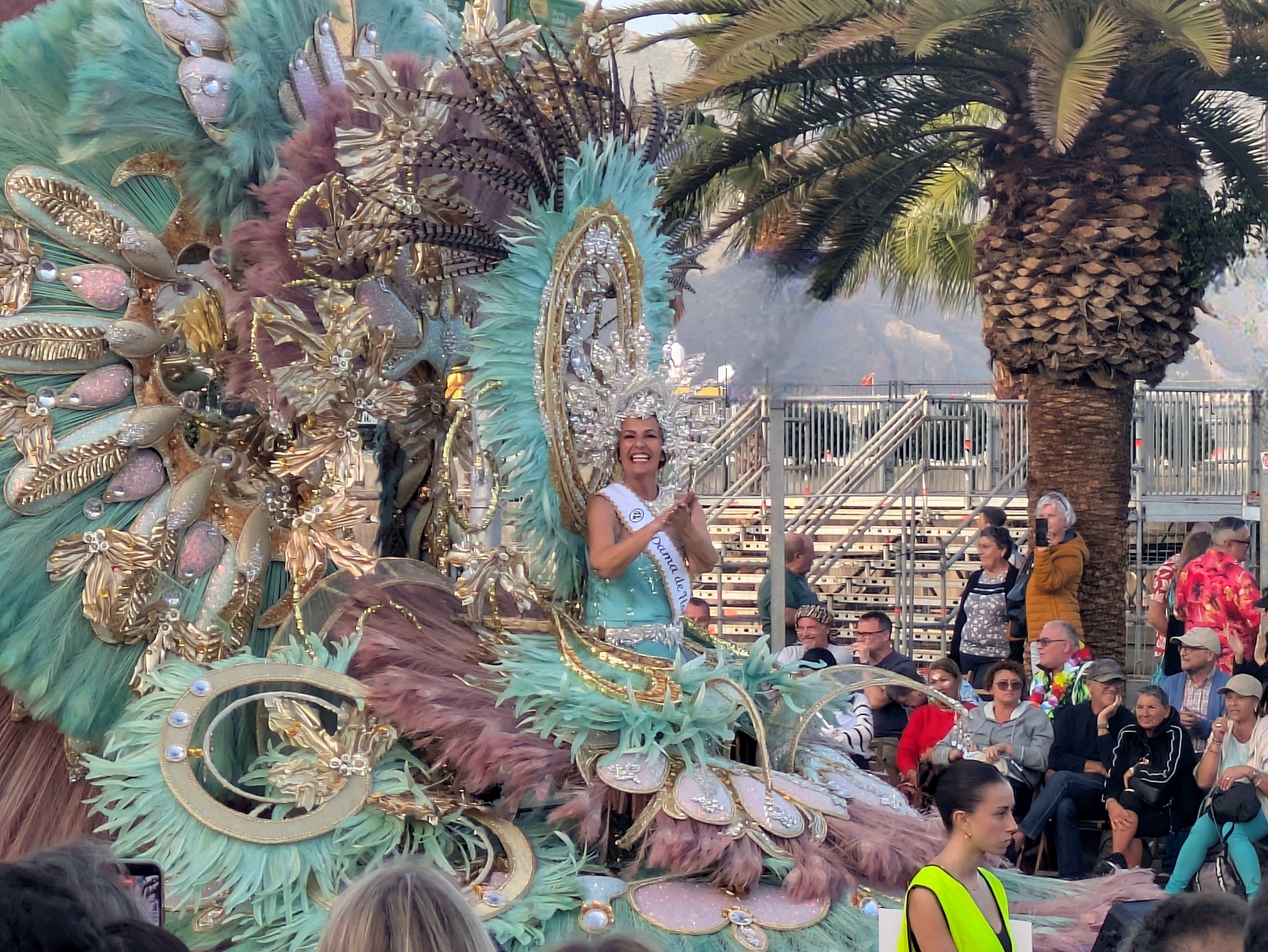
When the parade wrapped up, the party definitely didn’t end. Musical groups took over the stages and kept things going into the wee hours of the morning. Of course, it all continued well past our bedtime — but judging by the crowds, people were just getting started.
The Burial of the Sardine
The Burial of the Sardine was one of the most fun events of the Santa Cruz de Tenerife Carnaval, marking the official end of the celebration. It’s a humorous mock funeral where a giant sardine figure is carried through the streets in a parade filled with mourners dressed in exaggerated black costumes, widows, and over-the-top funeral attire — all mixed with music, dancing, and plenty of laughter. The procession ends when the sardine is ceremonially burned, symbolizing saying goodbye to Carnaval’s excess and indulgence before returning to normal life (and the start of Lent). Even though it represents the “end,” it felt more like one last big party, with crowds celebrating into the night before the city finally wound down.


We are only spending a week in Tenerife, the largest Canary Island, and most of our time has been centered around Carnaval, so we’ve barely scratched the surface of everything the island has to offer. Even with the massive crowds — and plenty of drinking, dancing, and late-night partying — the atmosphere felt friendly and welcoming. We didn’t see any confrontations, fights, or property damage. Instead, what stood out most was seeing people of all ages, from all over the world, coming together to celebrate and enjoy the experience together. It was truly an adventure that fulfilled our bucket list desire to participate in a huge festival.
2 thoughts on “Carnival”
Thanks for sharing! What a fun adventure and unique experience. Loved all the photos.
Thanks for sharing! What a fun adventure and unique experience. Loved all the photos.