Music, Mines And Ceramics
Music
As night falls, Guanajuato streets don’t just get quieter, they start to sing. We were drinking a beverage in the Jardín de la Unión when we heard guitars and harmony bouncing off centuries-old walls. That was our cue to follow the sound and join a callejoneada, a roving street serenade that’s part concert, part walking tour, and part spontaneous party. The tradition began in the 1960s when University of Guanajuato students borrowed the idea from Spain’s old estudiantinas, who once wandered medieval towns in capes, singing for tips and love. Here, it’s become a celebration of music, storytelling, and part of the city’s soul.
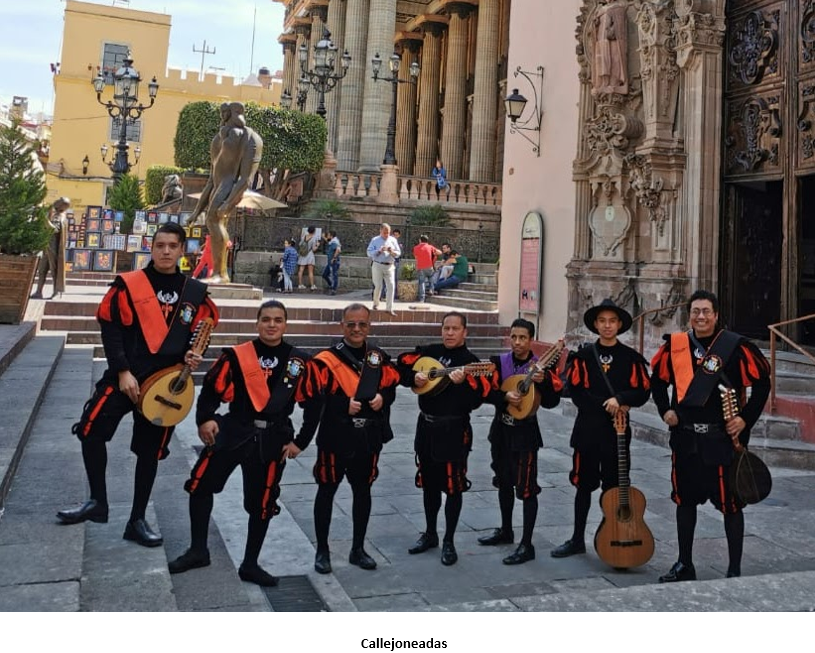
These days, callejoneadas walk the streets every evening. For a small fee, we started at the landmark Teatro Juárez, fell in step behind musicians in black capes, and wove our way through the twisting alleyways. Between songs, they told us tales of duels and forbidden kisses. Our apartment was right behind the theater, so every night we had a front-row seat. One of the songs we heard repeatedly, drifting up to our balcony, was Cielito Lindo (known to some in the U.S. as the “Frito Bandito” tune).
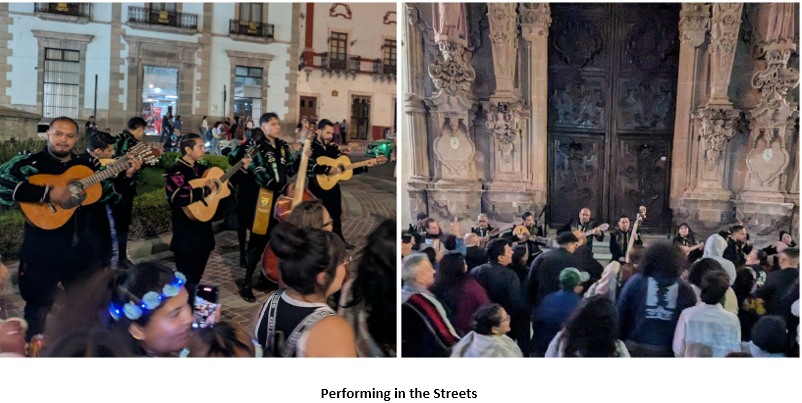
By the end of the night, we were not just tourists; we danced, laughed, and sang with Guanajuato’s best tour guides.
Silver
Guanajuato was built on silver—literally. In the 16th century, the hills around the city revealed some of the richest veins the world had ever seen, and before long, Guanajuato was producing two-thirds of all the silver in Mexico and South America. By the 18th century, over 20 major mines—along with dozens of smaller shafts—were producing silver, with names like La Valenciana, Rayas, Cata, Mellado, and Sirena turning this valley into one of the wealthiest mining towns on Earth.
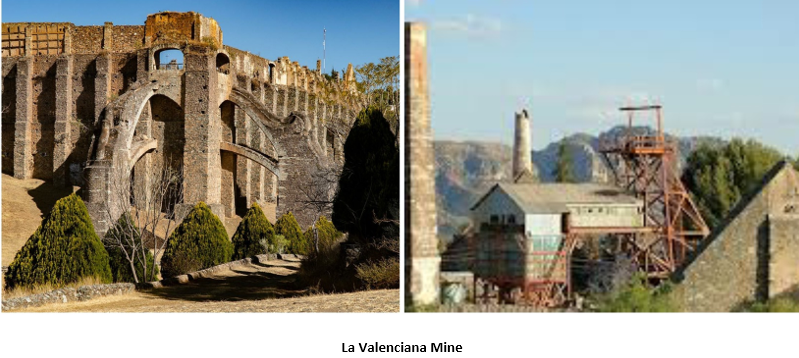
La Valenciana remains the most famous, still operating today much as it has since 1774 when it was among the most productive mines in the world. These days, the work is slower, about a ton of rock every six minutes. Mining in Guanajuato hasn’t disappeared, companies like Guanajuato Silver Company continue operations, running the Valenciana Mines Complex, San Ignacio mine, and the El Cubo Mines Complex.
We took an Uber to the original La Valenciana mine that houses a museum. It looks like a large fortress with high exterior walls protecting the mining operations.
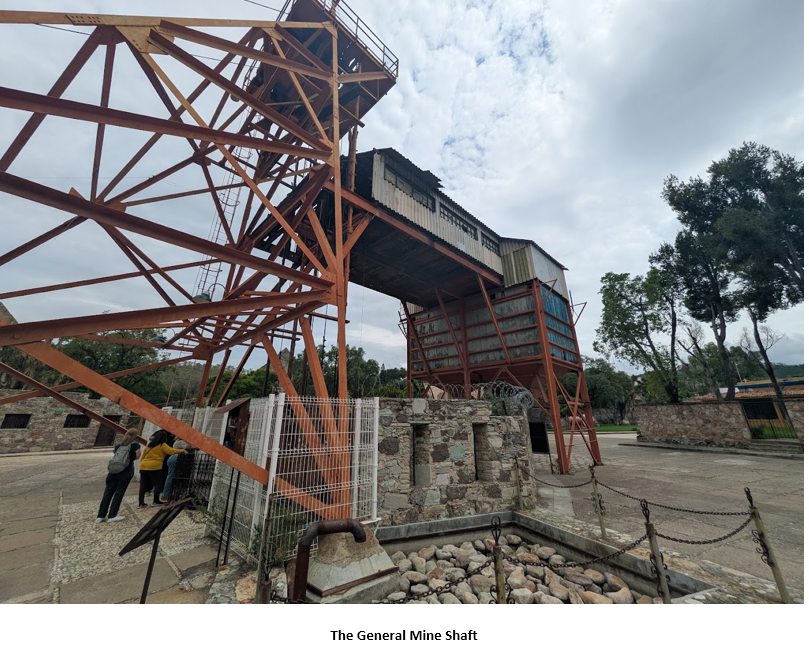
In the center is the San Jose General Shaft. The excavation of the shaft began in 1792 and finished in 1816 and was 1,745 ft. deep. The digging was entirely by hand.
Silver mining shaped Guanajuato’s identity, economy, and even its skyline. When rich veins were discovered in the 16th century, the city’s wealth drew fortune-seekers from around the world and funded the construction of its grand churches, ornate theaters, and colonial architecture.
Ceramics
Our initial plan was to stay in Guanajuato for about a week, but we extended our trip to visit the nearby city of Dolores Hidalgo. Best known as the birthplace of Mexico’s independence movement, it was here that Father Miguel Hidalgo y Costilla rang the church bell and issued the famous “Grito de Dolores,” (Cry of Sorrows) calling the people to revolt against Spanish rule. This historic moment sparked the Mexican War of Independence, and today the town is celebrated nationwide as a symbol of freedom, with reenactments, parades, and ceremonies on Independence Day.
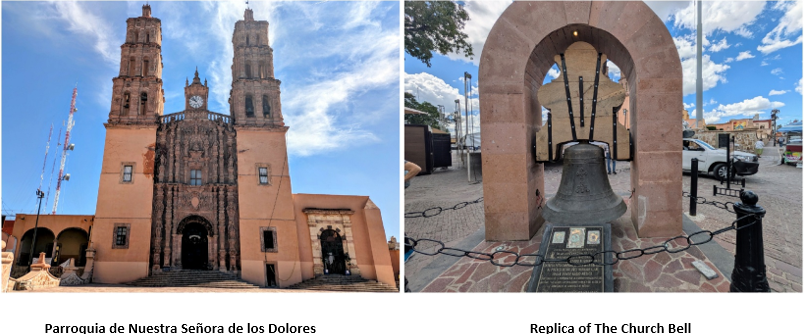
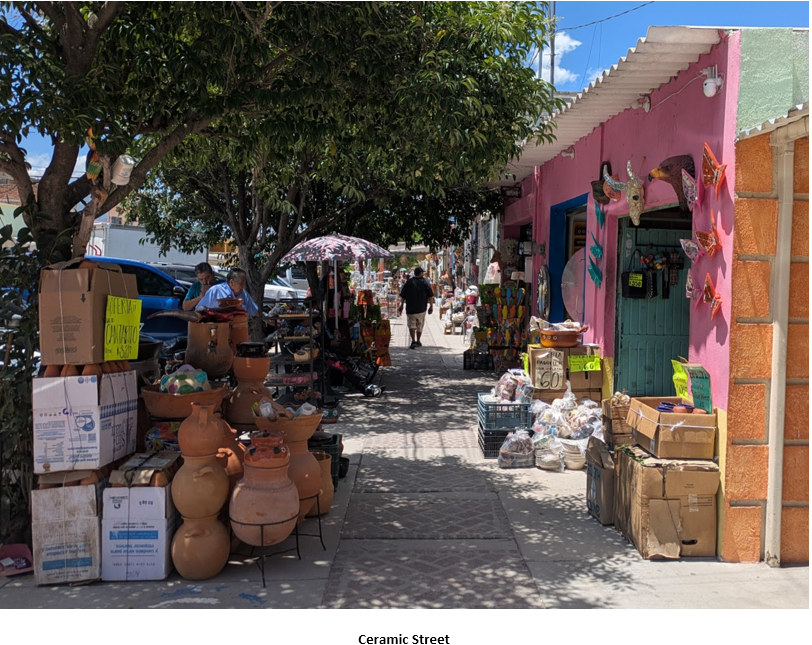
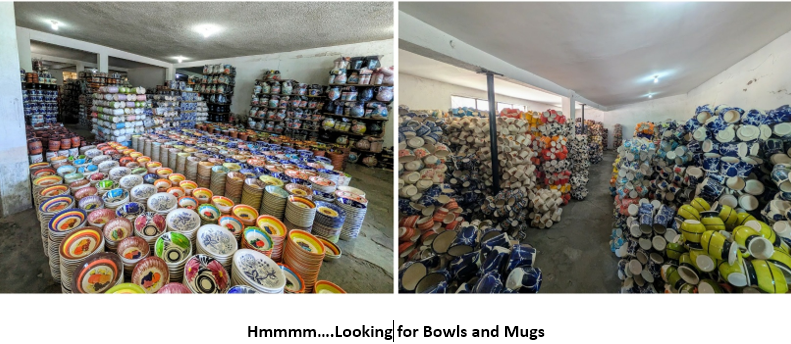
Dolores Hidalgo is also known for ceramics, particularly Talavera pottery. For generations, local artisans have shaped, painted, and glazed tiles, plates, vases, and household wares, blending Spanish colonial techniques with Mexican designs. We spent much of our time strolling along the Cobblestone streets, browsing the shops, and pausing to watch artisans at work.
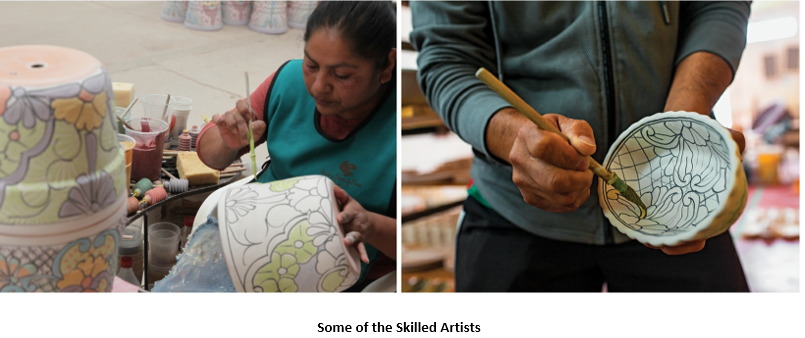
The skilled workers created intricate floral patterns, geometric shapes, and vivid colors.
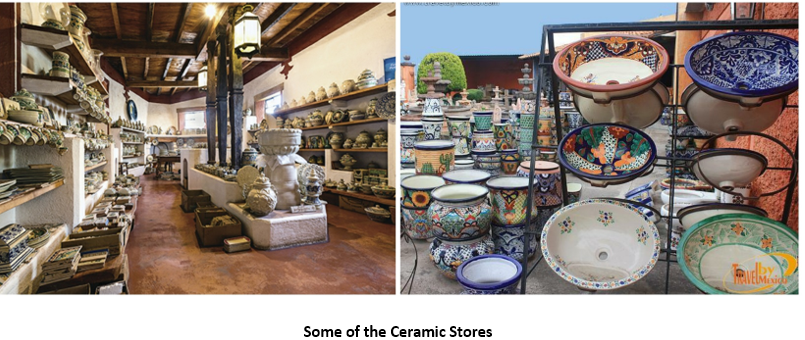
Each store had its own artistic personality. Some artists and shops focused on practical, everyday wares—plates, mugs, and tiles meant for everyday use, reflecting the town’s deep connection between beauty and daily living—while others offered striking, one-of-a-kind pieces that felt more like gallery art than household items.
Before heading back to Guanajuato, we just had to stop for Dolores Hidalgo’s famous ice cream. This little city takes ice cream to a new level—sure, we could get chocolate or vanilla, but why play it safe when we could try tequila, avocado, cactus, corn, cheese, and even fried pork rinds?
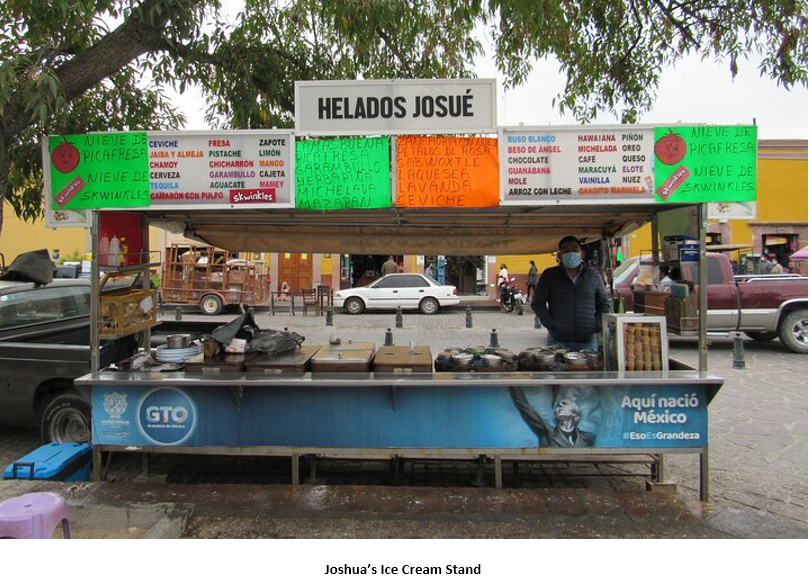
Every shop we passed seemed to have its own wild creations, and the vendors were quick to hand us a tiny spoon, daring us to be adventurous. We went for a little less adventurous flavor of avocado. It was very tasty with a hint of the flavor of avocado. Next time we’ll go for the tangy kick of pulgue (a liquor made from the agave plant). In Dolores Hidalgo, ice cream is an adventure in a cone.
After returning to Guanajuato, we found ourselves reflecting on our time in Mexico. Before the trip, Kathy had been a little concerned about whether we’d truly enjoy it. Earlier this year, we spent six weeks in Panama, and while it had its moments, we struggled to fully embrace the life and rhythm there. It left us wondering—were our fun travel adventures behind us?
Mexico answered that question loud and clear. We thoroughly enjoyed our time in Guanajuato, San Miguel de Allende, Dolores Hidalgo, and Querétaro. The sights, the sounds, the food, the culture, everything drew us in. More importantly, it rekindled our spark for exploration. No, our travel adventures are NOT over. As long as we can immerse ourselves in the life and culture of foreign countries, we’ll continue seeking new horizons.
Now, we’re heading back to San Miguel for a couple more days before flying home from Querétaro. We leave with fond memories, new friendships, and a deep appreciation for the warm hospitality we found here in Mexico.
4 thoughts on “Music, Mines And Ceramics”
Just awesome and amazing. Is the awesomazing?
Glad to hear your adventures continue … look forward to reading more 🙂
Keep your adventures going! Thank you for sharing 😊
Thank you so much for sharing your adventures, Marc & Kathy! I’ll be going away Sept 15-22 with my daughter, but nowhere exotic – just PA to visit friends across the state. We can’t wait though. I haven’t had a vacation in two years, Praying for no hurricanes while we’re gone or that might interfere with flying. Last year we had to cancel the same trip as Milton made landfall in Sarasota the very day we were to fly out.