Hello Guanajuato
Our Uber drove us one hour from San Miguel de Allende to its sister city of Guanajuato, and we weren’t sure what to expect. A friend had recommended that we visit, so we figured, why not? As we entered the city through its winding tunnels and colorful streets, we were struck by how vibrant and alive it felt. It was a different energy from the relaxed vibe of San Miguel. Guanajuato buzzes with movement, students walking to class, street performers setting up in plazas, and vendors selling everything from fresh fruit to handmade crafts. It felt like the city was in motion, and we were caught up in it.
About the City
Guanajuato is situated in a narrow valley, surrounded by steep hills that shape its dramatic landscape. Most of its population of 200,000 live along these hillsides, where homes are stacked together and connected by a labyrinth of staircases, alleyways, and winding paths. Walking through the city often means navigating countless stone steps and squeezing through narrow passageways that feel more like secret corridors than streets. This unusual layout gives Guanajuato its charm, and gave us a workout, but it’s part of what makes exploring the city feel like an adventure.

Once one of the richest silver mining centers in the world, Guanajuato played a leading role in shaping Mexico’s colonial economy—and later, its independence. The city was the site of one of the first battles of the Mexican War of Independence in 1810, when insurgents stormed the Alhóndiga de Granaditas, a former grain storage building turned fortress. Today, that same building is a museum of the country’s fight for freedom.
The Underground
One of the things that surprised us about Guanajuato was its network of tunnels. We had no idea that so much of the city’s traffic flows beneath the surface! At first, it felt a little strange. Our Uber suddenly dipped into a stone tunnel with dim lights and narrow turns, and we weren’t quite sure where we’d end up. These tunnels, built to divert floodwater from the river, now serve as roads winding under the city. They were like something out of a movie. We’d enter at one spot and reappear in a totally different part of town, making getting around Guanajuato feel like an adventure. It’s one of those quirks that make the city unforgettable.
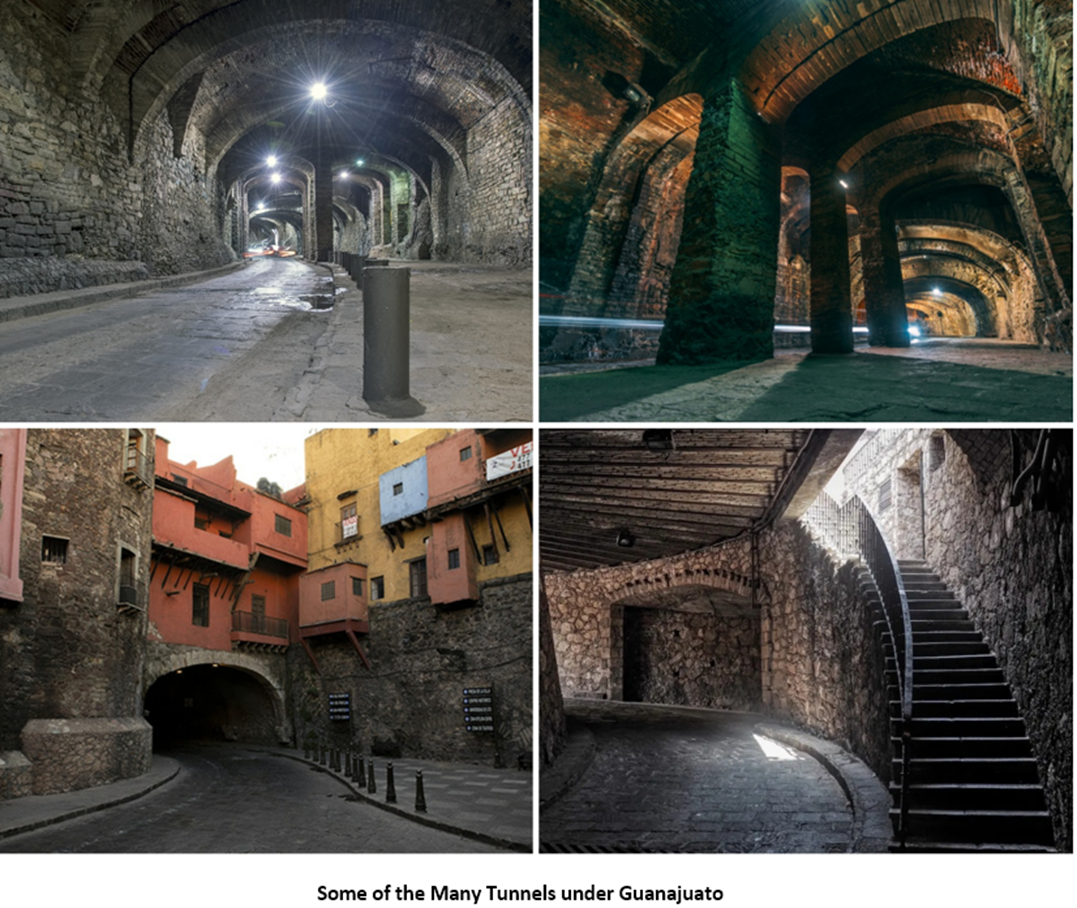
Guanajuato International Film Festival
When we arrived, we learned that the Guanajuato International Film Festival (GIFF) was taking place—and we were lucky to be in town for it. Held every year in late July, this is one of the biggest and most respected in Mexico, and draws filmmakers, actors, and fans from all over the world. What makes it unique is the way it blends film with the spirit of the city. Screenings aren’t just held in regular theaters; they happen in historic plazas, old churches, and even in the underground tunnels and cemeteries.
Most of the screenings were free, and we took advantage of the festival to attend a few. It was the perfect excuse to see some of Guanajuato’s historic theaters, which we might not have explored otherwise. Each venue had its own charm, from grand interiors to more intimate spaces—and seeing them come alive with film made the experience special.


We were pleasantly surprised that most of the films had English subtitles, and many of the films produced outside of Mexico had both Spanish and English subtitles. The crowds were a mix of locals and international visitors.
Dia De La Cueva
A couple of days after we arrived in Guanajuato, a coffee shop owner told us about an upcoming festival called Día de la Cueva (Day of the Cave). Every year on July 31st, the city honors San Ignacio de Loyola, one of Guanajuato’s patron saints. We hadn’t heard of it but were told it’s one of the city’s most beloved celebrations.
The festivities began with a traditional cabalgata, a horseback procession where dozens of riders travel from the old railway station to Cerro de la Bufa (Bufa Hill), in a display of devotion, heritage, and pride.
On the evening of July 30th, we joined in the heart of the celebration: the pilgrimage up Cerro de la Bufa. Around 6 p.m., the trail was lit with torches, candles, and bonfires, creating a glowing path that pilgrims would follow through the night.


We weren’t sure what to expect, but as we began the hike, we were amazed by how lively and welcoming it all felt. The trail was lined with vendors selling food, drinks, clothes, and souvenirs, turning the hillside into a marketplace. Partway up, there was a full carnival, complete with rides that had been hauled up and set into place. It was clear this wasn’t just a religious ritual; it was a family event.
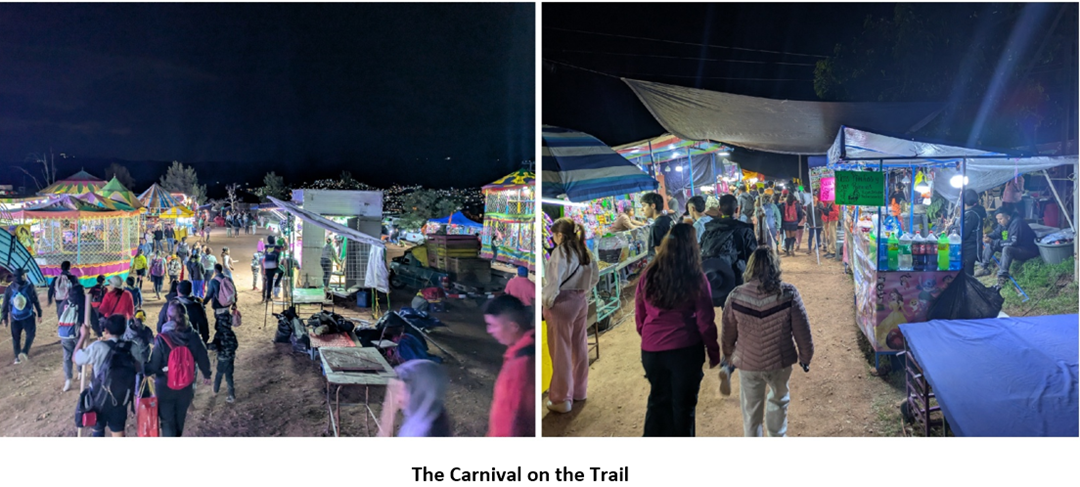
We saw people of all ages making the climb, kids holding their parents’ hands, grandparents pausing along the trail, and toddlers asleep in their mothers’ arms. Parts of the hike were steep, rocky, and hard to navigate by the dim torchlight. Families camped overnight, and music drifted through the hills.
We’d been told it would be a fun adventure, but Kathy had pledged on our last trip that she wasn’t climbing any more mountains. Still, she agreed to go, even though we didn’t know what to expect and didn’t even have a flashlight. We walked along a dark highway to reach the trailhead. No map, no lights, and no real idea where we were going. In hindsight, we probably should have been better prepared.
So, we simply followed the crowd up the trail. We didn’t realize we had taken a steep, rutted shortcut instead of the long, gently sloped path. The lack of light made every step more uncertain. At over 6,000 feet, we were already a little winded. About halfway up the steep stretch, Kathy decided to stop and rest, while Marc continued to the top.
When Marc finally reached Cueva Nueva, glowing with candles and surrounded by reverent silence, the atmosphere was peaceful and powerful. It felt sacred.
The journey back down was even trickier than the climb. Without lighting, finding sure footing among the gravel, rocks, and deep ruts took focus. Still, Marc made it safely to the base of the trail, where we met again.
It was, without question, an adventure. And it renewed Kathy’s pledge: no more mountains.

The following day, on July 31st at 1:00 p.m., a mass was held inside the cave, where a beautifully decorated altar and the image of San Ignacio stood at the center of it all. The entire celebration was more than a religious event; it was an expression of community, culture, and devotion. The hike gave us a sense of what makes Guanajuato so special.
Our First Impression
Our first impressions were of color and chaos in the best possible way. Brightly painted buildings climbed the hills around us, and music floated through the air from the centro historico. Guanajuato felt less polished, more spontaneous than other places we have been in Mexico, but that made it exciting. The twisted streets felt like an adventure. We hadn’t planned many activities for our visit, but in Guanajuato, it felt like the right call. Just being there, wandering, and soaking it all in was exactly what we needed.
2 thoughts on “Hello Guanajuato”
I’ve just had time to catch up. What wonderful experiences you guys are having. When I come to Fla to visit are you going to make me some of that luscious looking food? Enjoy your last week!!!
Guanajuato looks like a unique and interesting city. Enjoy your adventures and thank you for sharing