
Final Week In Oaxaca
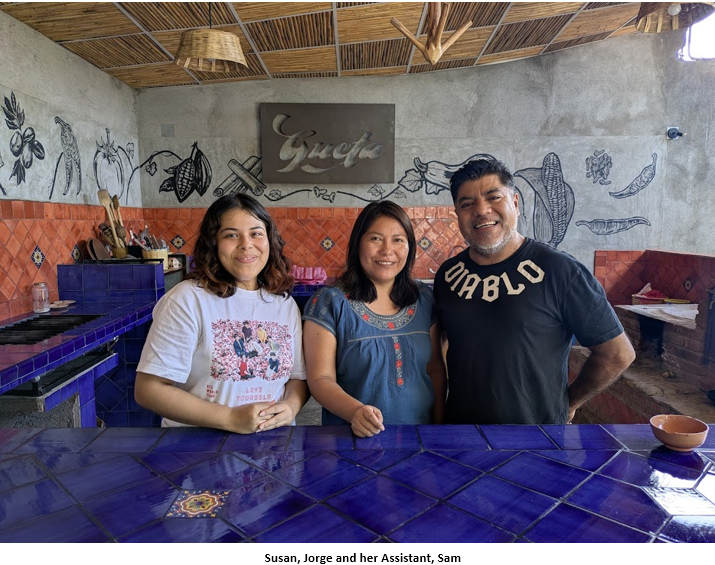
During our final week in Oaxaca, we took a cooking class. We were driven to a private home in the town of San Agustín Yatareni where Susan, our cooking instructor, welcomed us as our cooking instructor.
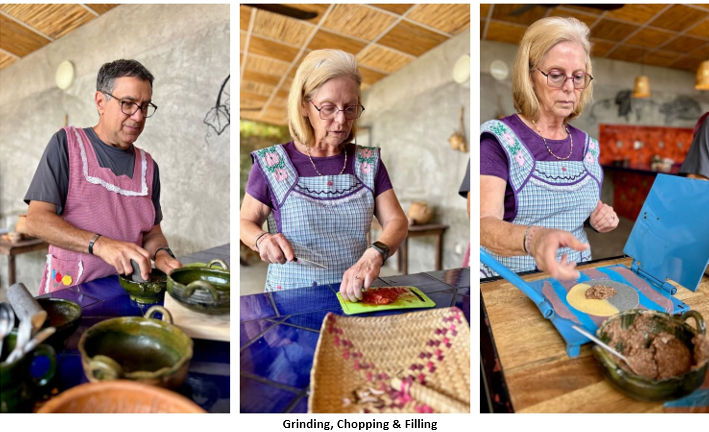
We prepared fresh salsa, masa, and refried beans and used them to create traditional Oaxacan dishes, all cooked on a hot comal, the flat griddle that has been the center Mexican kitchens for centuries.
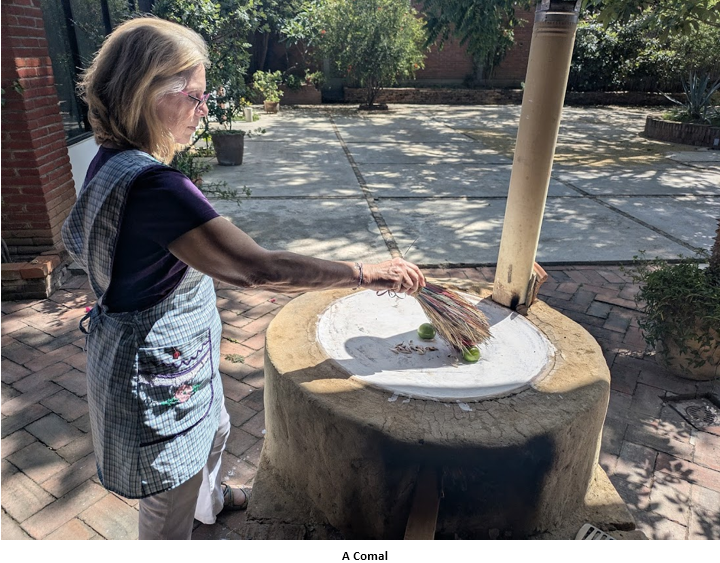
A comal is a flat griddle used in Mexico for thousands of years and is an essential tool in a local kitchens. It is 18 to 36 inches in diameter, with no raised edge, making it easy to slide tortillas and other foods on and off the heat. Traditionally made of clay, it is heated over a wood fire, charcoal, or gas burner. The comal is used to cook tortillas, roast vegetables and chiles for salsa, and prepare traditional dishes.
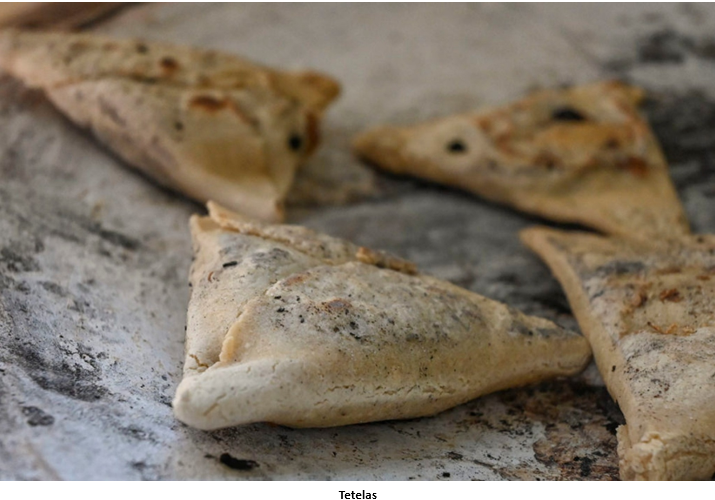
Tetelas
Tetelas are made from corn masa folded into a triangle, sealed around a filling and cooked on a comal. We filled ours with refried beans, giving them a rich, creamy center.
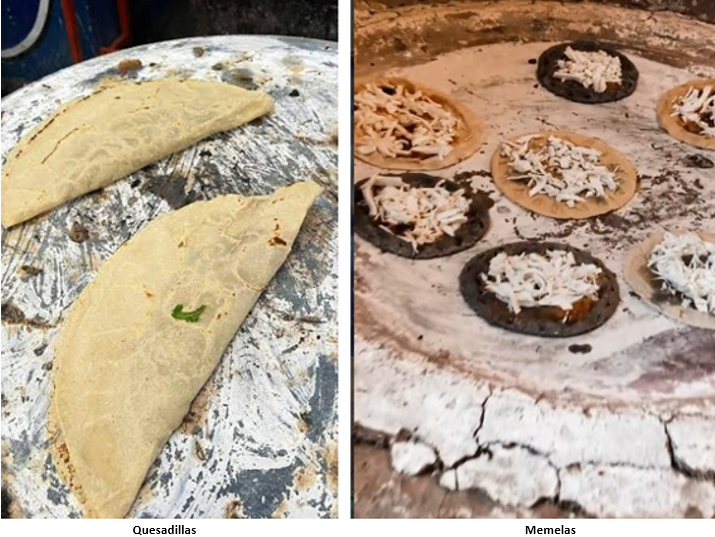
Quesadilla
Quesadillas in Oaxaca are made from corn masa. The masa is pressed into a tortilla, filled, folded in half, and cooked on a comal. We filled ours with quesillo (Oaxaca’s famous string cheese) and epazote, an herb that adds an earthy flavor.
Memelas
A memela is an Oaxacan iconic comfort food. It begins as a thick, hand-formed corn masa tortilla cooked on a comal. While still warm, we spread it with asiento, the flavorful pork fat left from rendering lard. We then topped it with salsa and quesillo before returning it to the comal just long enough for the cheese to melt. These simple ingredients created a delicious and authentic Oaxacan dish.
After we cooked, we sat down to enjoy the meal. As we ate, Sue shared stories about her family. We learned that Susan’s husband’s family has owned the house and land for four generations. In fact, their town has fewer than a thousand residents, and almost everyone is related.
Susan is researching, collecting, and writing down recipes that, have been passed down through the generations orally by grandmothers in order to help preserve Zapotec indigenous culture and heritage. Learning to make traditional dishes gave us a better understanding of the culture and traditions behind each dish, and to feel a connection to the people of Oaxaca.
Heading Home
Soon, we will be heading home. After a month of living in Oaxaca, we are sad to leave.
The weather in Oaxaca has been perfect, with low humidity and temperatures from the 60s to low 80s. One of the reasons we came here was to escape Florida’s hot, humid summer, even if only for a month. Although this is the rainy season, rain has not interfered with our daily walks around the city and exploration of the surrounding valley. Most days, the rain arrives in the late afternoon or evening and lasts about an hour. In fact, there hasn’t been any rain for eight days.
Water Problem
Like other parts of the world, Oaxaca is experiencing a drought. Water supplies are critically low because of rising temperatures, a growing population and increased tourism. The water pressure in our apartment has been noticeably weak, and residents told us there are times when water service is completely unavailable. In the small communities outside of Oaxaca, many homes have tap water only one day per week. During these periods, residents who can afford it buy water and pump it into home storage tanks. It is common to see water trucks delivering water to homes and businesses.
In fact, we witnessed demonstrations in front of the government building where residents demanded that the government build new wells and improve the infrastructure needed to capture, store, and distribute water. For many communities, a new well can mean the difference between having dependable running water and relying on costly water deliveries by truck.

Walking Around Oaxaca
Over the past four weeks, we have become familiar with the city, especially our neighborhood. We visited seven different coffee shops, enjoyed excellent restaurants, and even joined a gym, all within a quarter mile of our apartment. Before long, we began recognizing familiar faces and routines, and we felt like part of the community.

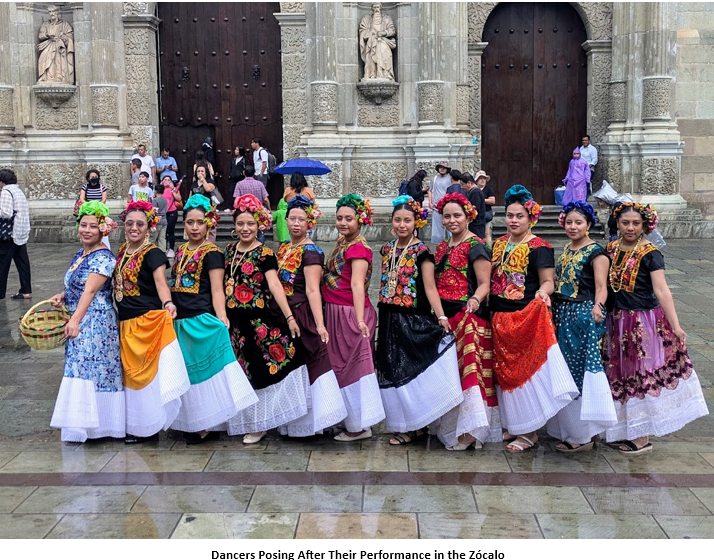
Walking was our mode of transportation. Nearly everything we wanted to see or do was within two miles, and our daily walks became our favorite part of the day. Usually there was music or dancing in the parks and plazas. The streets were busy with people strolling, shopping, dining, and gathering with friends. These walks gave us a sense of connection to the community and allowed us to experience Oaxaca as more than tourists.
Final thoughts of Oaxaca
We leave Oaxaca with wonderful memories and a deep appreciation for its culture and everyday way of life. This past month has been a time of relaxation, discovery, and a chance to slow down and embrace a different pace of living. While we are looking forward to returning home, we know we will look back on our time in Oaxaca with gratitude and great affection.
3 thoughts on “Final Week In Oaxaca”
It’s sounds fabulous!
Thank you (as always) for sharing your stories of adventure and experience. What a treat to learn about these beautiful places and people through your eyes — and the food, culture, and history!! What joy and beauty. I also appreciate what you share about the history and challenges you experience. Thank you for all this. You two look so happy and I’m so happy for you!
Thanks Darcy. We feel blessed that we are able to travel and do the things we want to do.