Our Thoughts On Croatia
After a month in Croatia, it is hard for us to pick a favorite place or experience. We saw Roman ruins, ancient palaces, medieval walls, beautiful islands, and little seaside towns. We sailed on ferries, wandered through narrow streets, sat in waterfront cafés and ate more seafood and pastries than we should have.
But when we look back, it won’t be one attraction that we remember. It will be how those things came together and how often Croatia surprised us.
We knew before we came that Croatia was supposed to be beautiful. Everyone told us about the Adriatic, the islands, Dubrovnik and the old cities. We expected beautiful scenery. We just didn’t expect to be so surprised by it.
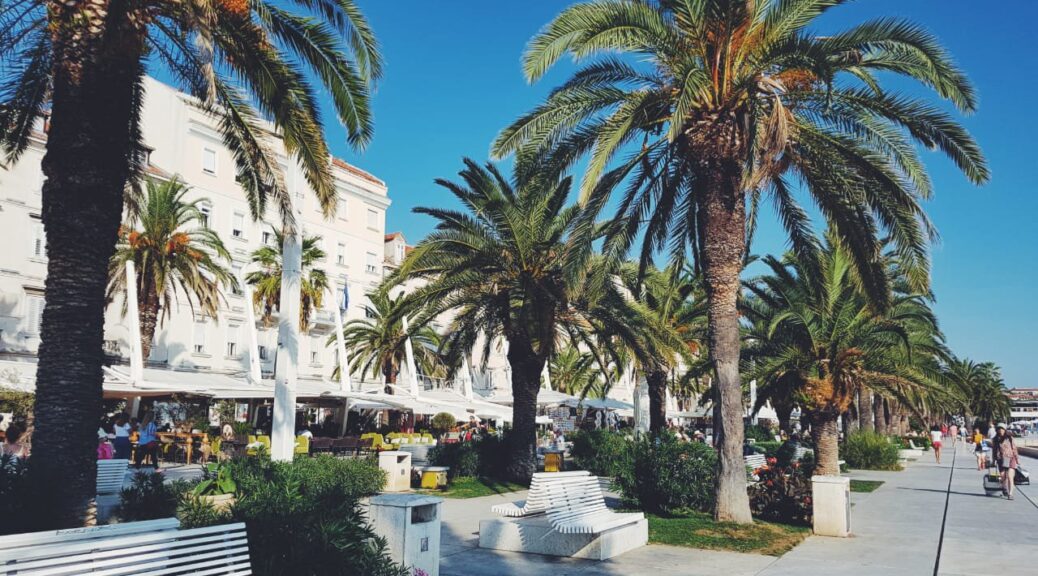
The Adriatic really is clear, blue water, with mountains rising behind. There were boats in every harbor and cafés along the waterfront. Narrow stone streets led somewhere interesting when we turned a corner. Sometimes our favorite experience was heading out with no destination and seeing where we ended up. And at times, Croatia was magical. After a while, we realized that it wasn’t the scenery that was surprising us. It was the culture, the history and, especially, the way people lived.
Pomalo
One of the first things we noticed was the pace of life, described by the word pomalo. It is translated as slowly, little by little, take it easy, don’t rush. The longer we stayed in Croatia, the more we understood what it meant.
At least from the perspective of a tourist, we felt like we were living at two different speeds. As tourists, we thought about everything we wanted to see and do. Which city should we visit? Which historical site? Which island? What haven’t we seen yet? We traveled all this way and don’t want to miss anything.
The Croatians we watched seemed much more comfortable simply being where they were. We noticed it especially with coffee. In Croatia, coffee isn’t something you grab in a paper cup while rushing somewhere else. You sit down. You take your time. You talk to someone, watch people walk by, or read the newspaper. You finish your coffee whenever you finish your coffee. There doesn’t seem to be any reason to hurry.
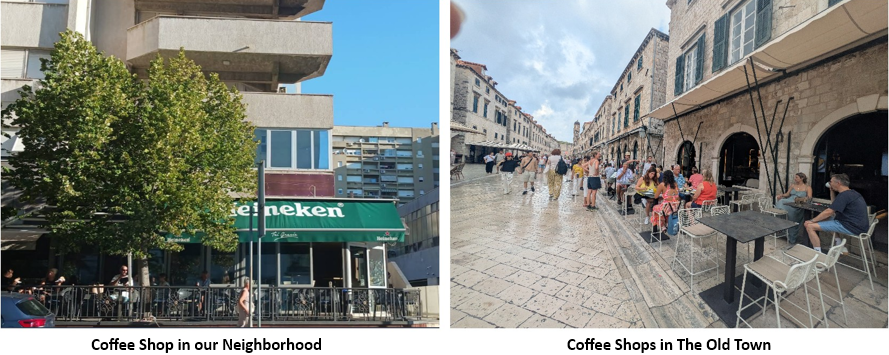
We found it interesting that there are no Starbucks stores in Croatia. That isn’t because Croatians don’t drink coffee, but they don’t buy large cups of coffee to go. Quite the opposite. Croatia has an established café culture, and coffee seems to be as much a social activity as it is a beverage.
No matter what neighborhood we were in, there were small cafés. Many of them looked alike. There weren’t menus of complicated drinks served in oversized paper cups. Coffee usually arrived in a small ceramic cup—espresso, or espresso combined with milk to make a cappuccino, latte, or white coffee. And, at least in the places we visited, there was only one size. No small, regular, grande, or venti.
Maybe that’s the difference between being a tourist and actually living somewhere. The tourists were thinking about what to do next. The locals seemed happy doing what they were doing right now. Of course, we don’t know that every Croatian lives by pomalo. We were tourists observing another culture for a month, and there’s a lot we didn’t see. But we liked what we saw. Croatia reminded us that we don’t always have to be going somewhere, doing something, or thinking about what comes next. Sometimes it’s okay to sit a little longer. Drink your coffee a little slower. Watch the boats. Enjoy where you are.
Food
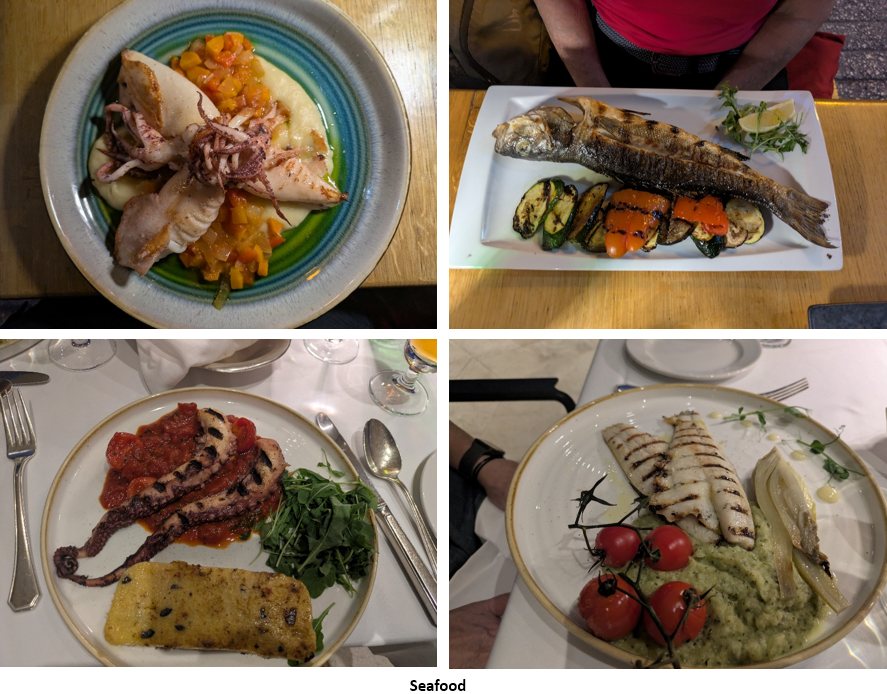
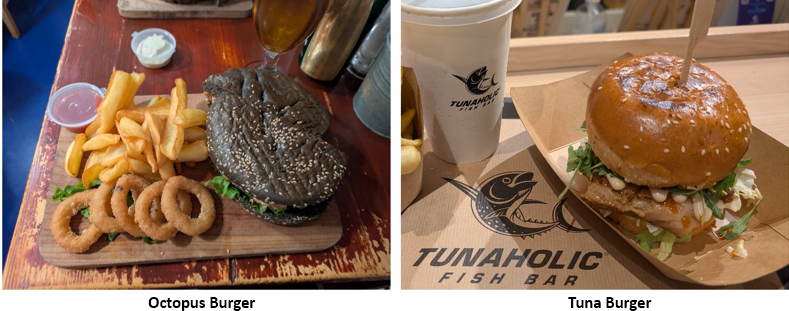
Food was another way we discovered Croatia, and we enjoyed the seafood. Grilled octopus and squid have always been favorites of mine, and we ate plenty of fresh fish and shellfish. Of course, a lot of restaurants cater to tourists. Menus often included grilled meats, pasta, risotto, pizza, hamburgers, and other familiar dishes.
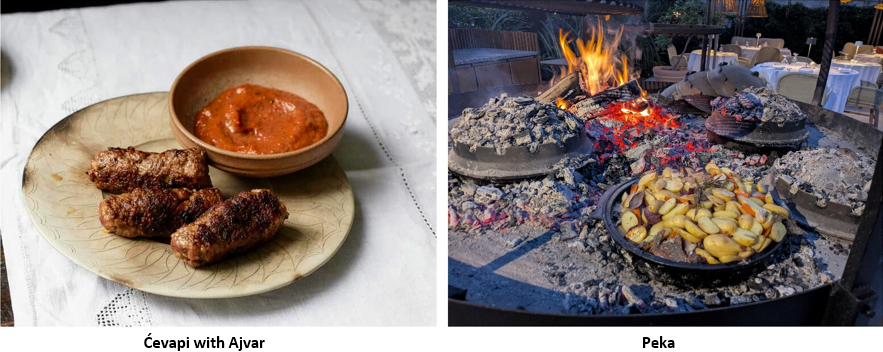
 But we also tried foods that were new to us. One was ćevapi, small pieces of seasoned grilled meat usually served in bread or on their own with ajvar, a red pepper sauce that seemed to be everywhere. We liked ajvar enough that we bought a jar at a grocery store and started putting it on almost everything—sandwiches, eggs, and pasta. We also tried food prepared under a peka, the large bell-shaped lid used to slowly cook meat and vegetables.
Like most places we travel, some of our memories of Croatia will probably be connected to what we ate and where we ate it. But because we stayed in apartments, we didn’t eat out for every meal. We went to grocery stores and cooked for ourselves.
That turned out to be part of the fun. Going to a grocery store in another country is one of those things that probably doesn’t sound very interesting until you do it. Some things are immediately familiar. Some are completely different. And occasionally we found ourselves in an aisle trying to figure out exactly what we’re looking at.
And then there were the bakeries. They are bakeries in every neighborhood with different names on the outside, but once you walked through the door, they all looked pretty similar. A large glass case was filled with pastries and other sweet treats, while loaves and rolls of freshly baked bread were displayed behind the counter or in another display case.
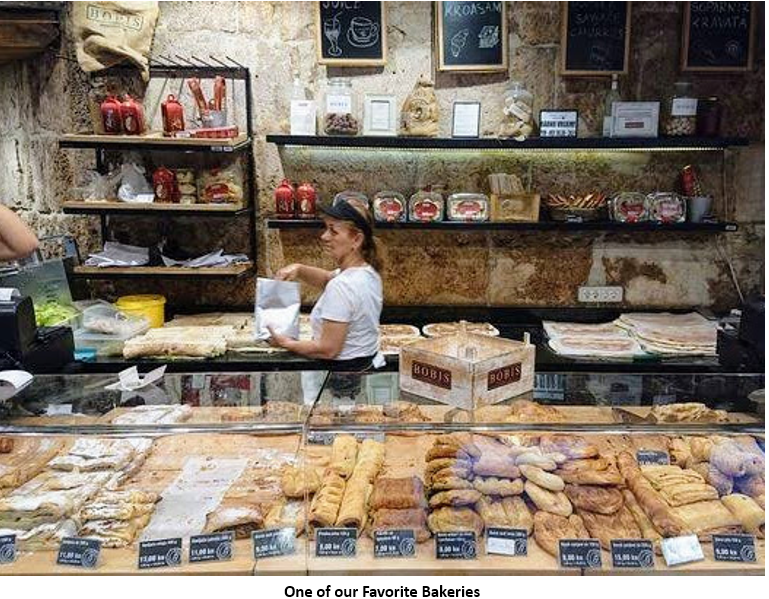 The smell alone made it difficult to walk past without stopping. Hardly a day went by that we didn’t have an apple, cherry, or cheese strudel. It wasn’t on our itinerary. We hadn’t researched the best strudel in Croatia. It simply became part of our daily life.
Flexibility
I think I was the one who really wanted to go to Croatia. From the little reading and research we did beforehand, we planned to hike, bike, and kayak while we were there.
We did plenty of walking and hiking. But the biking and kayaking never happened. A few of the places we thought we might bike to, we ended up hiking to instead. Croatia has plenty of good bike trails, but many are outside the main cities or on more remote parts of the islands. Biking through the cities didn’t look particularly appealing to us, and we didn’t have a strong enough desire to figure out how to rent bikes and arrange transportation to some of the better trails.
So we didn’t. We just did something else. That is actually pretty typical of the way we travel. Since our trips usually last a month, we don’t need to plan every day before we arrive. We normally stay in apartments or houses and sometimes book only the first five days.
Once we arrive, we get settled, get the lay of the land, and decide what to do next. Sometimes we stay longer than we expected. Sometimes we move on sooner. Sometimes something we thought we really wanted to do turns out not to be worth the trouble. And sometimes, like biking and kayaking in Croatia, it just never happens.
We even tend to book our flights this way. We buy a one-way ticket to wherever we’re going. After we’ve been there for a week or so, we have a much better idea of where we want to go, what we want to do, and how long we want to stay. Then we book the flight home.
This kind of travel probably isn’t for everyone. But it works for us. We like having enough information about what a place has to offer without having to follow a schedule created months before. In some ways, that seems to fit perfectly with pomalo.
What We Didn’t Know
The longer we stayed in Croatia, the more we realized how much we didn’t know about the country before we came. One conversation particularly surprised us. A Croatian told us about how much Tito’s government had done to develop tourism along the Adriatic Sea after World War II.
Tourism? During communism? It had simply never occurred to us that people behind the Iron Curtain went on vacation. Of course they did. Why wouldn’t they? But somehow, we never pictured it.
Yugoslavia was also different from the countries we think of when we think about the Iron Curtain. After Tito’s break with Stalin in 1948, Yugoslavia followed its own path rather than becoming part of the Soviet bloc. Yugoslav citizens had freedom to travel, and the Croatian coast attracted tourists from both Eastern and Western Europe.
Then came another surprise. We heard Tito described by Croatians as a “benevolent dictator.” That phrase really stuck with us. We had always thought of dictators as simply dictators, people who denied their citizens freedom. But Tito’s story was more complicated.
He was authoritarian. Yugoslavia was not a democracy with competing political parties, and political opponents could be imprisoned or persecuted. At the same time, Yugoslav citizens had freedoms that were unusual in the communist world. They could travel abroad; many worked in Western Europe, and the government provided education, health care, and social benefits.
There were elections, but they were not the kind of competitive elections we think of as democratic. So how could people remember Tito fondly? There probably isn’t a simple answer. It made us realize that people don’t necessarily remember their history in the same neat categories we use to describe it afterward.
A dictator can be a dictator, and people can still remember parts of his rule with genuine affection. Someone can have lived under an authoritarian government and still remember having health care, education, economic opportunities, stability, or the ability to travel.
That doesn’t make the government democratic or erase its abuses. It just makes history more complicated. And we found that fascinating. It certainly wasn’t something we expected to be thinking about during our time in Croatia.
The Croatia We Didn’t Expect
Finally, we hadn’t researched much about Croatia before visiting. We expected beautiful scenery, but all the natural beauty of the sea, mountains, islands, and parks truly surprised us. We didn’t expect to be so impressed by how comfortable and developed the country felt. The cities and towns felt European, but many places didn’t have the overwhelmed-by-tourists feeling of some of Europe’s famous destinations.
Croatia has spent more than 2,000 years at the crossroads of Central Europe, Italy, and the Balkans. First by Greece before the 1st century BC, then by the Roman Empire, Early Christianity, the Venetian Republic, the Ottoman Empire, and Yugoslavia.
Where we stayed, along the Dalmatian coast (Dubrovnik, Split, Trogir, Hvar and the islands), the strongest visual influences are Roman, Venetian/Italian and Mediterranean. That’s why when we walked around, we saw so much marble, narrow pedestrian streets, picturesque squares, bell towers, and buildings packed tightly together.
Final Thoughts
For some time now, we’ve been talking about where our travels might take us next. We’ve wanted to branch out a little more from Latin America and some of the more familiar European countries and destinations. Our earlier trip to Morocco gave us a taste of doing something a little different, and our time in Croatia has only reinforced that feeling.
This adventure has really opened the door to exploring more of Eastern Europe and the Balkans. There are so many countries in this part of the world that we really knew very little about before coming here, and now they seem much more interesting and within reach. Sometimes one trip has a way of changing how you look at the map and where you might go next.
So, over the next month or so, we’ll start looking at the possibilities and trying to figure out our next destination. We don’t know where it will be yet, and that’s part of the fun. There are still a lot of places we haven’t seen and plenty of adventures waiting for us.
Because it’s never too late for adventure.